A roofing sheet may look simple once it is installed. You see the colour, the profile and the finished roof, but there is much more happening beneath that surface. Before a sheet reaches a construction site, it passes through several stages where its material, coating, dimensions and finish need to be checked.
This becomes particularly important for colour coated roofing sheets. A good-looking sheet is not necessarily a well-made sheet. For someone unfamiliar with roofing manufacturing, it helps to think of quality as a chain. Every stage contributes to the final product. If one stage is not properly controlled, it can affect everything that follows.
Starting With a Strong and Consistent Substrate
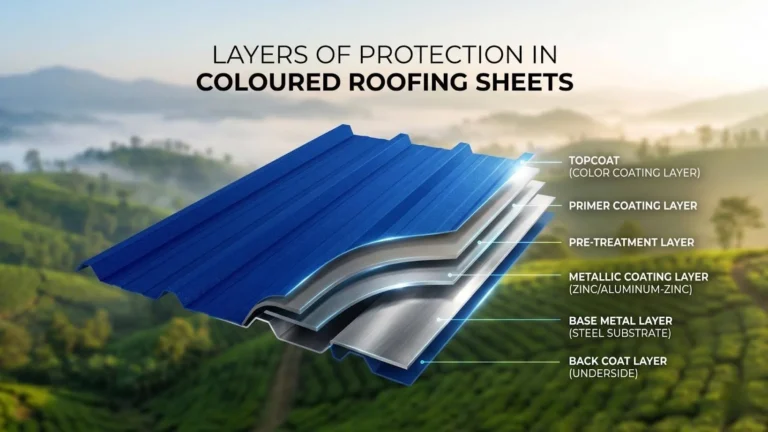
The foundation of a roofing sheet is the metal underneath the paint. Therefore, quality control begins before the colour is even added. For pre-painted roofing products, aluminium-zinc coated steel is used as the substrate.
The metallic coating provides corrosion protection, while the steel provides the strength needed for the finished sheet. This makes a high-quality galvalume substrate an important starting point.
The thickness of the steel also matters. If thickness varies significantly, it can affect the sheet’s strength, weight and consistency. This is why measurable specifications are an important part of manufacturing quality rather than relying only on visual inspection.
Quality is Built Into the Coating Process
The colour coated sheet manufacturing process involves more than simply applying paint to steel. The surface first needs to be properly prepared so that the coating can adhere effectively.
Surface preparation helps remove unwanted contaminants and prepares the metal for the coating system. This is similar to painting any surface: even a high-quality coating may not perform properly if the surface underneath has not been prepared correctly.
Different coating layers have different purposes, from improving adhesion to protecting the surface and maintaining its appearance. This is particularly relevant because roofing sheets are exposed to rain, humidity and sunlight for long periods.
Quality Checks That Go Beyond Appearance
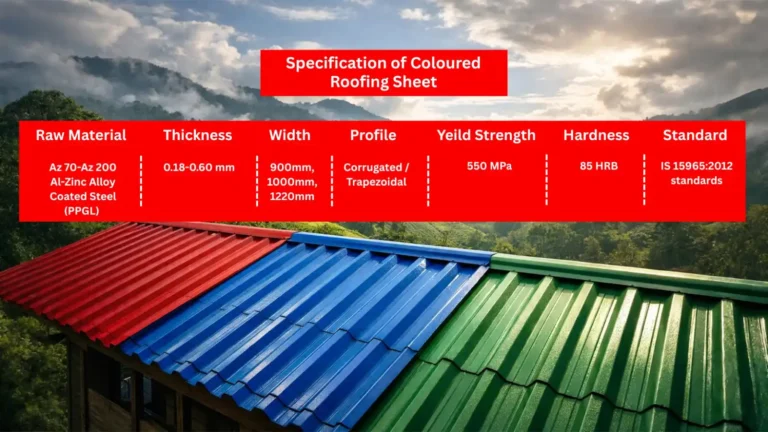
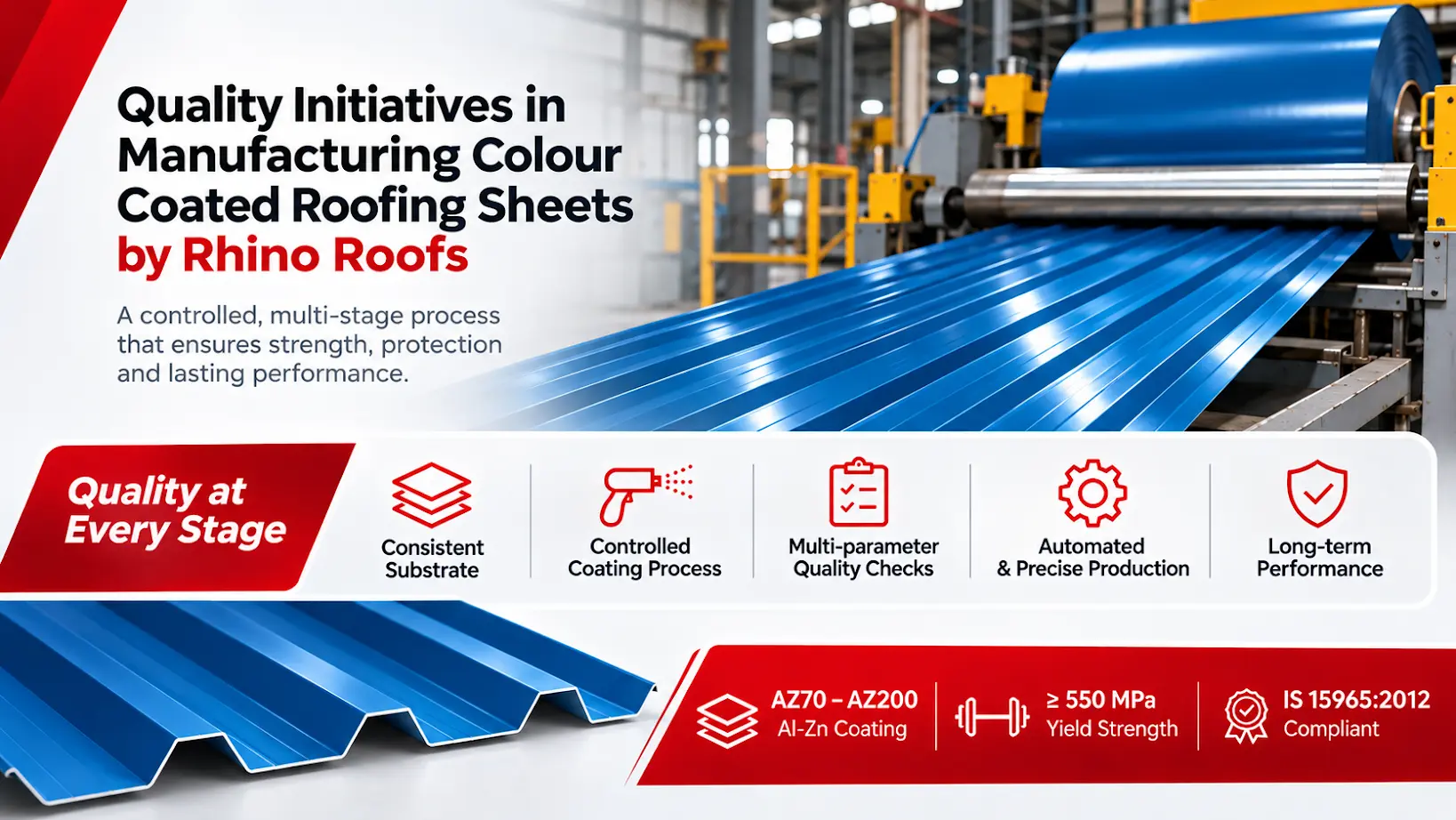
One of the most useful ways to understand colour coated roofing sheet quality is to look at the measurable properties checked during manufacturing.
A sheet may appear smooth and evenly coloured, but appearance alone cannot confirm its thickness, coating level, strength or hardness. Published colour sheet specifications provide measurable reference points for these properties.
| Quality parameter | Published specification | What it tells you |
|---|---|---|
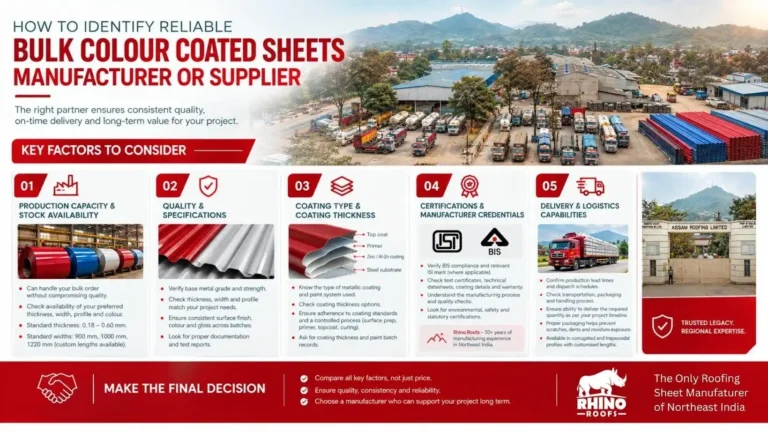
| Sheet thickness | 0.18-0.60 mm | Indicates the thickness range of the steel substrate |
| Aluminium-zinc coating | AZ70-AZ200 | Indicates the specified metallic coating level |
| Yield strength | Minimum 550 MPa | Indicates resistance to permanent deformation |
| Hardness | Minimum 85 HRB | Indicates the material’s resistance to indentation |
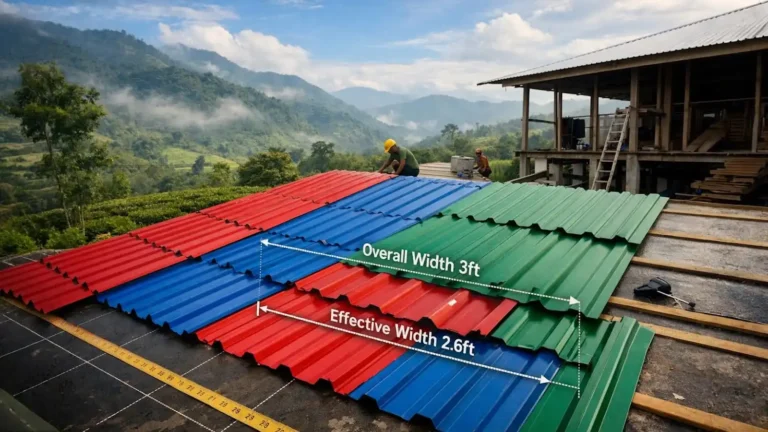
| Coil width | 900 mm, 1,000 mm and 1,220 mm | Shows specified dimensional options |
| Coil weight | 2-5 MT | Indicates the specified coil weight range |
| Applicable standard | IS 15965:2012 | Provides a recognised reference for the product |
These figures show why quality checks for colour coated roofing sheets should not be reduced to checking whether the colour looks right.
Automation Helps Maintain Consistency
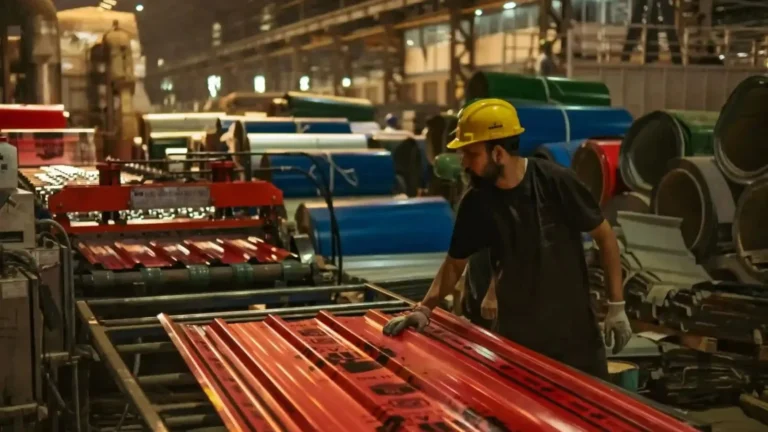
Producing roofing sheets consistently requires more than good raw materials. The manufacturing process also needs controlled equipment and repeatable production conditions.
This is where automated & precision infrastructure can make a difference. Automated continuous production systems can help maintain consistency across processes such as coating, curing and sheet production. The benefit of automation is not simply speed. It is repeatable.
Why These Quality Initiatives Matter
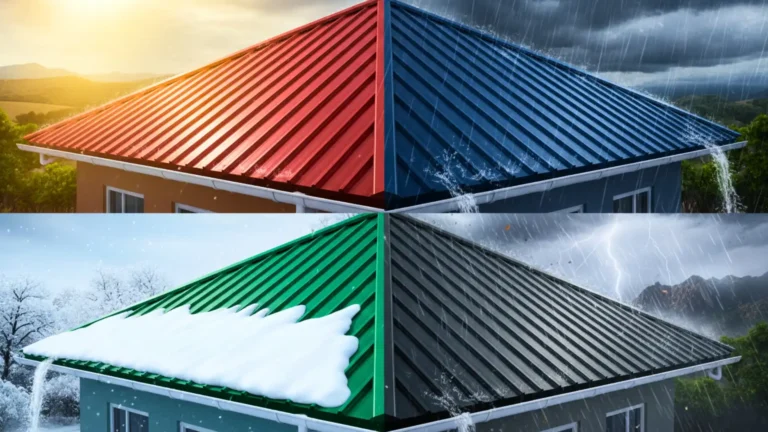
The importance of quality control of colour coated roofing sheets becomes clearer when you consider what happens after installation. A roofing sheet has to face changing weather conditions, moisture, sunlight and temperature variations. It may also experience handling and forming stresses before installation.
These quality initiatives matter because they help:
- Maintain consistent sheet quality: Controlled production helps keep thickness, dimensions, coating and finish within the specified range across different batches.
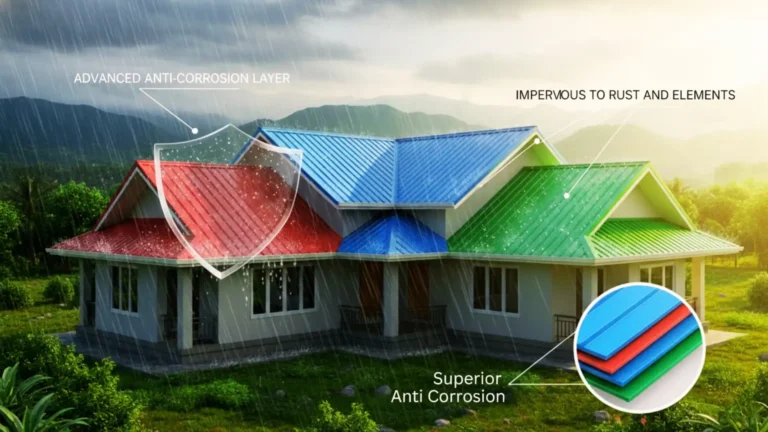
- Improve corrosion protection: A properly prepared substrate and controlled coating system help protect the underlying steel from rust and corrosion caused by moisture and environmental exposure.
- Reduce coating-related problems: Adhesion, bend and coating checks can help identify issues such as poor bonding, cracking or uneven coating before the sheets reach the site.
- Support long-term appearance: Good coating quality and UV & Fading Resistance help the sheet maintain a more consistent appearance during prolonged exposure to sunlight.
- Make installation more predictable: Consistent dimensions and sheet profiles can make handling, alignment and installation easier for roofing contractors.
Conclusion
The manufacturing of colour coated roofing sheets is a carefully controlled process in which several quality initiatives work together.
A suitable substrate provides the foundation. Proper surface preparation helps the coating adhere. Multiple protective layers contribute to weather resistance and appearance, while testing checks measurable properties such as thickness, coating level, strength and hardness.
Ultimately, colour coated roofing sheet quality is determined long before the sheet reaches the roof. Looking at the manufacturing process through measurable specifications and quality checks gives a much clearer understanding of what contributes to a reliable roofing product.
Written and Verified by:
Rhino Roofs
Bio: Leading roofing sheet manufacturer with 50+ years of experience in the Northeast. Rhino Roofs provides colour coated, galvalume (Aluminium Zinc coated) and asbestos cement roofing sheets.
FREQUENTLY ASK QUESTIONS
Quality control helps identify issues with coating thickness, surface finish, colour consistency and sheet dimensions before the products reach customers.
Proper cleaning and surface preparation help the primer and paint adhere evenly to the metal, reducing the risk of peeling and premature coating failure.
Manufacturers can conduct adhesion, bend and corrosion-resistance tests to assess how well the coating withstands handling, shaping and environmental exposure.
Automated production systems help maintain consistent processing conditions, reduce variations between sheets and improve control over the manufacturing process.
Details such as sheet thickness, metallic coating level, paint finish and applicable standards help buyers assess whether the product suits their building and local weather conditions.