

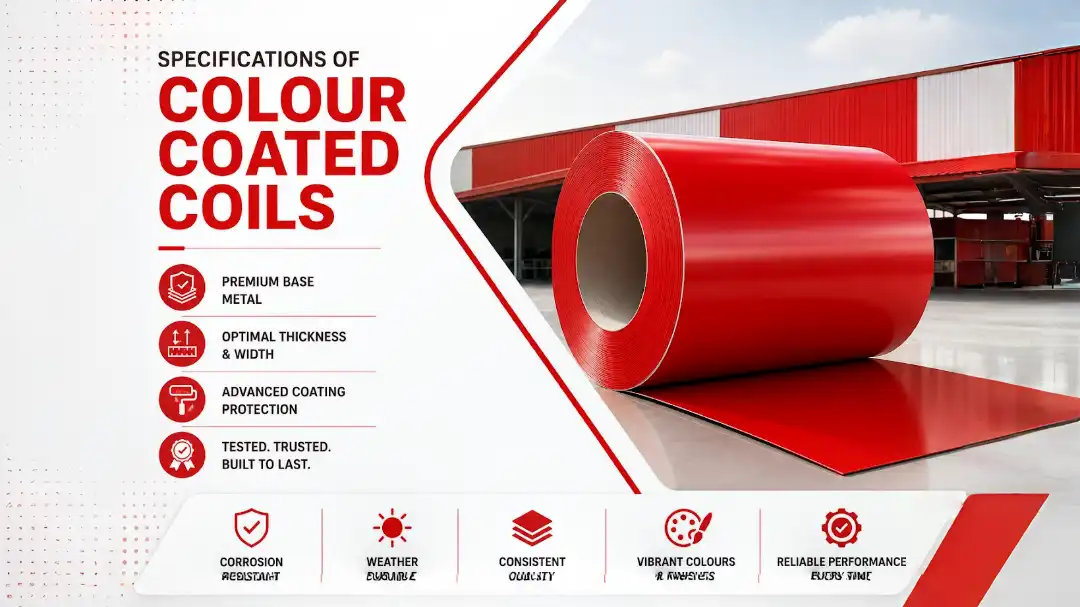
When selecting roofing or cladding materials, appearance is only one part of the decision. Modern construction projects require materials that can withstand changing weather conditions, resist corrosion, and maintain their finish for years. This is why the colour coated coil has become a preferred choice for industrial, commercial, agricultural, and residential applications.
A high-quality colour coated steel coil offers the perfect combination of durability, strength, and aesthetics. However, choosing the right product requires understanding its technical specifications rather than focusing only on colour or finish. From substrate quality to coating type, thickness, width, and performance standards, each specification contributes to the overall lifespan and performance of the material.
This guide explains the Key Specifications of Colour Coated Coils, helping buyers make informed purchasing decisions.
What is a Colour Coated Coil?
A colour coated coil, also known as a pre-painted steel coil, is manufactured by applying multiple protective and decorative paint layers over a metallic coated steel substrate through a continuous coil coating process.
The finished product delivers excellent resistance against corrosion, moisture, UV rays, and harsh weather conditions while offering an attractive appearance suitable for modern architectural designs.
Colour coated coils are widely used for:
- Roofing sheets
- Wall cladding
- Industrial sheds
- Warehouses
- Commercial buildings
- Agricultural structures
- Prefabricated buildings
- Furniture and fabrication applications
Because of their long service life and low maintenance requirements, colour coated coils have become one of the most reliable roofing materials in the construction industry.
Why Are Specifications Important in Colour Coated Coils
Understanding Why are specifications important in colour coated coils helps buyers select products that perform efficiently throughout their lifespan.
The right specifications ensure:
- Better corrosion resistance
- Improved structural strength
- Longer coating life
- Superior weather resistance
- Better fabrication performance
- Reduced maintenance costs
- Consistent product quality
Rather than selecting materials based only on price, evaluating technical specifications helps ensure long-term value and dependable performance.
Key Specifications of Colour Coated Coils
Several technical factors determine the quality and durability of a colour coated coil.
Base Metal Substrate
The substrate forms the foundation of every colour coated steel product.
Premium colour coated steel coil products are manufactured using Pre-Painted Galvalume Steel (PPGL) with an Aluminium-Zinc alloy-coated steel substrate. The Al-Zinc coating provides enhanced protection against rust and corrosion, making the material suitable for humid climates, industrial environments, and coastal regions.
A strong substrate significantly improves the service life of roofing and cladding systems.
Colour Coated Coil Thickness
Among all Colour coated coil specifications, thickness is one of the most important considerations.
The Colour coated coil thickness generally ranges from 0.18 mm to 0.60 mm, allowing builders to choose the appropriate material based on structural and design requirements.
Selecting the correct thickness offers several advantages:
- Higher structural stability
- Better resistance to denting and deformation
- Improved wind load performance
- Easier installation
- Longer service life
Thicker coils are generally preferred for industrial and commercial applications where greater durability is required.
Colour Coated Coil Width
The Colour coated coil width affects manufacturing efficiency, roofing profiles, and material utilisation.
Standard widths include:
- 900 mm
- 1000 mm
- 1220 mm
Choosing the correct width reduces wastage during roll forming, improves production efficiency, and simplifies installation.
Coating System
The protective coating system plays a critical role in determining durability.
A quality pre painted steel coil consists of multiple layers including:
- Metallic coating
- Primer coating
- Top paint
- Back coat
These coatings work together to protect the steel from corrosion, moisture, chemicals, and UV radiation while maintaining colour consistency over time.
Availability of Colour
One of the major advantages of colour coated coils is the wide range of finishes available.
Availability of Colour
Common colour options include:
- Blue
- Red
- Green
Many manufacturers also provide customized colours to meet project-specific architectural requirements.
A premium paint system helps maintain colour brightness while reducing fading caused by prolonged sunlight exposure.
Performance Standards
One of the most important specifications of colour coated coils is compliance with recognised manufacturing standards.
Reliable manufacturers test their products for:
- Coating adhesion
- Flexibility
- Corrosion resistance
- Impact resistance
- Surface hardness
- Weather durability
- Gloss retention
High-quality PPGL colour coated coils are commonly manufactured according to IS 15965:2012 and feature:
- Yield Strength: 550 MPa
- Minimum Hardness: 85 HRB
- Aluminium-Zinc Coating: AZ70-AZ200
These Performance Standards ensure consistent quality and reliable long-term performance.
Surface Finish
The finish of a colour coated coil affects both aesthetics and functionality.
Common finishes include:
- Gloss finish
- Matte finish
- Textured finish
A quality finish enhances the building’s appearance while reducing dirt accumulation and improving resistance to weathering.
Colour Coated Coil Specifications at a Glance
| Specification | Details |
|---|---|
| Product Type | Pre Painted Galvalume Steel (PPGL) |
| Base Metal | Aluminium-Zinc Alloy Coated Steel |
| Thickness | 0.18 mm – 0.60 mm |
| Width | 900 mm, 1000 mm, 1220 mm |
| Zinc-Aluminium Coating | AZ70 – AZ200 |
| Yield Strength | 550 MPa |
| Hardness | Minimum 85 HRB |
| Standard | IS 15965:2012 |
| Colours | Blue, Red, Green & Custom Colours |
Benefits of Choosing a High-Quality Colour Coated Steel Coil
Investing in premium colour coated steel coil products offers several advantages:
- Superior corrosion resistance
- Excellent weather protection
- Attractive appearance
- UV resistance
- Long service life
- Low maintenance requirements
- Faster installation
- Better fabrication performance
- Improved return on investment
These benefits make colour coated coils one of the most cost-effective roofing solutions for modern construction projects.
Conclusion
The demand for colour coated coil products continues to grow because they offer the ideal combination of strength, durability, and aesthetics. Whether used for roofing, wall cladding, warehouses, factories, or residential buildings, choosing the right specifications directly impacts the overall performance of the project.
Understanding the Key Specifications of Colour Coated Coils, including substrate quality, coating system, Colour coated coil thickness, Colour coated coil width, Availability of Colour, and Performance Standards, enables buyers to select products that provide long-term reliability and excellent value.
A premium pre-painted steel coil manufactured to recognised quality standards ensures dependable protection against corrosion, harsh weather, and daily wear while maintaining its appearance for years.
Written and Verified by:
Rhino Roofs
Bio: Leading roofing sheet manufacturer with 50+ years of experience in the Northeast. Rhino Roofs provides colour coated, galvalume (Aluminium Zinc coated) and asbestos cement roofing sheets.
FREQUENTLY ASK QUESTIONS
Colour coated coils are commonly used in roofing, wall cladding, industrial sheds, warehouses, prefabricated buildings and various architectural applications.
Buyers should review the substrate quality, coating system, thickness, width, colour options and performance standards to ensure the product meets project requirements.
Yes, the thickness of the coil contributes to its strength, structural stability and ability to withstand environmental conditions over time.
Performance standards help verify the product’s resistance to corrosion, weather exposure, impact and other factors that influence long-term performance.