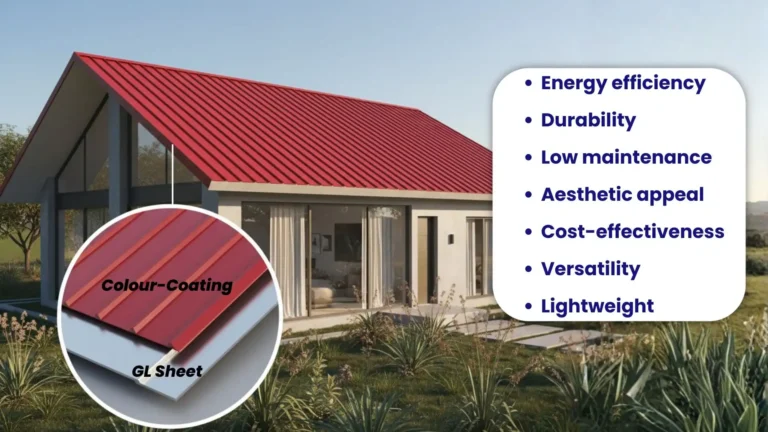
The best colour for a roofing sheet depends on your climate, building design and heat-control needs. For hot and sunny areas, white, cream and light grey are generally better choices because they reflect more sunlight and absorb less heat. Darker shades can be selected when appearance is the main priority.
Selecting a roofing sheet colour is often viewed as a surface-level design choice. But its influence runs far deeper than most people realise. The colour of your roof plays a role in regulating indoor temperature, controlling energy use, determining how often maintenance is required, and even shaping the long-term value of your property. With Indian climates becoming increasingly extreme in 2026, the importance of choosing the right shade has never been greater.
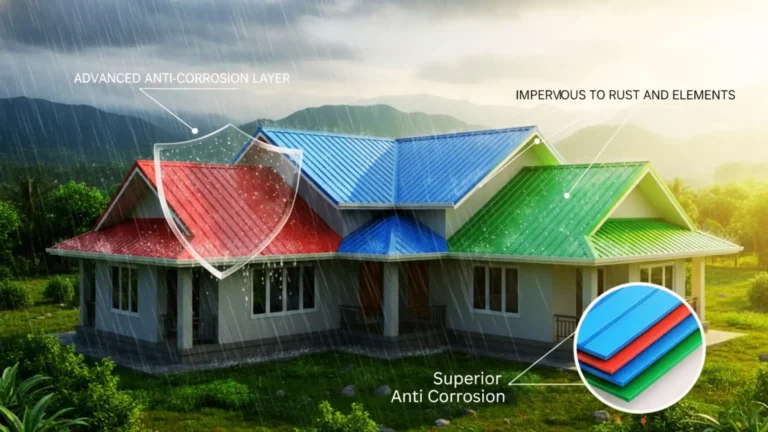
The growing availability of advanced colour coated sheet options now allows homeowners, builders and industrial buyers to achieve both performance and aesthetics. Brands offer technologically advanced colour coated roofing sheets engineered for superior heat reflection, UV stability and corrosion protection. This guide explains how to choose roofing sheet colour wisely, helping you improve comfort.
Which Colour is Best for Roofing Sheet?
The best colour for a roofing sheet depends on the climate, building design and heat-control requirements. For hot and sunny areas, light colours such as white, cream and light grey are generally preferred because they reflect more sunlight and absorb less heat. For a modern or bold appearance, darker shades such as charcoal, dark blue and brown can be considered based on the building’s exterior and surroundings.
| Roofing Sheet Colour | Heat Reflection | Appearance | Suitable For |
|---|---|---|---|
| White | Very high | Clean, modern | Hot climates |
| Cream | High | Warm, subtle | Homes |
| Light Grey | High | Modern, neutral | Homes and commercial buildings |
| Light Blue | High | Fresh | Residential buildings |
| Green | Moderate | Natural | Homes/agricultural buildings |
| Red | Moderate | Bold | Residential & commercial |
| Dark Blue | Lower | Premium | Moderate climates |
| Brown | Lower | Traditional | Residential buildings |
| Black | Low | Modern | Design-focused buildings |
Best Colour for Roofing Sheets Based on Requirement
Best Roofing Sheet Colours Based on Climate
India’s diverse climate-ranging from intense dry heat to heavy coastal humidity-makes regional weather one of the most decisive factors when choosing coloured roofing sheets.
-
For Hot and Dry Regions
In regions that experience prolonged heat and strong solar exposure, roof colour significantly influences indoor comfort. Light shades like white, cream and soft grey reflect a large portion of sunlight, helping to lower roof surface temperature and reduce heat transfer indoors. These colours can reduce interior heat build-up, directly lowering air-conditioning demand and electricity spending.
When combined with premium colour coated roofing sheets, these reflective properties remain effective for years. -
For Coastal and Humid Regions
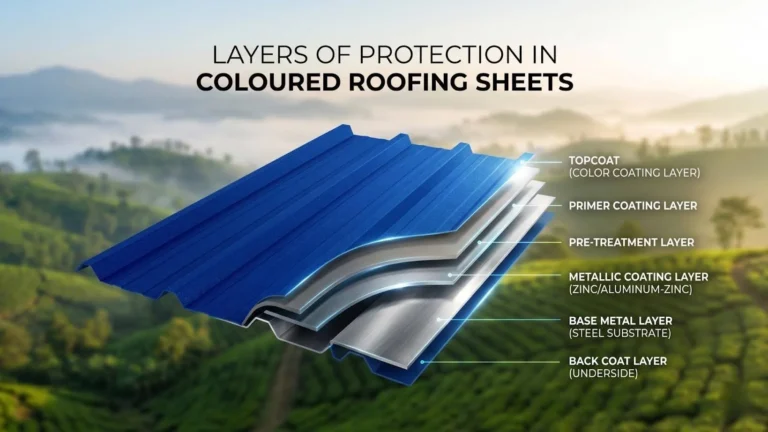
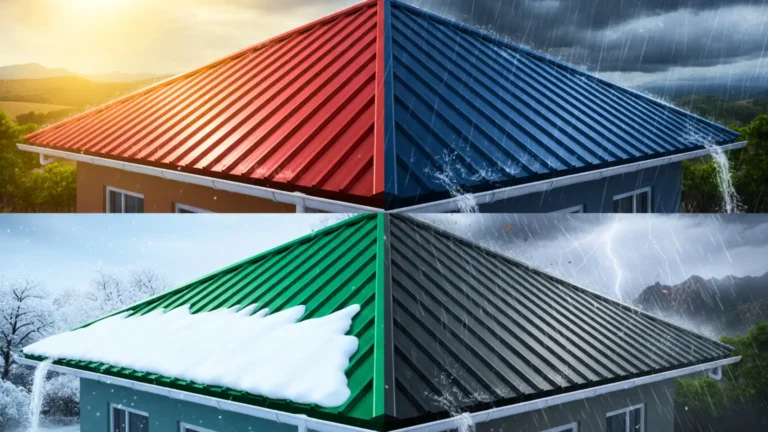
Coastal regions are exposed to constant moisture and salt in the air and intense UV radiation. All of this accelerates corrosion and colour fading. In such environments, colour stability and coating performance become equally important. Light blues, silvers and neutral greys perform well by balancing heat reflection with long-term visual consistency. Aluminium–zinc coating, and multi-layer paint protection provide excellent resistance against salt corrosion while preserving colour brightness even under continuous marine exposure. Learn more why galvalume with colour coated sheets give the better benefits.
-
For Cold or Hill Regions
In colder and hill regions, roofing colour contributes to passive heat retention. Shades like deep blue and forest green, also rich brown, naturally absorb more solar energy. This helps to maintain warmer indoor temperatures during winter months, reducing the reliance on artificial heating and improves everyday comfort. These darker shades also prevent excessive indoor cooling during prolonged cold spells.
Choosing Colour Based on Building Types
Different building types place different demands on roofing performance. This makes colour selection a functional decision as much as a design one.
-
For Traditional Houses
For a traditional house, brown, red, green, and earthy-toned roofing sheets are suitable choices. These colours complement classic architectural styles and pair well with cream, beige, yellow, or off-white walls, creating a warm and natural appearance.
-
For Modern Houses
For a modern house, grey, charcoal, black, white, and dark blue roofing sheets are popular choices. Neutral shades create a clean, contemporary look and pair well with white, beige, light grey, or natural-toned walls.
-
For Industrial and Warehouse Buildings
Industrial and warehouse structures prioritise thermal regulation and operational efficiency over decorative finish. Light shades like white and pale grey help control internal heat build-up. It also enhances natural light reflection within the space. This reduces dependence on artificial lighting and improves worker comfort across long operational hours. Colour sheet manufactures high-reflectance industrial roofing systems designed to support energy-efficient facility management.
-
For Commercial and Public Buildings
Commercial buildings demand visual consistency alongside strength and durability. Corporate colours are often selected to reinforce brand identity and professional image. Popular options include blue and red with metallic silvers. However, these structures are also exposed to continuous sunlight. This makes the colour fade resistance essential. Premium PVDF-coated roofing sheets ensure long-lasting colour retention even under prolonged UV exposure.
Best Roofing Sheet Colour for Low Maintenance
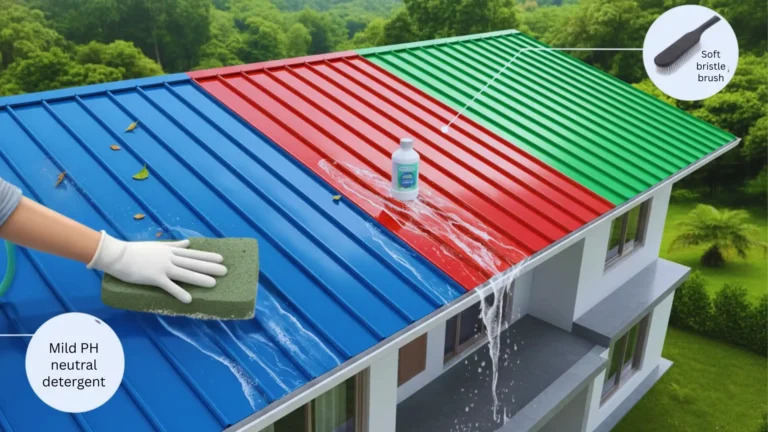
For low-maintenance roofing, medium and darker shades such as grey, brown, green, and blue can be practical choices. They tend to make dust, minor stains, and everyday dirt less noticeable than very light colours. However, maintenance also depends on the sheet’s coating, finish, material quality, and local weather conditions.
Best Roofing Sheet Colour for Heat Reflection
White is generally the best roofing sheet colour for maximum heat reflection because it reflects more sunlight and absorbs less solar heat. Other light shades, such as cream and light grey, can also help reduce heat absorption and keep the roof surface cooler in hot, sunny climates.
Which Colour Roof Shade is Coolest?
White is generally the coolest roof shade because it reflects more sunlight and absorbs less solar heat than darker colours. Light shades such as cream and light grey can also help keep the roof surface cooler. However, actual indoor comfort also depends on insulation, ventilation, roofing material and the local climate.
Light vs Dark Roofing Sheet: Which Should You Choose?
| Feature | Light Roofing Colours | Dark Roofing Colours |
|---|---|---|
| Heat absorption | Reflect more sunlight and absorb less heat | Absorb more heat and retain warmth |
| Indoor temperature | Help keep interiors cooler | Can increase indoor heat |
| Energy efficiency | Reduce cooling costs in hot climates | Helpful in colder regions |
| Maintenance | Show dirt, stains, and algae easily | Hide dust and dirt better |
| Fading | Fade less under sunlight | Fade faster over time |
| Visual impact | Make homes look bigger and brighter | Create a bold, modern appearance |
| Best suited for | Hot and sunny areas | Cool or mild climates |
Choose a light coloured roofing sheet if you live in a hot climate, your roof receives strong sunlight, or reducing indoor heat is important. White, cream and light grey shades reflect more sunlight. Darker colours can be chosen for a bold appearance, especially in cooler climates where higher solar heat absorption is less of a concern.
Roofing Sheet Colour Combinations with House Exterior
The right roof and exterior colour combination improves your home’s overall look and balance. A mismatched choice can make even a well-designed house look dull or uneven. Here are safe and popular pairings to consider.
| House/Wall Colour | Recommended Roof Colour |
|---|---|
| White | Red, blue, green, grey, brown |
| Cream | Brown, green, red, dark grey |
| Beige | Brown, terracotta, dark green |
| Light Grey | Dark grey, blue, black |
| Dark Grey | White, silver, light grey |
| Yellow | Brown, green, red |
| Peach | Brown, terracotta, dark red |
| Light Blue | Blue, grey, white |
| Green | Brown, dark green, grey |
Steps to Choose the Right Roofing Sheet Colour
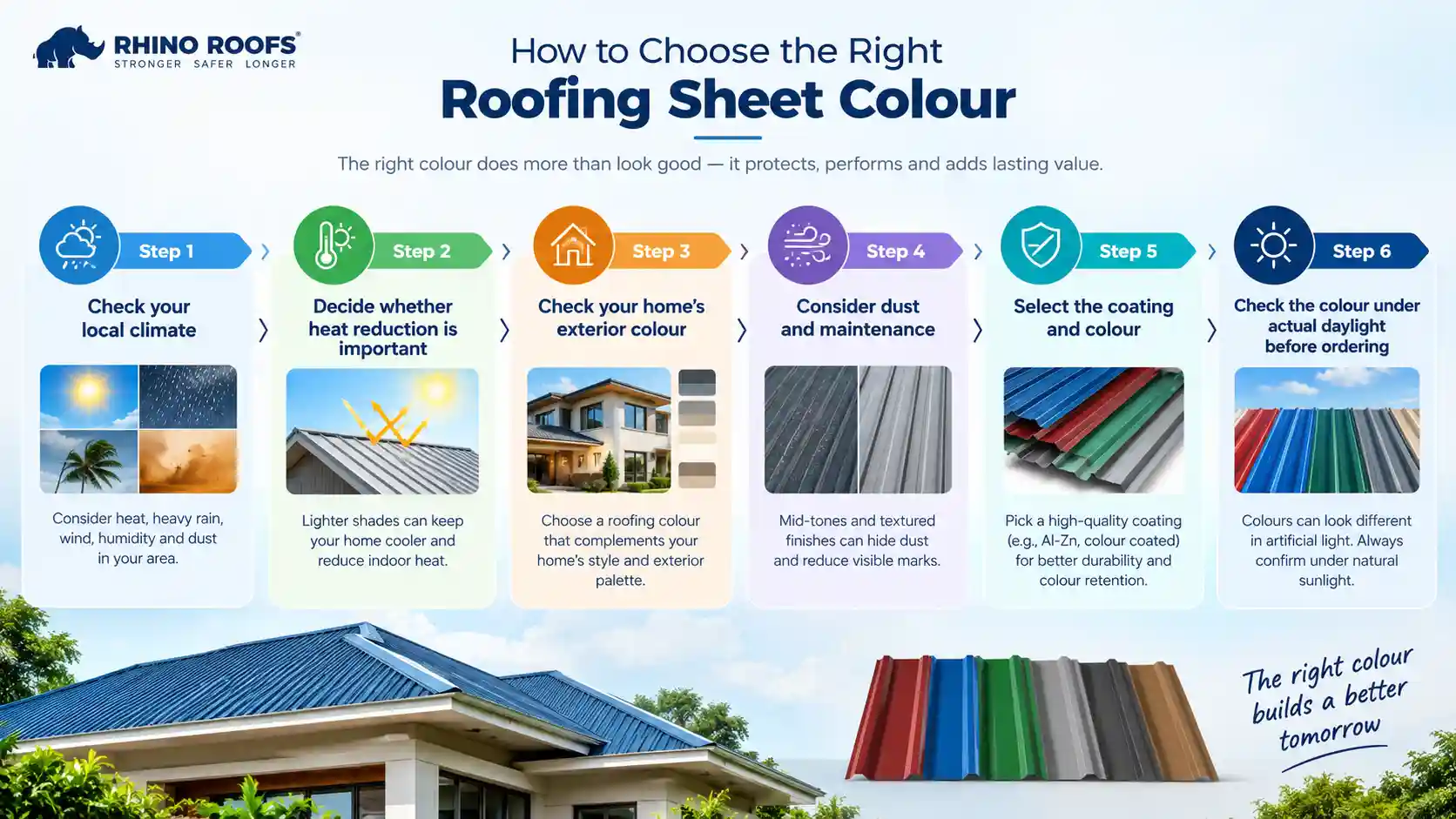
Choosing the right roofing sheet colour depends on your climate, building design, heat-control needs and maintenance requirements. Consider these steps before making a choice:
Step 1: Check the climate
For hot and sunny regions, light colours such as white, cream and light grey can reflect more sunlight and absorb less heat. In cooler areas, you have greater flexibility to choose darker shades based on your design preference.
Step 2: Match the Building Exterior
Choose a roofing colour that complements the walls, doors, windows and other exterior elements. For example, brown and terracotta can complement cream or beige walls, while grey and charcoal work well with modern white or light-grey exteriors.
Step 3: Think About Heat Control
If reducing heat absorption is a priority, consider lighter roofing sheet colours. However, roof colour is only one factor; insulation, ventilation, roofing material and coating also affect indoor temperature.
Step 4: Consider Maintenance
Dust, dirt and stains can be more noticeable on very light-coloured sheets. Medium shades such as grey, brown and green may be practical where the roof is regularly exposed to dust or outdoor pollution.
Step 5: Check the Coating Quality
Colour alone does not determine roofing sheet performance. A suitable coating can help with colour retention, UV resistance and protection against weather exposure. Check the manufacturer’s specifications before choosing a sheet.
Step 6: Check the Colour in Natural Light
A roofing sheet can look different under indoor lighting, sunlight and shade. Before making the final choice, compare a physical sample in natural daylight with your building’s exterior colours.
By considering climate, appearance, heat control, maintenance and coating quality together, you can select a roofing sheet colour that suits both the performance requirements and visual style of your building.
Does Roofing Sheet Coating Affect Colour Performance?
Yes, the coating of a roofing sheet can affect how well its colour performs over time. A good-quality coating helps protect the surface from UV exposure, weathering, fading and corrosion. Therefore, when choosing a roofing sheet, consider both the colour and coating quality to maintain its appearance and performance for longer.
Things to Avoid While Choosing Roofing Sheet Colour
Choosing the right roofing sheet colour matters more than it seems. A poor choice can affect heat, looks, and long-term maintenance. Here are key things to avoid before deciding.
- Very dark colours that trap too much heat
- Colours that clash with your walls or surroundings
- Trendy shades that may look outdated soon
- Ignoring local climate and sunlight exposure
- High-maintenance colours that show dust and stains easily
Common Mistakes to Avoid When Choosing Roofing Sheet Colour
A significant number of roofing issues originate from poor colour selection rather than from material defects.
- Choosing purely based on appearance – Attractive shades may perform poorly in high-heat or high-UV environments.
- Ignoring climate conditions – Climate-mismatched colours reduce comfort and accelerate coating deterioration.
- Overlooking future maintenance needs – Some shades require frequent cleaning to maintain appearance.
- Not matching colour with coating type – Low-grade coatings lead to early fading and surface degradation.
- Selecting trendy colours with low UV stability – Short-lived trends often compromise long-term durability.
Why Roofing Sheet Colour Matters More Than You Think
Roof colour quietly shapes the everyday performance of a building. Beyond visual appeal, it directly affects comfort levels, operating costs and how well the roof ages over time.
- Influences indoor temperature and cooling costs– Reflective colours minimise heat transfer, reducing the load on cooling systems.
- Affects thermal comfort in both residential and industrial buildings– Proper colour selection helps maintain stable, liveable indoor conditions.
- Impacts roof lifespan based on heat exposure– Continuous heat absorption accelerates coating wear and material fatigue.
- Determines how often dirt, stains and weather marks are visible– Certain shades conceal surface dust and pollution far better than others.
- Contributes to brand identity for commercial and industrial spaces– Consistent roof colour strengthens visual branding and professional presentation.
Conclusion
The process of selecting the right roofing sheet colour extends far beyond aesthetics. It directly influences thermal comfort, energy efficiency, visual longevity and overall maintenance costs. With advanced colour coated sheet solutions from trusted manufacturers, today’s buyers can achieve a balance of performance, durability and architectural appeal.
When climate suitability, building purpose and coating quality are carefully aligned with the chosen shade, your roofing investment becomes both visually rewarding and structurally dependable for decades to come.
Learn more
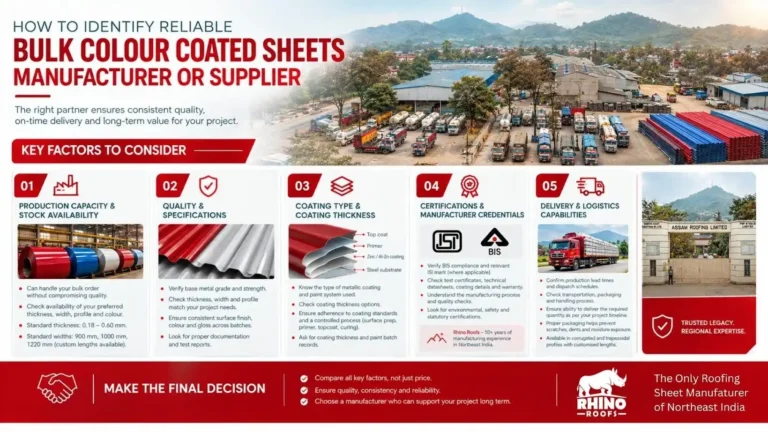
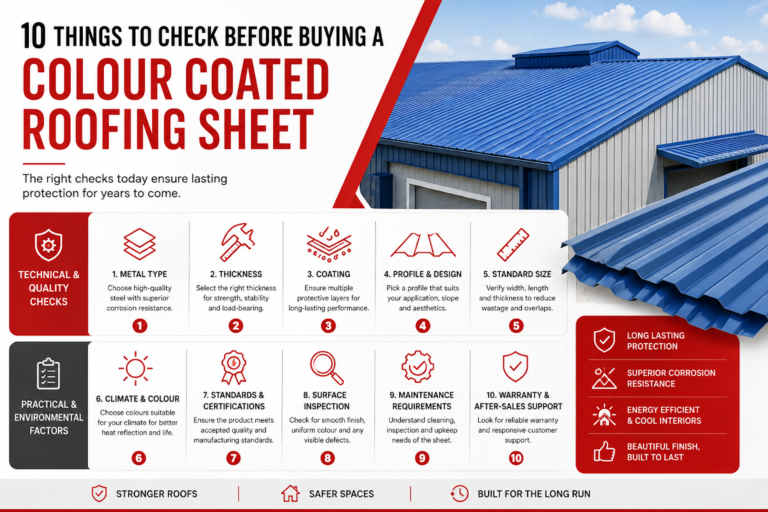
Things to Check Before Buying a Colour Coated Roofing Sheet.
Written and Verified by:
Rhino Roofs
Bio: Leading roofing sheet manufacturer with 50+ years of experience in the Northeast. Rhino Roofs provides colour coated, galvalume (Aluminium Zinc coated) and asbestos cement roofing sheets.
FREQUENTLY ASK QUESTIONS
White, cream and light grey provide the highest solar reflectance.
Mid-tone greys and blues with PVDF coatings offer excellent fade resistance.
Brown, charcoal and darker blues conceal dust and surface stains well.
Yes, reflective colours lower indoor heat gain and reduce cooling energy demand.
Red is a popular choice for white houses because it creates a strong contrast. Grey, blue, green and brown can also work depending on the architectural style and surrounding colours.
Metal roofs reflect or absorb heat strongly based on colour. Concrete and clay react slowly, holding heat longer. Lighter colours stay cooler across all materials.
Neutral colours like grey, brown, and beige are most durable. They fade less, hide dirt well, and handle sun and weather better than very dark or bright shades.
The best roofing sheet colour for a house depends on the climate, exterior design and personal preference. White, cream and light grey are suitable for hot climates, while brown, red, green and blue can complement traditional or modern home designs. Choose a shade that matches the walls and surroundings.
White is generally the coolest roof shade because it reflects more sunlight and absorbs less solar heat. Light shades such as cream and light grey can also help reduce heat absorption. However, roof insulation, ventilation, material, coating and local climate also affect the overall temperature inside the building.
Medium and darker shades such as grey, brown, green and blue are generally easier to maintain visually because dust, dirt and minor stains are less noticeable than on white or very light-coloured sheets. However, actual maintenance depends more on the sheet’s coating, material quality and local weather conditions.