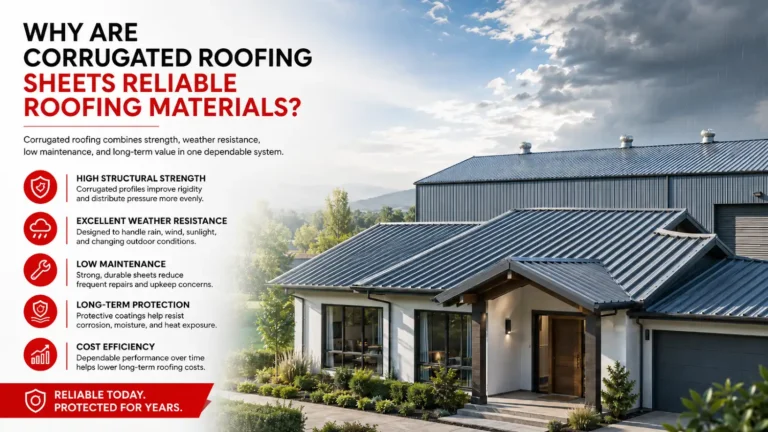
A roofing sheet has to do much more than simply cover a building. Its ability to handle rain, heat, moisture and everyday environmental exposure depends on several technical factors that are not always visible after installation. Material, thickness, dimensions, coating and manufacturing standards all have a direct bearing on how a roof performs over time.
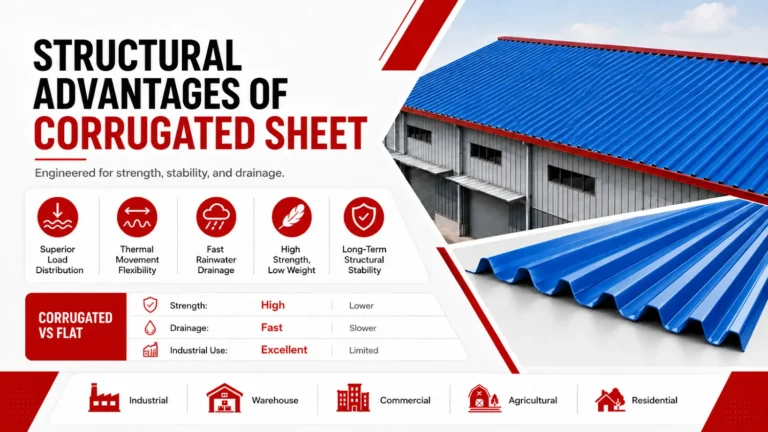
A corrugated roofing sheet is designed with a formed profile that adds strength while allowing rainwater to drain efficiently. For this reason, understanding the technical details before selecting a sheet is important for builders, contractors and project owners. Each specification helps determine whether a roofing sheet is suitable for a particular building and its conditions.
What are the Different Types of Corrugation in Roofing Sheets?
The shape of the corrugation is an important part of a roofing sheet. It affects the sheet’s strength, appearance and how it handles rainwater. The two types commonly considered are trapezoidal double ribbed and sinusoidal.
-
Trapezoidal Double Ribbed
Trapezoidal double ribbed sheets have raised, straight ribs that give the sheet a strong and firm shape. This profile is suitable for buildings where a stronger roofing sheet is required, such as factories, warehouses, industrial sheds and commercial buildings.
The actual performance of the sheet also depends on its thickness, material, coating and the structure supporting the roof. -
Sinusoidal
Sinusoidal sheets have a smooth, wave-like shape. This is a simple and widely used roofing profile that allows rainwater to flow along the sheet and off the roof. They can be used for homes, sheds and other general roofing applications. The right choice still depends on the building, weather conditions and other sheet specifications.
What are the Key Technical Specifications of a Corrugated Roofing Sheet?
There are three major types of corrugated roofing sheets based on materials which are colour coated corrugated sheet, aluminium zinc corrugated sheet and asbestos corrugated sheet. The specifications of these corrugated sheets have been provided below.
Base Material
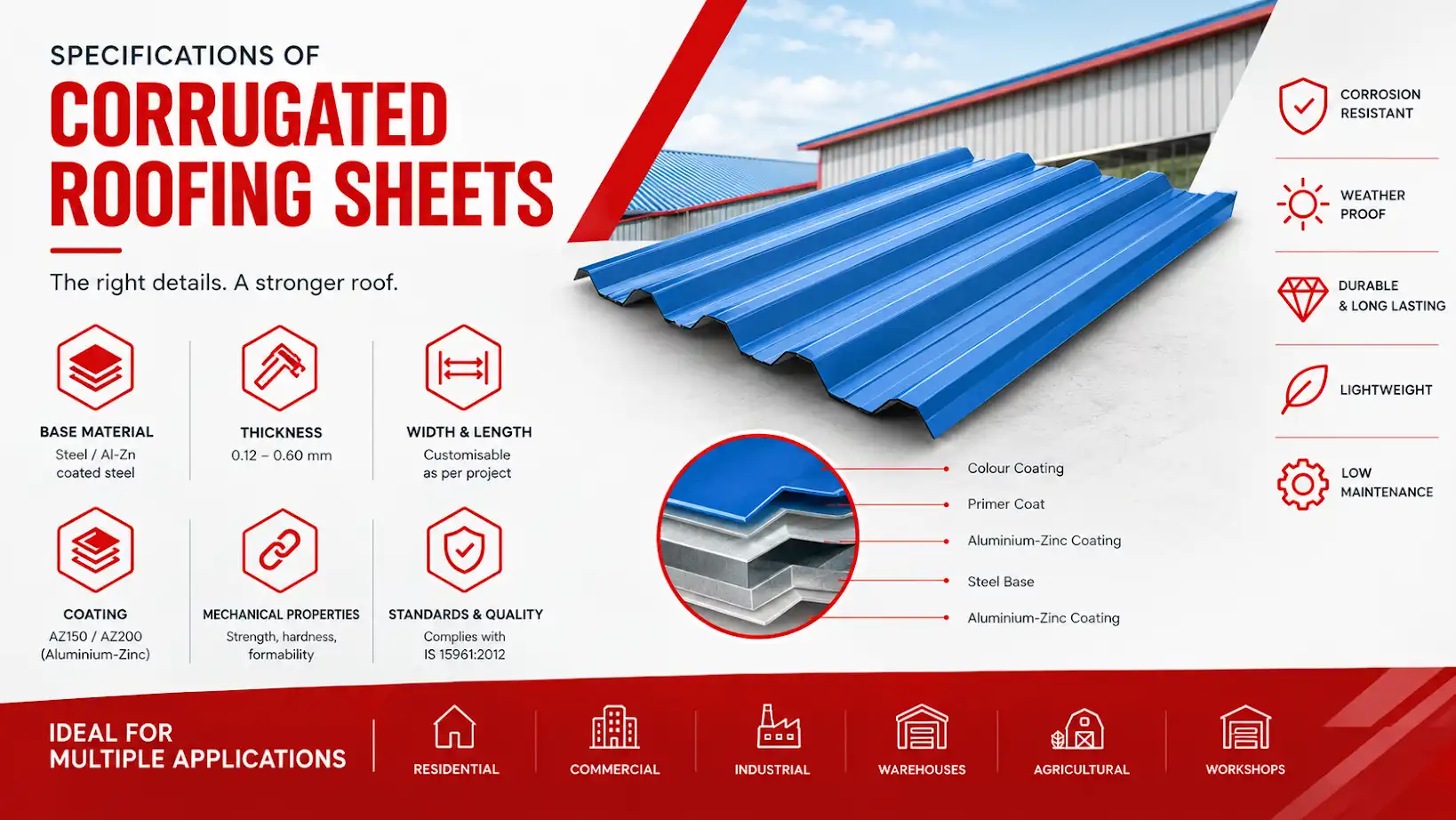
The base material is one of the primary factors that influences the characteristics and intended use of a corrugated roofing sheet. Based on the product specifications provided, corrugated roofing sheets may include:
- PPGL (Pre-Painted Galvalume Steel) for coloured corrugated roofing sheets.
- Aluminium-zinc coated steel for aluminium-zinc corrugated sheets.
- Asbestos fibre reinforced cement for corrugated cement roofing sheets.
The material should be selected according to the building requirements, environmental conditions, structural design and intended application.
Thickness
Thickness is an important specification because it is related to the sheet’s weight, handling characteristics and structural performance.
The supplied specifications show different thickness ranges for different sheet types:
- Coloured PPGL corrugated sheet: 0.60 mm
- Aluminium-zinc corrugated sheet: 0.12-0.60 mm
- Corrugated cement roofing sheet: 6 mm
Thickness should not be compared across different material types as though the values provide equivalent performance. The appropriate thickness depends on the particular roofing system, support arrangement, span, loading conditions and manufacturer’s specifications.
Width and Length
Sheet dimensions affect roof coverage, quantity calculations and installation planning.
For the aluminium-zinc corrugated sheet specified in the reference:
- Length: 900-1000 mm
- Corrugated width: 720-910 mm
The corrugated cement roofing sheet specification provides:
- Overall width: 1050 mm
- Effective width: 1010 mm
- Defined length: 1.5-3.6 m
For roof planning, measurements should be taken carefully to account for the roof’s length, width, slope, overlaps and layout. Effective coverage can differ from the overall sheet dimensions because of side or end laps.
Coating
For metal corrugated roofing sheets, the coating system is an important specification because it provides protection to the underlying steel.
The supplied specifications identify aluminium-zinc (Al-Zn) coating for the metal sheets:
- Coloured PPGL sheet: AZ70-AZ200
- Aluminium-zinc corrugated sheet: AZ150/AZ200
The coloured PPGL sheet additionally has a pre-painted finish. According to the supplied product description, these sheets are intended to provide corrosion resistance, UV resistance and weather resistance.
The required coating specification should be selected according to the expected environmental exposure and project requirements.
Mechanical Properties
Mechanical properties describe how a roofing sheet behaves when subjected to physical or structural loads.
The supplied specification identifies a 550 MPa yield strength for the coloured PPGL corrugated sheet. This value should be treated as a product-specific specification rather than a general value for all corrugated roofing sheets.
Mechanical properties can vary depending on the material, grade, thickness and manufacturing process. Therefore, where structural calculations or specific load requirements are involved, the manufacturer’s technical documentation should be used rather than assuming that one strength value applies to every roofing sheet.
Corrugation Profile and Dimensions
The geometry of the corrugation affects the sheet’s profile and coverage. Important profile-related dimensions can include:
- Corrugation depth
- Corrugation pitch
- Overall width
- Effective width
- Corrugated width
For the corrugated cement roofing sheet in the supplied specification:
- Corrugation depth: 48 mm
- Overall width: 1050 mm
- Effective width: 1010 mm
These dimensions should be considered when determining sheet coverage and compatibility with the intended roofing arrangement.
Standards
Applicable standards provide a reference for product requirements and manufacturing specifications.
The supplied references identify:
| Roofing Sheet Type | Standard |
|---|---|
| Coloured PPGL corrugated sheet | IS 15965:2012 |
| Aluminium-zinc corrugated sheet | IS 15961:2012 |
| Corrugated cement roofing sheet | IS 459 |
The applicable standard should always be considered together with the manufacturer’s product documentation and the requirements of the specific project.
Quality and Performance
Product quality depends on the consistency of the material, coating, dimensions and manufacturing process. The supplied specifications describe the coloured PPGL sheet as durable, strong, low maintenance and having a long service life, with corrosion, UV and weather resistance.
For aluminium-zinc corrugated sheets, the supplied description highlights durability, corrosion resistance and long-lasting roofing performance.
Performance should not be judged from a single specification alone. Material, thickness, coating, profile, dimensions, installation method and environmental exposure all need to be considered together.
Key Specifications at a Glance
| Specification | Coloured PPGL Sheet | Aluminium-Zinc Sheet | Corrugated Cement Sheet |
|---|---|---|---|
| Material | PPGL (Pre-Painted Galvalume Steel) | Aluminium-zinc | Asbestos fibre with cement |
| Thickness | 0.60 mm | 0.12-0.60 mm | 6 mm |
| Coating | AZ70-AZ200 | AZ150/AZ200 | – |
| Yield Strength | 550 MPa | Not specified in supplied reference | Not specified |
| Width | Not specified | 720-910 mm corrugated width | 1050 mm overall; 1010 mm effective |
| Length | Not specified | 900-1000 mm | 1.5-3.6 m |
| Corrugation Depth | Not specified | Not specified | 48 mm |
| Standard | IS 15965:2012 | IS 15961:2012 | IS 459 |
How Should You Select a Corrugated Roofing Sheet?
Selecting the right Corrugated Roofing Sheet should begin with the requirements of the building. There is no single specification that will suit every structure, so several factors should be assessed before placing an order.
Consider:
- Required sheet thickness
- Width and length
- Aluminium-zinc coating grade
- Roof design and support structure
- Local rainfall and humidity
- Intended application
- Applicable BIS standard
- Manufacturing quality
- Project-specific technical requirements
Taking these factors into account helps create a better balance between durability, corrosion resistance, structural performance and installation requirements.
Conclusion
The specification of a corrugated roofing sheet should be carefully evaluated before it is selected for a project. Material, thickness, dimensions, coating and quality standards all contribute to the sheet’s performance and suitability.
Understanding these corrugated sheet technical specifications makes it easier for builders, contractors and property owners to select a roofing solution that matches the building’s structural requirements and environmental conditions.
Written and Verified by:
Rhino Roofs
Bio: Leading roofing sheet manufacturer with 50+ years of experience in the Northeast. Rhino Roofs provides colour coated, galvalume (Aluminium Zinc coated) and asbestos cement roofing sheets.
FREQUENTLY ASK QUESTIONS
Rhino Roofs offers Al-Zn corrugated sheets in thicknesses ranging from 0.12 to 0.60 mm.
The sheets are available with AZ150 and AZ200 aluminium-zinc coating options.
Rhino Roofs states that its Al-Zn corrugated sheets comply with IS 15961:2012.
They can be used for residential, commercial and industrial applications, including warehouses, factories, agricultural buildings and workshops.