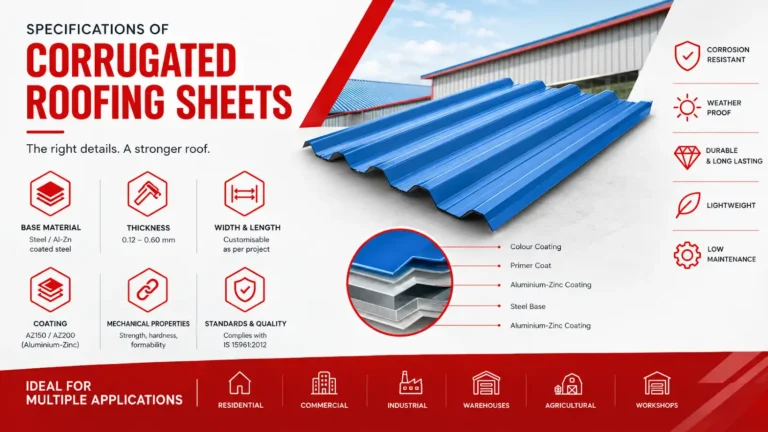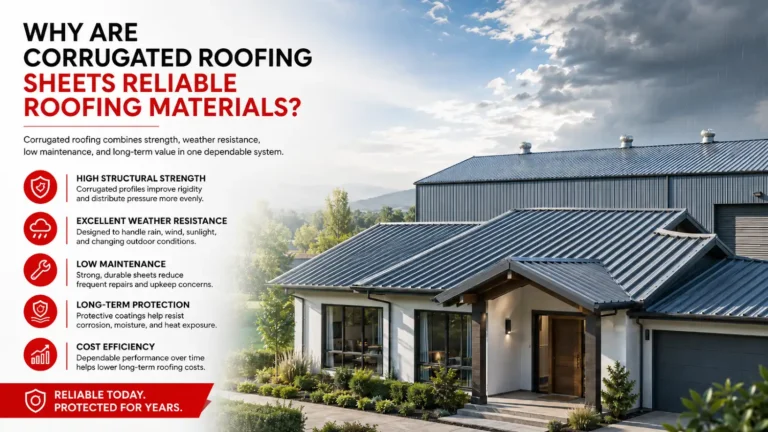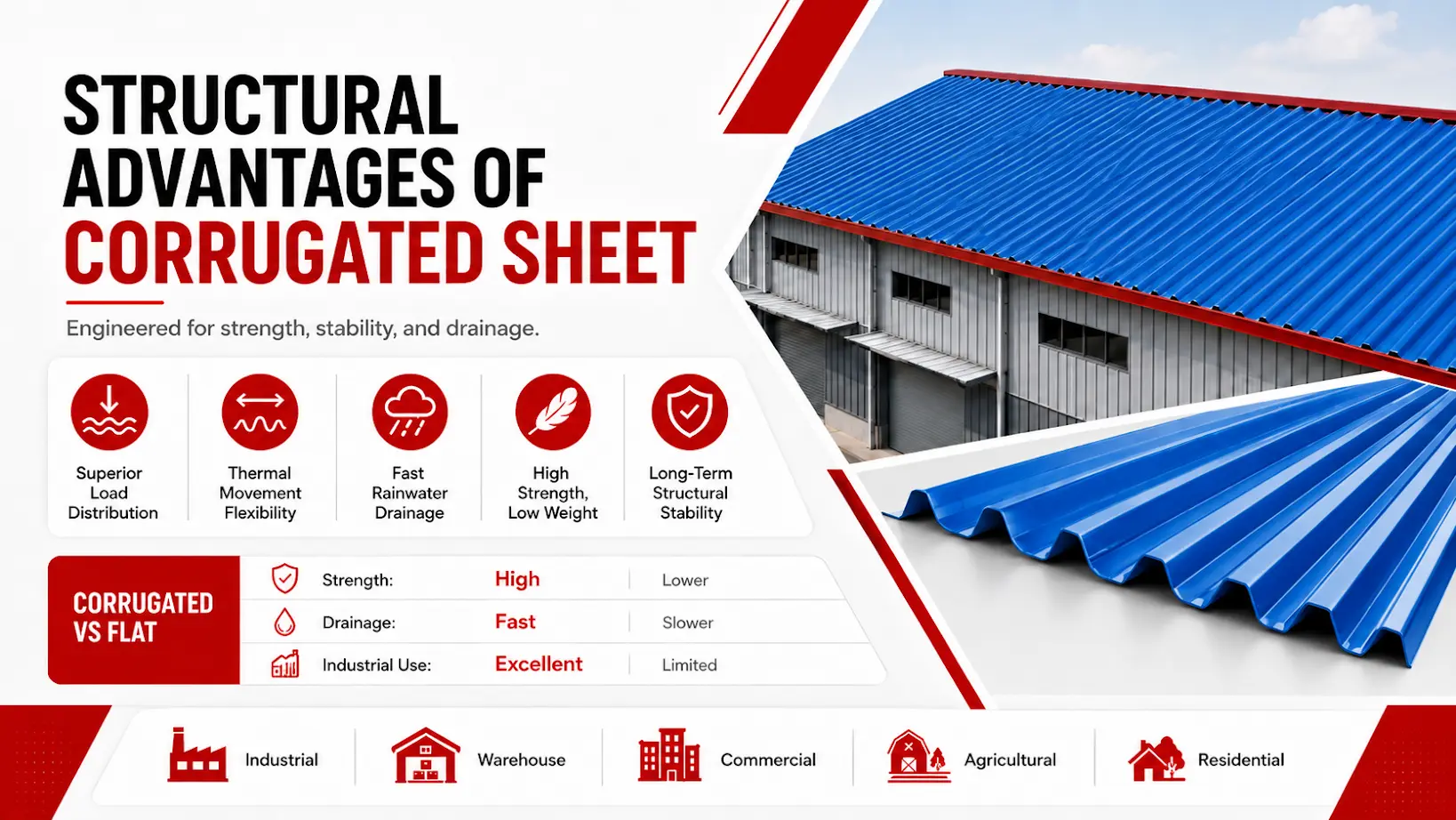
The performance of a roof is determined by more than its appearance. It plays a vital role in protecting the building, supporting the overall structure and ensuring that operations inside remain uninterrupted despite changing weather conditions. This is why the choice of roofing profile deserves careful consideration.
A corrugated sheet has remained one of the most trusted roofing solutions across industrial, commercial, agricultural and residential projects for many years. Its distinctive wave-shaped design is not just for appearance; it is engineered to improve strength, distribute loads more efficiently and withstand demanding environmental conditions.
In this guide, we explore the structural advantages that make corrugated sheets a preferred choice for modern construction.
Key Structural Advantages of Corrugated Sheets
The unique design of a corrugated sheet offers several practical benefits that contribute to the overall strength and stability of a building. Understanding these advantages of corrugated sheets makes it easier to prefer the corrugated sheets as a reliable roofing profile.
-
Superior Load Distribution
One of the biggest contributors to the structural strength of corrugated sheet is its carefully engineered profile. The ridges and valleys create additional rigidity, allowing the sheet to spread structural loads more evenly than a flat sheet. Because the sheet carries loads more efficiently, it is less likely to bend or deform over time.
This makes corrugated roofing an excellent choice for factories, warehouses, industrial sheds and commercial buildings where long roof spans require dependable structural support.
-
Better Resistance to Thermal Movement
Every roofing material naturally expands during hot weather and contracts when temperatures fall. Managing thermal expansion in roofing sheets is essential for maintaining long-term structural stability.
The corrugated profile is designed to accommodate this natural movement more effectively than many alternative roofing systems. When installed correctly with suitable fasteners and proper spacing, corrugated roofing continues to perform reliably through seasonal temperature changes. It helps to preserve both the roof’s appearance and its structural integrity.
-
Excellent Performance During Heavy Rainfall
The wave-shaped design of corrugated sheets naturally channels rainwater away from the roof surface, allowing it to drain quickly and efficiently.
This makes corrugated roofing particularly suitable as one of the most reliable heavy rainfall roofing solutions, especially in regions that experience prolonged monsoon seasons. This ability to manage heavy rainfall is one of the reasons corrugated roofing remains widely used across India.
-
High Durability with Minimal Weight
A roofing material should provide strength without placing unnecessary weight on the supporting structure. One of the most valued benefits of corrugated sheets is its excellent strength-to-weight ratio.
Although lightweight, corrugated steel roofing delivers impressive structural performance because its profile adds rigidity without increasing material consumption. The combination of lightweight construction and long-lasting durability makes corrugated roofing suitable for projects ranging from industrial buildings to commercial facilities.
-
Long-Term Structural Stability
The corrugated sheet durability seen in quality roofing products comes from the combination of premium steel, advanced protective coatings and precision manufacturing. Each of these elements works together to maintain the roof’s structural performance throughout its service life.
A properly manufactured corrugated roofing sheet is designed to resist corrosion, maintain its rigidity and withstand years of exposure to changing weather conditions. With regular inspections and routine maintenance, it continues protecting the building without significant structural deterioration.
-
Reliable Strength for Industrial Applications
Industrial buildings demand roofing systems that perform consistently under challenging operating conditions. The strength of corrugated roofing sheets makes them particularly suitable for these environments.
Its ability to withstand environmental stress while maintaining structural stability helps reduce maintenance requirements and supports uninterrupted operations. For industries seeking dependable roofing performance over many years, corrugated sheets continue to be a practical and cost-effective choice.
Types of Corrugation on Roofing Sheets
Corrugated roofing sheets are available in different types, each designed to meet specific structural and architectural requirements. Among the most widely used types of corrugated sheets are colour coated corrugated sheets, aluzinc corrugated sheets and asbestos corrugated sheets. While all are engineered to deliver durability, weather resistance and long-term performance, they differ in profile design, finish and ideal applications.
| Feature | Trapezoidal Profile of Rhino Star Colour Coated Sheets | Sinusoidal Profile of Rhino Gold Al-Zn Coated Sheets | Asbestos Sinusoidal Sheets |
|---|---|---|---|
| Profile Design | Angular trapezoidal ribs | Traditional wave-shaped or sinusoidal profile | Traditional corrugated or wave-shaped profile |
| Structural Strength | High rigidity for longer roof spans | Excellent load distribution through corrugated waves | Good strength and rigidity for general roofing applications |
| Material & Coating | Colour-coated steel with advanced paint protection | Galvalume-coated steel with aluminium-zinc alloy coating | Fibre-cement material, generally without a metallic coating |
| Corrosion Resistance | Excellent resistance to corrosion, UV exposure and harsh weather | Superior corrosion resistance, particularly in humid conditions | Resistant to rust and corrosion; performance depends on environmental conditions |
| Rainwater Drainage | Deep rib profile supports efficient water flow | Wave-shaped profile enables quick and effective drainage | Corrugated profile supports effective rainwater drainage |
| Appearance | Modern and contemporary finish | Classic corrugated look suitable for a wide range of buildings | Traditional, functional roofing appearance |
| Recommended Applications | Warehouses, factories, industrial buildings and commercial projects | Residential, agricultural, commercial and industrial buildings | Older industrial, agricultural and utility structures where existing asbestos-cement roofing is already present |
| Maintenance | Low maintenance with long-lasting colour retention | Low maintenance with dependable long-term performance | Generally low maintenance, but damaged or deteriorating sheets require specialist handling |
| Health & Safety | Does not contain asbestos | Does not contain asbestos | Contains asbestos if it is asbestos-cement roofing; poses a serious health risk if fibres are released during cutting, drilling, breaking or removal |
| Environmental Considerations | Steel can be recycled at end of life | Steel can be recycled at end of life | Disposal requires controlled handling; asbestos-containing material should not be treated as ordinary construction waste |
Conclusion
The popularity of the corrugated sheet is built on proven performance rather than design alone. Its engineered profile provides excellent load distribution, supports efficient water drainage, accommodates natural thermal movement and delivers dependable structural strength in a wide range of environments.
Corrugated roofing continues to offer a combination of durability, efficiency and low maintenance that few roofing materials can match. By choosing a high-quality corrugated roofing sheet from a trusted manufacturer and following recommended installation and maintenance practices, you can invest in a roofing solution that delivers reliable performance for decades.
Written and Verified by:
Rhino Roofs
Bio: Leading roofing sheet manufacturer with 50+ years of experience in the Northeast. Rhino Roofs provides colour coated, galvalume (Aluminium Zinc coated) and asbestos cement roofing sheets.
FREQUENTLY ASK QUESTIONS
The corrugated profile increases rigidity, allowing the sheet to distribute loads more efficiently and resist bending better than a flat sheet.
Temperature changes cause roofing sheets to expand and contract naturally. A corrugated profile accommodates this movement more effectively, helping reduce structural stress.
Yes. Their profile allows rainwater to drain quickly, making them an excellent choice for regions with frequent or heavy rainfall.
Choose a quality roofing sheet, ensure professional installation, inspect it regularly, keep drainage channels clean, and address minor issues before they become major repairs.