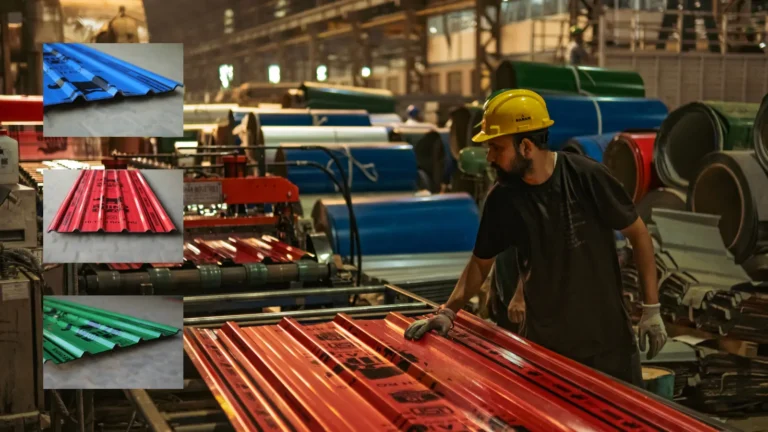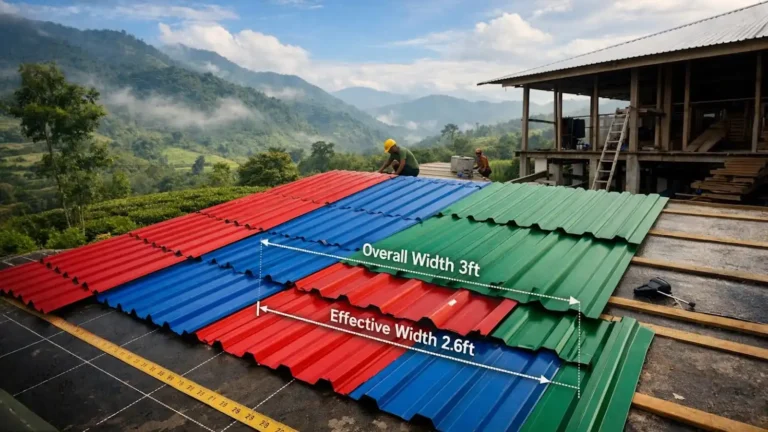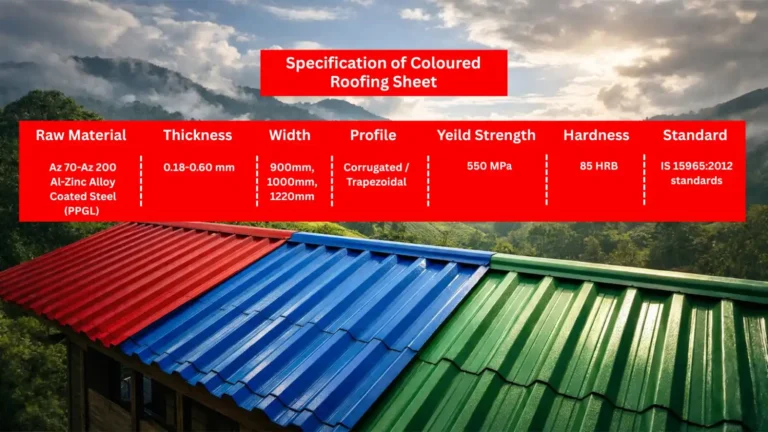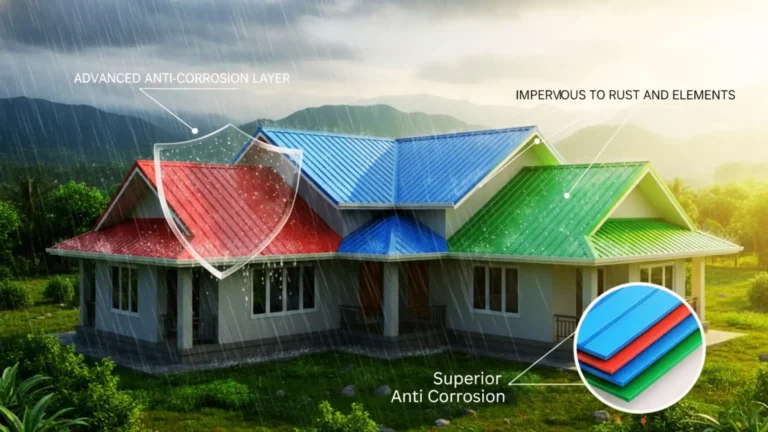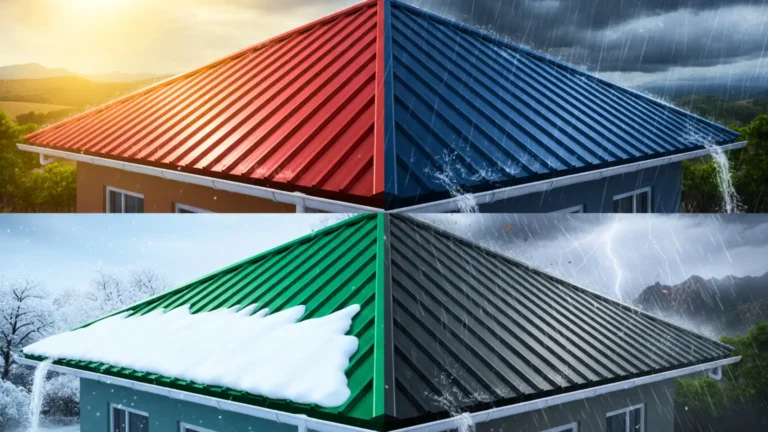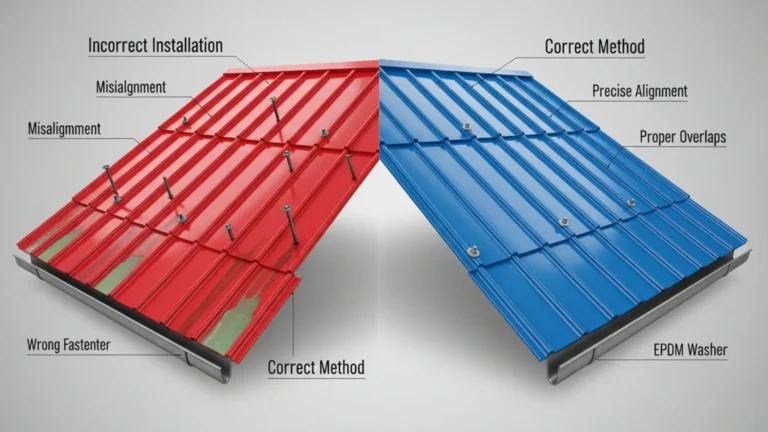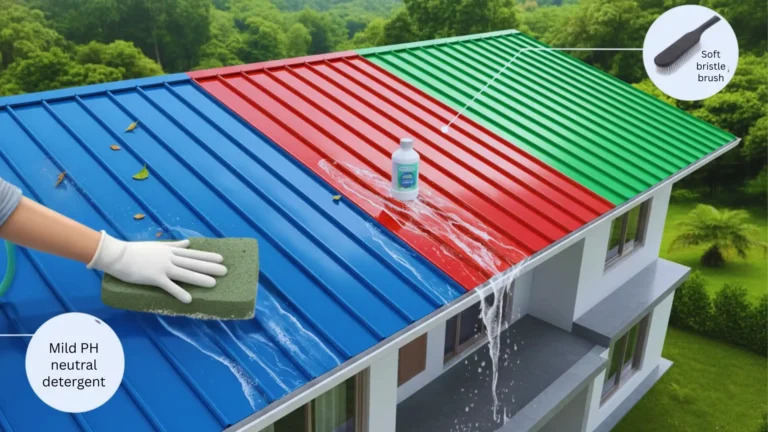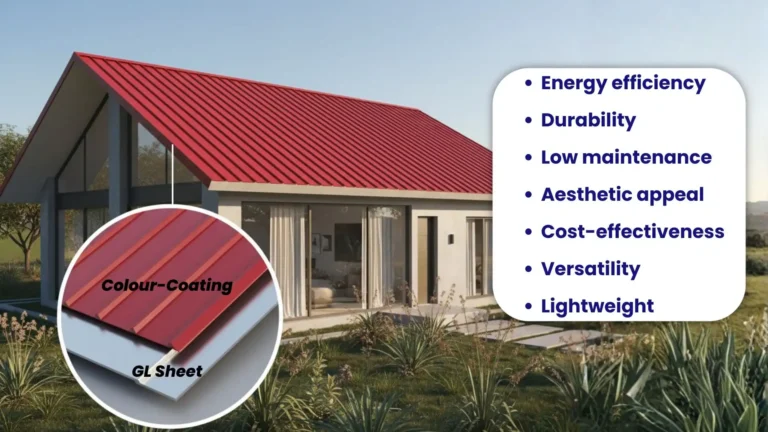
Roofing materials are expected to do far more than simply provide coverage. They must deliver long-term durability and resist corrosion as well as retain their visual appeal over time. This is where the manufacturing of a colour coated sheet becomes especially important.
Today, a colour roofing sheet is widely used across industrial, commercial and residential projects because it combines the strength of coated steel with advanced paint systems. Every step contributes to the overall quality from selecting the right raw materials to applying coatings and conducting final inspections.
This article explains how coloured roofing sheets are manufactured by a colour roofing sheet manufacturer and how each stage ensures consistent performance.
Raw Materials Selection in Colour Coated Sheet Manufacturing
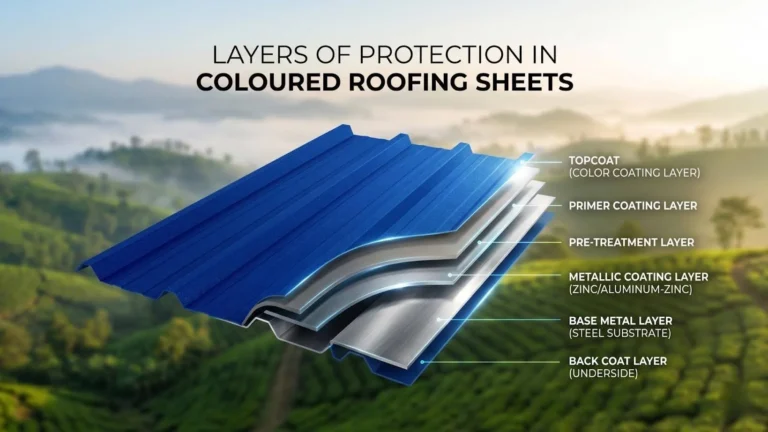
The manufacturing process starts with selecting a suitable base metal which is typically galvalume steel or aluminum zinc coated steel. These materials provide the structural strength and corrosion resistance required for roofing applications. The reliability of the final colour coated sheet depends significantly on the quality of this substrate.
Alongside the base metal, coating materials are equally important. The process involves multiple layers which includes primers and topcoats as well as sometimes back coatings. High-performance paint systems like polyester and silicon-modified polyester (SMP) also PVDF are commonly used because of their resistance to UV exposure and weathering. Careful selection of these materials ensures that the final coloured roofing sheet performs consistently across different environments.
Step-by-Step Manufacturing Process of Coloured Sheets
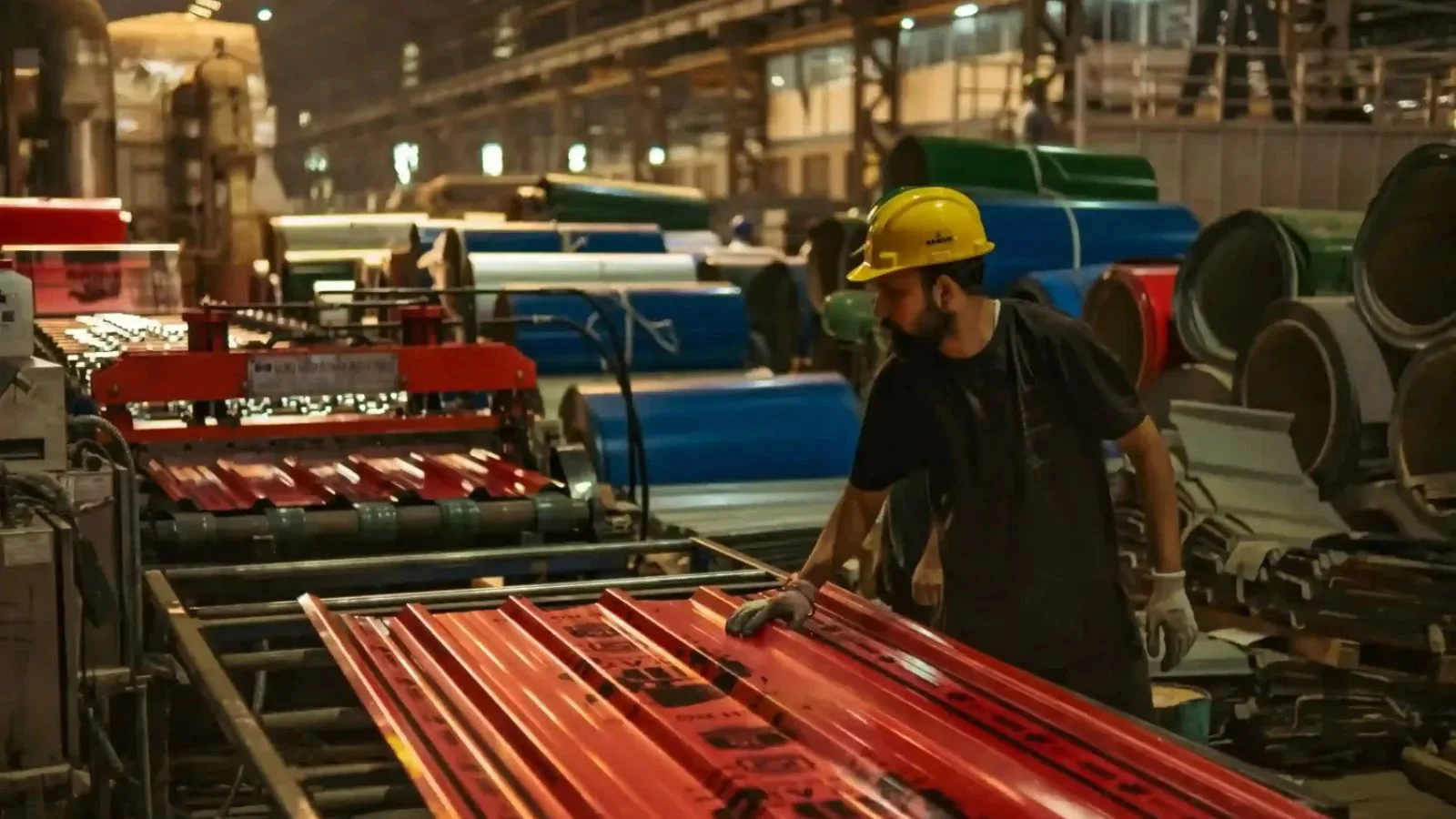
The manufacturing process is continuous, precise, and designed to maintain uniform quality across every sheet.
-
Surface Cleaning and Pre-Treatment
The process begins with thorough surface cleaning to remove oil and dust and any impurities from the steel sheet. This is typically carried out using chemical cleaning agents followed by rinsing.
The sheet undergoes a pre-treatment stage after cleaning. This step enhances paint adhesion and improves corrosion resistance by preparing the surface at a microscopic level. Proper pre-treatment is essential because minor contamination can affect how well the coating bonds with the metal. -
Coating Application (Primer and Topcoat)
Once the surface is prepared, a primer layer is applied to the sheet. This layer acts as a bonding agent and adds an extra level of protection. It is followed by the application of the topcoat, which determines the colour, finish, and weather resistance of the sheet.
Advanced roller coating techniques are used to ensure uniform application across the entire surface. The consistency of this process is critical, as it directly influences both the appearance and performance of the colour roofing sheet. -
Curing Process
The sheet passes through a curing oven where controlled heat is used to bond the paint layers to the metal surface after the coatings are applied. This step transforms the coating into a durable and stable layer.
Proper curing ensures that the coating achieves the required hardness and flexibility as well as resistance to environmental factors such as UV radiation and moisture. It also helps maintain the long-term appearance of the sheet without fading or peeling. -
Cooling and Finishing
Following the curing stage, the sheet is gradually cooled to stabilise the coating. Controlled cooling prevents thermal stress, which could otherwise lead to cracking or surface defects.
At this stage, additional finishing processes such as embossing or profiling may be carried out depending on the intended application. These processes prepare the sheet for installation in roofing or cladding systems. -
Cutting and Packaging
The sheets are cut into required sizes and shapes using precision machinery in the final stage. This ensures consistency in dimensions and compatibility with various construction needs.
The sheets are then carefully packaged to protect them during handling and transportation. Proper packaging plays an important role in maintaining the quality of the coloured roofing sheet until it reaches the site.
Conclusion
The manufacturing of a colour coated sheet is a carefully controlled process that combines advanced material selection with precise coating technology. From preparing the base metal to applying and curing the coatings every stage contributes to the overall performance of the final product.
A well-manufactured colour roofing sheet offers durability, corrosion resistance, and long-lasting appearance, making it a reliable choice for modern construction. Understanding how these sheets are made helps you choose high-quality coloured roofing sheets that perform well and last longer.
Written and Verified by:
Rhino Roofs
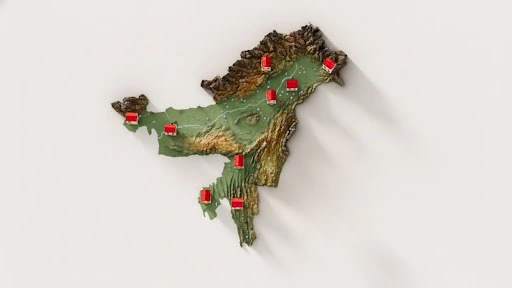
Bio: Leading roofing sheet manufacturer with 50+ years of experience in the Northeast. Rhino Roofs provides colour coated, galvalume (Aluminium Zinc coated) and asbestos cement roofing sheets.
FREQUENTLY ASK QUESTIONS
It is a steel sheet coated with protective paint layers to enhance durability, corrosion resistance, and appearance.
Galvanized steel or aluminum-zinc coated steel is commonly used as the base material.
Pre-treatment improves coating adhesion and enhances resistance to corrosion.
Through tests such as coating thickness measurement, adhesion testing, and corrosion resistance evaluation.