A roof usually does its job quietly. You notice it when something goes wrong like rust starts appearing, a fastener comes loose or water begins collecting or a section needs repair. For a home, that can be frustrating. For a warehouse, factory or commercial building, repeated roof problems can also disrupt day-to-day work.
That is why maintenance deserves attention when choosing a roofing material. A galvalume roofing sheet can be a practical choice for this reason. Its steel core is protected by an aluminium-zinc coating. Together, they help the sheet deal with moisture and changing weather conditions.
Still, there is an important difference between low maintenance and maintenance-free. Galvalume does not remove the need for sensible roof care. But with the right specification and installation, it can help reduce some of the problems that lead to frequent maintenance.
Why Galvalume Can Mean Less Maintenance
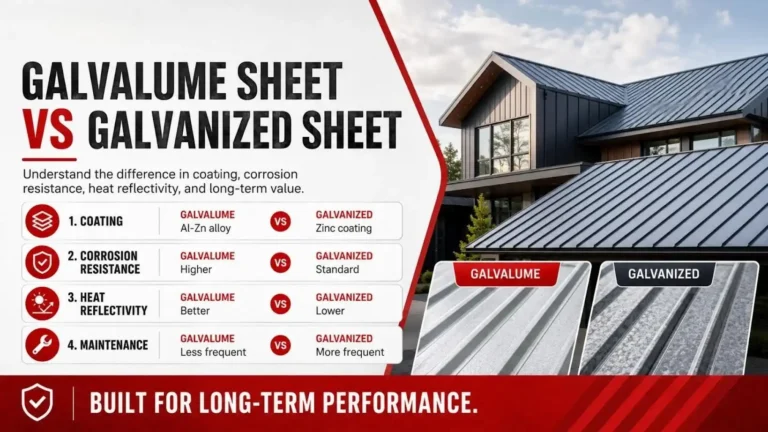
A galvalume sheet, also commonly called a gl sheet, consists of a steel substrate protected by an aluminium-zinc coating, unlike a galvanised sheet, which has a zinc-only coating (Learn more about the difference between galvalume sheet and galvanised sheet). Think of the coating as a protective layer between the steel and the outside environment.
Rain, humidity and temperature changes are all part of normal roof exposure, and this added protection can help limit the effect they have on the steel underneath.
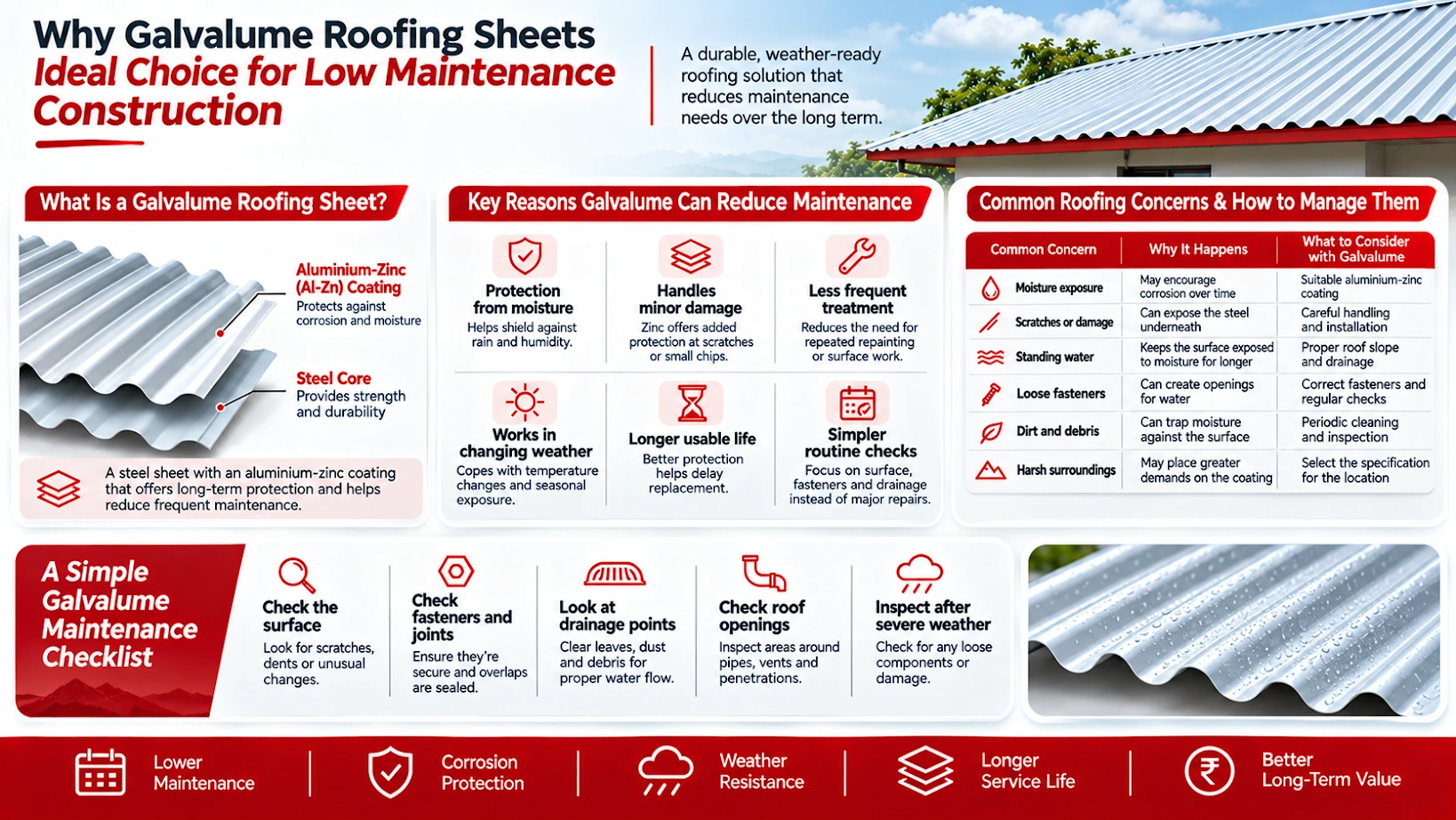
Key Reasons Galvalume Can Reduce Maintenance
- Protection against everyday moisture: The aluminium-zinc coating helps shield the steel from rain and humidity, which can reduce the risk of early corrosion.
- Additional protection around minor damage: Zinc can provide a degree of protective action when small areas of the coating are affected.
- Less frequent surface treatment: A suitable protective coating can reduce the need for repeated repainting or other surface treatments.
- Suitable for changing weather: Roofs regularly expand and contract as temperatures rise and fall. The right sheet specification and proper installation can help the roof cope with these changes.
- Lower risk of premature replacement: Better protection against corrosion and surface deterioration can help individual sheets remain usable for longer.
- Straightforward routine checks: Regular inspections can focus on the surface, fasteners, joints and drainage instead of constantly dealing with major repairs.
Low maintenance comes from good protection combined with good roofing practice. Even a corrosion-resistant sheet can face problems if water remains trapped, fasteners are poorly fitted or the protective surface is damaged during installation.
| Common roofing concern | Why it can become a problem | What to consider with Galvalume |
|---|---|---|
| Moisture exposure | May encourage corrosion over time | Suitable aluminium-zinc coating |
| Scratches or surface damage | Can expose the steel underneath | Careful handling and installation |
| Standing water | Keeps the surface exposed to moisture for longer | Proper roof slope and drainage |
| Loose fasteners | Can create openings for water | Correct fasteners and regular checks |
| Dirt and debris | Can trap moisture against the surface | Periodic cleaning and inspection |
| Harsh surroundings | May place greater demands on the coating | Select the specification for the location |
This is where the benefits of galvalume roofing sheets become more meaningful. The value is not simply in claiming that the material lasts a long time. It is in reducing the number of problems that can turn into repair work.
Installation Can Create Maintenance Problems Too
Cutting and drilling can damage the protective surface if they are not done properly. Incorrect overlaps can create paths for water. Poor drainage can leave water sitting on the roof, while unsuitable fasteners can create their own problems.
This is why low maintenance roofing solutions using galvalume are about more than the sheet itself. The entire roof needs to be considered. Correct support spacing, suitable fasteners, proper overlaps, adequate drainage and careful handling all contribute to long-term performance.
It is also sensible to inspect the roof after installation. A small scratch, loose fastener or blocked drainage point is much easier to deal with before it develops into a larger problem.
A Practical Galvalume Maintenance Risk Checklist
Low maintenance does not mean forgetting about the roof. A simple inspection routine can help catch problems while they are still small.
- Check the surface
Look for scratches, dents, peeling or unusual changes in the sheet surface. - Check fasteners and joints
Make sure fasteners remain secure and that overlaps are not allowing water to enter. - Look at the drainage points
Leaves, dust and other debris can stop water from draining properly and should be cleared when necessary. - Pay attention to roof openings
Areas around pipes, vents and other roof penetrations can become potential points of water entry. - Inspect after severe weather
Heavy rain and strong winds can loosen components or cause damage that may not be obvious from the ground.
This turns maintenance into a small, planned task instead of waiting for a leak or serious corrosion to reveal a problem.
Why Lower Maintenance Can Matter Financially
Consider two roofs with similar installation costs. If one needs frequent repairs, surface treatment and replacement of damaged sections while the other mainly needs routine inspection and occasional care, the difference can become significant over the years.
There is also the cost of disruption. For a factory or warehouse, roof repairs may affect stored materials, equipment or daily operations. Even a short interruption can be inconvenient and expensive.
That is why looking at galvalume products from a longer-term perspective can be more useful than comparing only the price of each sheet.
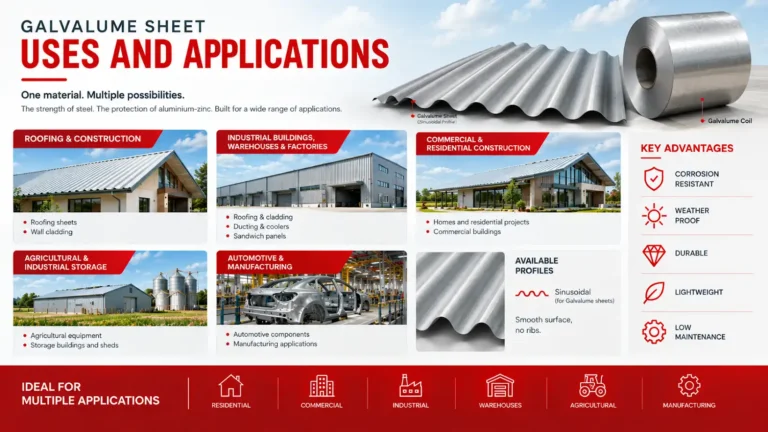
Check more about the uses and applications of galvalume sheets.
Conclusion
The appeal of a galvalume roofing sheet goes beyond its appearance or basic strength. Its aluminium-zinc coating provides an important layer of protection that can help reduce common corrosion and weather-related problems.
But the material alone does not determine how well a roof performs. Thickness, coating level, location, drainage, installation quality and routine care all play a part.
That is why galvalume roofing works best when treated as a long-term roofing decision rather than simply another construction material. Choose the specification according to the building, install it carefully and keep up with simple inspections. The result can be a roof that needs attention when necessary, without turning maintenance into a constant chore.
Written and Verified by:
Rhino Roofs
Bio: Leading roofing sheet manufacturer with 50+ years of experience in the Northeast. Rhino Roofs provides colour coated, galvalume (Aluminium Zinc coated) and asbestos cement roofing sheets.
FREQUENTLY ASK QUESTIONS
Their aluminium-zinc coating helps protect the steel underneath from corrosion, reducing the risk of frequent surface repairs when the sheets are properly installed and maintained.
Generally, they do not need routine repainting like some uncoated steel surfaces. However, scratches, coating damage and local environmental conditions may require attention.
They may be suitable, but salt-laden air can increase corrosion risk. The coating specification, installation details and maintenance requirements should be assessed carefully before choosing them.
Not necessarily. Thickness affects structural strength, while the aluminium-zinc coating contributes to corrosion protection. Both should match the building’s requirements and environment.
Keep drainage paths clear, check fasteners and roof joints, and inspect for scratches or damage after severe weather. Addressing small issues early can help prevent costly repairs.