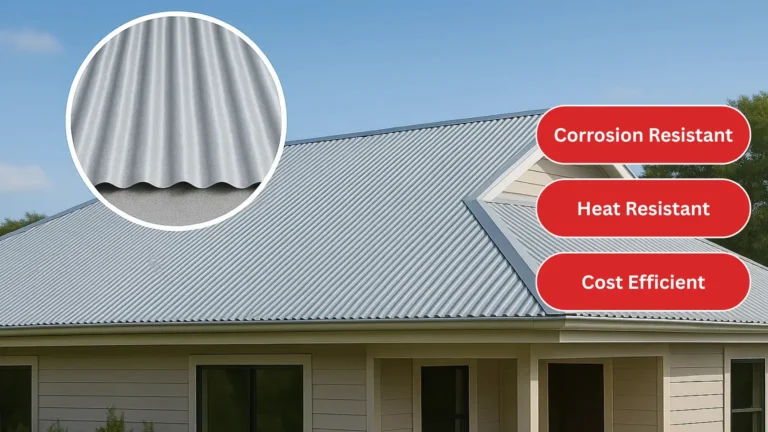
A roof can make a noticeable difference to the comfort of a building, particularly during India’s hot summer months. While insulation and ventilation play their part, the roofing sheet itself also matters. The material, coating and even the colour of the roof can affect how much sunlight and heat the roof absorbs.
This is why a cooling sheet is increasingly considered for homes, industrial buildings, warehouses and commercial spaces. A suitable cooling sheet for the roof can offer a practical balance between heat management, durability and appearance. But what makes a roof sheet effective for managing heat, and how should you choose the right one for your building?
Let’s explore the key features, materials, colours, benefits and applications of cooling roof sheets.
What are the Benefits of Using Cooling Roof Sheets?
Cooling roof sheets are roofing sheets finished with highly reflective, high-emissivity coatings that send the sun’s heat back into the sky instead of letting it soak into the building. This matters because in tropical countries, the roof is where a building gains the most heat. A dark concrete roof absorbs roughly 85% of the sunlight that hits it, while a white reflective cool roof absorbs only 20-30%. Cooling roof sheets keep both the roof surface and the space below noticeably cooler, which makes them a practical choice for homes, factories, warehouses and commercial buildings in hot climates.
Solar Reflectance and Heat Reduction
- Reflects more sunlight: Cool roofs reflect more of the sun’s energy and absorb less heat than traditional roofs, so less heat passes into the building.
- Much cooler roof surface: At the peak of summer, they can run up to 28-33°C cooler than conventional rooftops.
- Sheds absorb heat quickly: High thermal emittance lets the sheet release the heat it does absorb, keeping its surface temperature lower.
- Cool in colours, not just white: Factory coatings with cool pigments reflect much more solar heat than ordinary paint of the same shade. Depending on the colour, coated metal roofs reach an SRI of 25 to 81.
- More comfortable interiors: Cool metal roofing lowers energy needs in air-conditioned buildings and makes buildings without AC more comfortable.
Energy Efficiency Benefits
- Lower cooling bills: Studies show a cool metal roof can cut cooling costs by up to 20%.
- Less strain on the power grid: Lower demand for building cooling also means lower emissions from power plants.
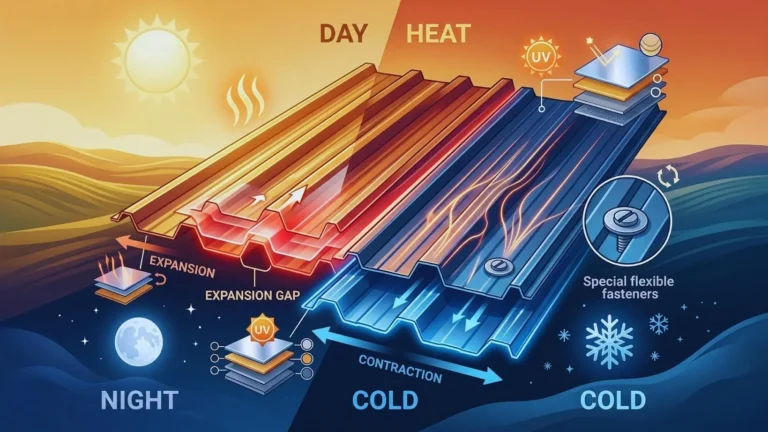
- Longer roof life: Reflecting more solar heat reduces thermal stress, warping and the expansion and contraction of the sheet. Research on roofing shows sun-driven heat is among the strongest causes of degradation.
- Supports green building ratings: IGBC, GRIHA, LEED and India’s energy codes all use SRI to define what counts as a cool roof.
- Cooler surroundings: Roofs that absorb solar heat contribute to the urban heat-island effect and raise the energy needed to cool the area around them. Cooling sheets absorb less heat, so they help reduce that effect.
Top Cooling Roofing Sheets and Material Types
Not every cooling roofing solution works in the same way. Some materials help reflect sunlight, while others reduce the transfer of heat into the building through insulation. The right option depends on the building’s purpose, roof design, local climate and budget.
Here are some commonly used cooling roofing materials and systems:
-
PUF Insulated Sandwich Panels
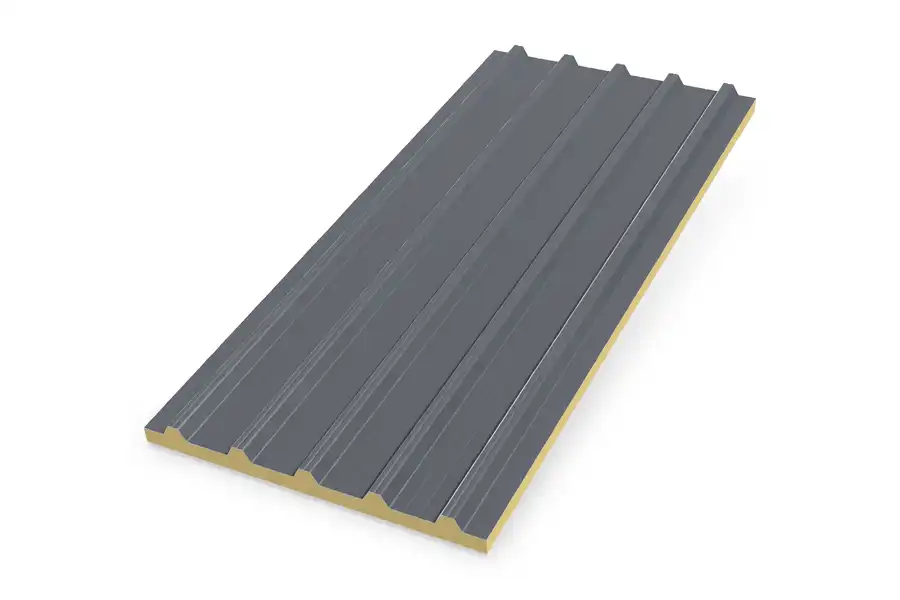
PUF (Polyurethane Foam) insulated sandwich panels consist of an insulating foam layer placed between two metal sheets. The foam core helps reduce heat transfer from the outside into the building, making these panels useful for spaces where indoor temperature control is important. Their insulation performance depends on the foam thickness, density, panel joints and installation quality.
-
Aluminium / Silver Reflective & Bubble Sheets
Aluminium and silver reflective sheets are designed to reflect a portion of the radiant heat reaching the roof. Some products also include bubble insulation layers that help reduce heat transfer when installed as part of a suitable roofing system.
These materials are often used beneath metal roofing sheets in warehouses, sheds and industrial structures. Their performance depends on the reflective surface, insulation layer and correct installation. An appropriate air gap may also be needed for reflective insulation to work effectively.
-
Colour Coated & Alloy Metal Roof Sheets

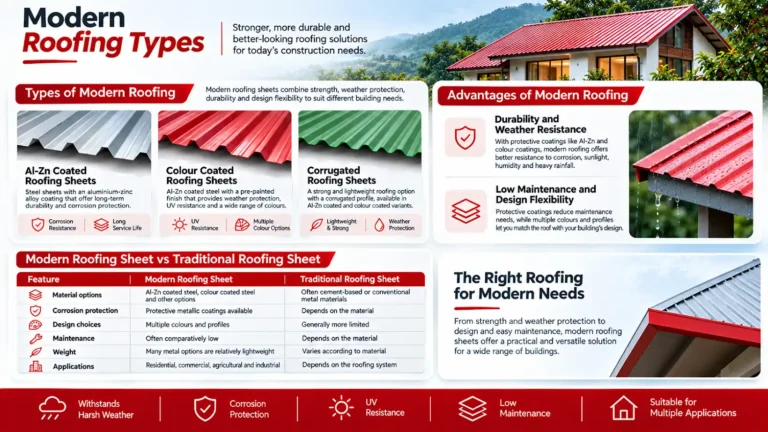
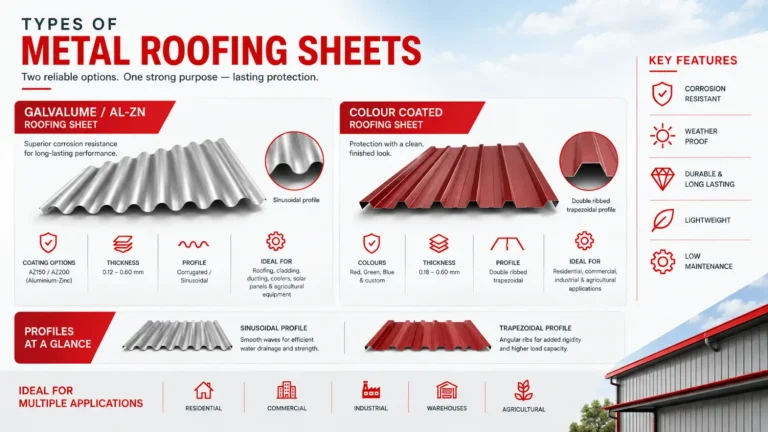
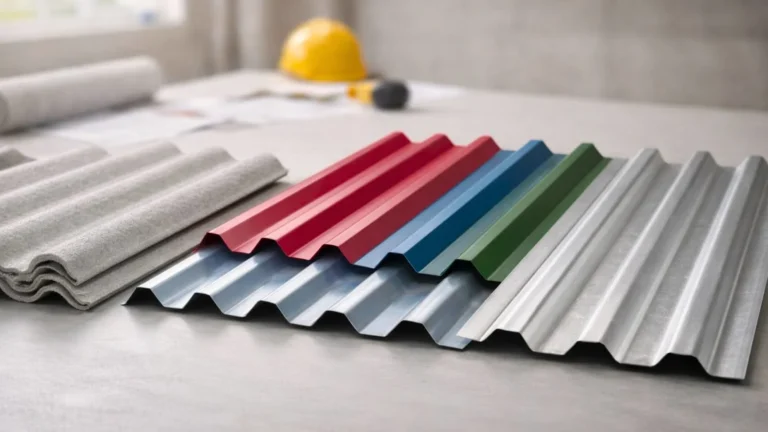
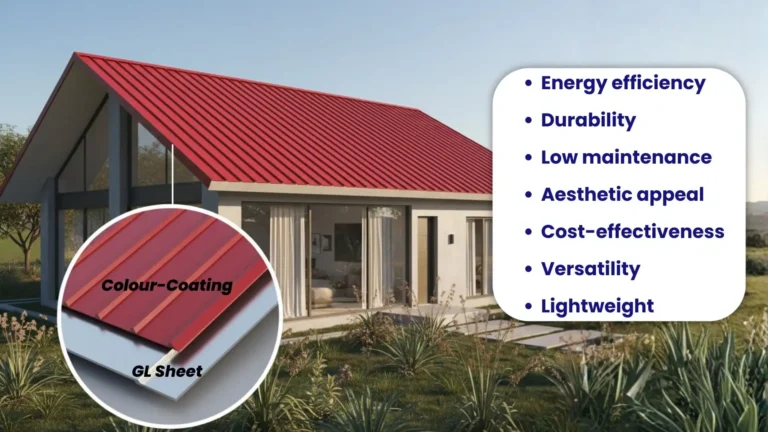
Colour coated and alloy metal roofing sheets combine the strength of steel with protective surface coatings. Lighter and more reflective roof colours can help reduce solar heat absorption compared with darker shades. These sheets are suitable for residential buildings, commercial spaces, factories and warehouses. Their overall performance also depends on the coating specification, sheet thickness, insulation and ventilation.
-
Polycarbonate Multiwall Sheets
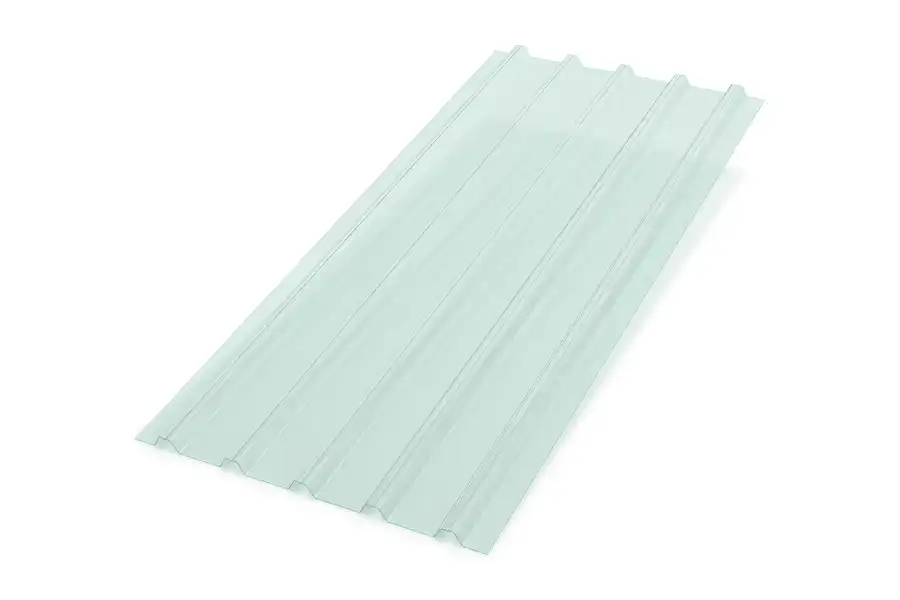
Polycarbonate multiwall sheets contain multiple internal layers separated by hollow spaces. These spaces help provide insulation while allowing natural light to pass through the roofing surface.
They are commonly used in skylights, covered walkways, patios, courtyards and industrial spaces where daylight is required. However, clear sheets can allow significant solar heat and light into a building, so selecting a suitable tinted or heat-control variant is important.
-
Cool Roof Coatings (High-SRI)
Cool roof coatings are reflective surface treatments applied to suitable existing or new roofs. They are designed to reflect more sunlight and release absorbed heat more effectively.
Some products have a high solar reflectance index (SRI), which indicates their ability to reflect solar energy and release heat compared with reference surfaces. They can be applied to compatible metal, concrete and other roof surfaces, depending on the product specifications.
These coatings can be useful when upgrading an existing roof without replacing the entire roofing system. However, surface preparation, compatibility, application thickness and maintenance all influence their performance.
Comparison Table of Roofing Sheet Types and Their Heat Reduction Performance
| Roofing type | Key heat data | How it handles heat | Heat reduction (1-5) | Best for | Watch out |
|---|---|---|---|---|---|
| PUF Insulated Sandwich Panels | PU foam core λ ≈ 0.022 W/m·K; U ≈ 0.56 W/m²·K at 40 mm, ≈ 0.2 at 100 mm | Foam core blocks conducted heat between two metal skins. The only option here that is true insulation. | Excellent | Cold storage, pharma, factories, offices, PEB buildings | Highest cost; check fire class of the core; joint sealing affects performance |
| Clay and Concrete Tiles | Ventilated clay tile (SR 0.54) cut peak roof-deck heat flow to ~30% of an asphalt-shingle roof (ORNL field test) | Heavy tiles absorb heat slowly; the air gap under each tile vents heat out at the ridge, worth roughly 24-30 points of extra reflectance | Very good | Homes, villas, sloped residential roofs | Heavy, needs a strong structure; stored heat releases into the evening; plain red or grey tiles reflect less than light or cool-coated ones |
| Standing Seam Metal Sheet | Factory cool PVDF finishes: SRI ≈ 24 (dark) to 86 (white) | Concealed-fastener interlocking panels, usually Galvalume or aluminium. Heat depends on the coating; the sealed seams suit an insulated build-up underneath | Good (higher when laid over insulation) | Premium commercial, institutional and architectural roofs | Higher cost than through-fastened sheets; dark colours run hot |
| Colour Coated Galvalume Sheet | Painted metal SRI ≈ 25 (dark) to 81-86 (white); the paint, not the substrate, sets reflectance | Thin steel passes heat quickly; light and cool-pigment colours reflect far more sun than dark ones | Good in light/cool colours; Moderate in dark | Industrial sheds, warehouses, homes | Dark shades run very hot; needs under-deck insulation or a false ceiling for comfort |
| UPVC Sheet | Brand-quoted λ ≈ 0.07-0.33 W/m·K (steel ≈ 50) | Conducts heat far slower than metal; ASA top layer resists UV; foam-core versions insulate better. Gain over a light-coloured metal sheet is smaller than brochures suggest | Good | Chemical and coastal plants, poultry, farmhouses | Claims vary widely, ask for a tested λ value; rated to about 80 °C; sags if purlin spacing is too wide |
| Aluzinc Sheet | Same 55% Al-Zn coating as Galvalume, sold bare. Reflects up to ~80% of sunlight; SR 0.77 new to 0.51 after 3 years; emissivity ≈ 0.08; SRI ≈ 50-72 | Shiny surface bounces most sunlight, but low emissivity means absorbed heat sheds slowly; reflectance dulls with weathering | Good | Factories, warehouses, agricultural sheds in hot regions | Glare; performance drops over the first 2-3 years; corrodes in contact with wet mortar or animal waste |
| Colour Coated Galvanized Sheet | Same paint range as coated Galvalume; bare zinc SR 0.58 new to 0.25 after 3 years (SRI 32) | Same heat behaviour as coated Galvalume when new; where paint wears, the zinc base darkens and absorbs more heat | Good when new; drops with age | Budget sheds, temporary structures | Shorter service life; reflectance falls faster as the coating ages |
| Asbestos Sheet | Asbestos-cement λ ≈ 0.58 W/m·K; solar absorptivity up to ~0.96 | Conducts slower than metal but absorbs nearly all sunlight, then keeps radiating heat indoors after sunset | Moderate | Legacy sheds only; not advised for new builds | Asbestos fibres are a serious health hazard; never cut, drill or break without proper precautions |
| Bituminous Sheet | λ ≈ 0.04-0.10 W/m·K (Onduline tests); 3 mm sheet U ≈ 4.4 W/m²·K | Fibre-bitumen sheet conducts slowly and dampens rain noise, but it is thin and usually dark, so the surface runs hot | Moderate | Garages, stables, low-cost sheds | IS 12583 tests it at 70 °C for 2 hours; extreme heat can soften it; shorter life than metal |
| Asphalt Shingles | SR 5-15% (dark), 25-35% (white); black shingles reach 77 °C on a 21 °C day; cool shingles SR 0.25-0.40 | Mineral-granule surface absorbs most solar heat, especially near-infrared; relies on attic insulation and ventilation | Low (cool shingles: Moderate) | Steep-slope homes on a solid deck | Needs a solid deck and underlay; heat speeds up ageing; uncommon on Indian roofs |
| Polycarbonate Sheet | Light transmission ~30-80%; SHGC 0.75 (clear 25 mm multiwall) to 0.43 (opal) | Lets sunlight, and its heat, straight into the space; multiwall air cells insulate better than solid sheet; solar-control tints cut heat gain | Low (opal or solar-control multiwall: Moderate) | Skylights, walkways, canopies, daylight panels | Not a full-roof solution in hot climates; clear sheets create a greenhouse effect |
* Figures are typical values from lab data, they vary by brand, thickness, colour and installation.
PUF insulated sandwich panels cut roof heat gain the most, followed by clay and concrete tiles. Clear polycarbonate and standard asphalt shingles let in the most heat. For single-skin sheets, the surface colour and coating matter more than the base material.
Heat Matrics Used
| Metric | What it measures | Better for heat reduction |
|---|---|---|
| Solar reflectance (SR) | Share of sunlight bounced off the surface, 0-1 | Higher |
| Thermal emissivity | How readily the surface sheds heat it has absorbed, 0-1 | Higher |
| Solar Reflectance Index (SRI) | SR and emissivity combined; standard black = 0, standard white = 100 | Higher |
| Thermal conductivity (λ) | How fast heat moves through the material, W/m·K | Lower |
| U-value | Heat passing through the whole sheet or panel, W/m²·K | Lower |
| Solar heat gain coefficient (SHGC) | Share of solar heat passing through a translucent sheet, 0-1 | Lower |
For any single-skin sheet, adding under-deck insulation or a false ceiling lifts its real-world performance by a tier or more.
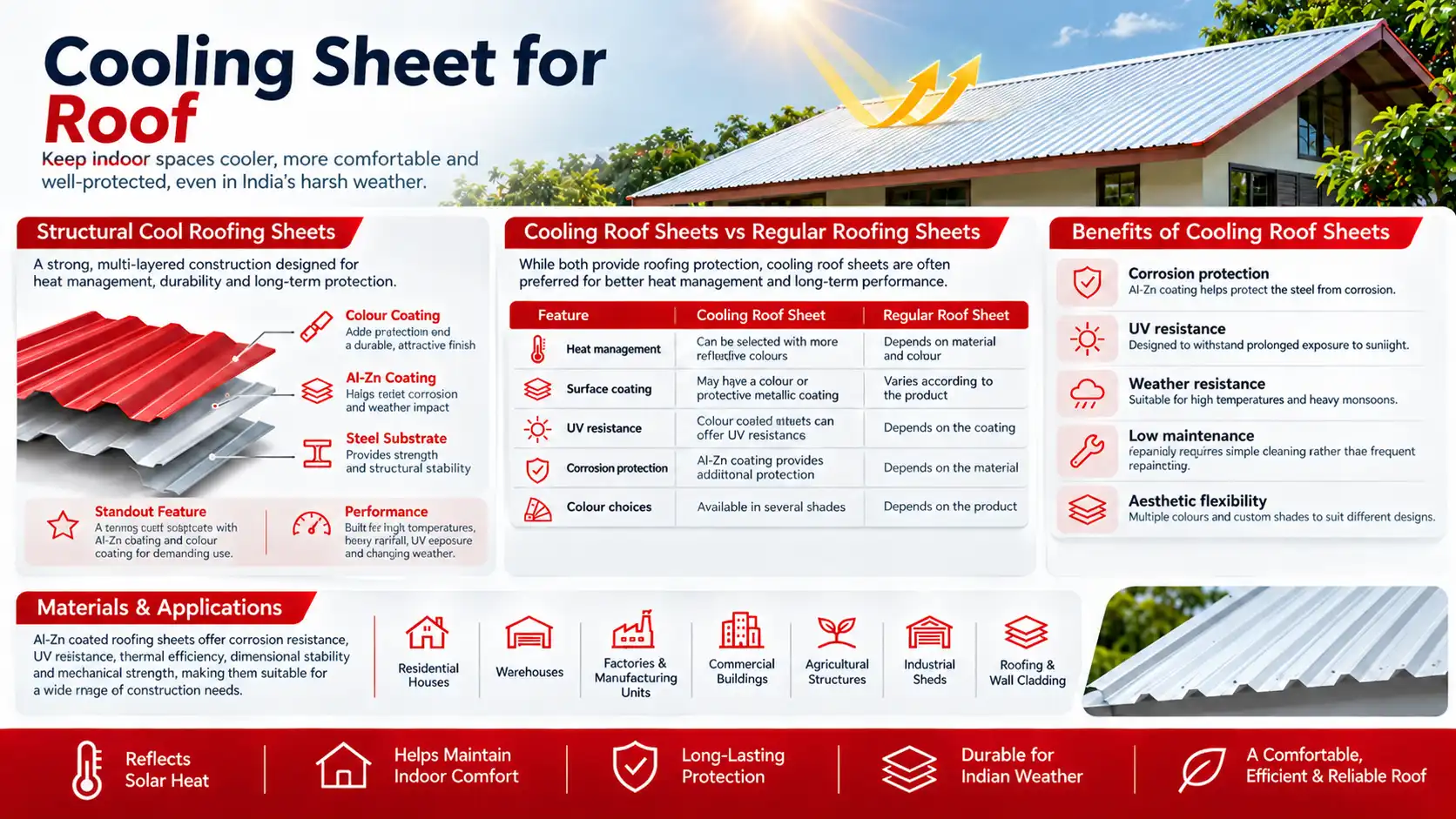
Cooling Roof Sheets vs Regular Roofing Sheets
Not all roofing sheets perform in exactly the same way. The material, protective coating and colour can influence how a roof behaves when exposed to sunlight and moisture.
| Feature | Cooling Roof Sheet | Regular Roof Sheet |
|---|---|---|
| Heat management | Can be selected with more reflective colours | Depends on material and colour |
| Surface coating | May have a colour or protective metallic coating | Varies according to the product |
| UV resistance | Colour coated sheets can offer UV resistance | Depends on the coating |
| Corrosion protection | Al-Zn coating provides additional protection | Depends on the material |
| Colour choices | Available in several shades | Depends on the product |
Best Cooling Roof Sheet for Different Applications
| Application | Typical Buildings | Best Cooling Roof Sheet | Why It Works | Also Consider |
|---|---|---|---|---|
| Residential | Independent homes, villas, rooftop rooms, farmhouses | Colour coated Galvalume sheet in a light or cool-pigment colour, with under-deck insulation. For living spaces directly under the roof, PUF insulated sandwich panels. | Lightweight and long-lasting, with a wide choice of colours that still reflect heat. Insulation keeps rooms below comfortable. | Clay or concrete tiles for sloped roofs on strong structures; multi-layer UPVC sheets for farmhouses and outbuildings |
| Commercial | Offices, showrooms, malls, schools, hospitals, hotels | Standing seam metal roof with a cool PVDF finish laid over insulation, or PUF insulated sandwich panels | High-SRI finishes cut heat gain. Concealed-fastener seams give a leak-resistant, premium look. Helps buildings work toward green building ratings. | Opal or solar-control multiwall polycarbonate for skylights and atriums only |
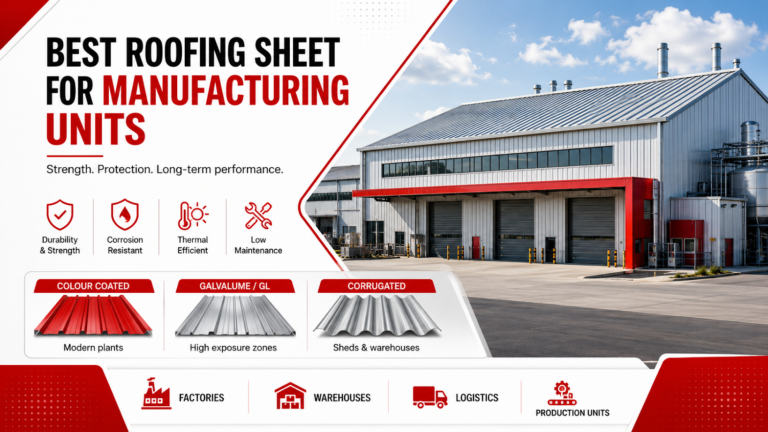
| Industrial | Factories, warehouses, cold storage, pharma and food processing units, PEB sheds | PUF insulated sandwich panels for temperature-controlled spaces. Cool-coated Galvalume or bare Aluzinc sheets for general sheds and warehouses. | PUF panels block heat and control condensation. Aluminium-zinc sheets reflect sunlight and resist corrosion economically over large spans. | UPVC sheets for chemical or corrosive environments; polycarbonate daylight strips to cut lighting costs |
The best cooling roof sheet depends on what happens under the roof. Spaces that must stay at a steady temperature benefit most from insulated panels: sandwich roof panels are widely used in cold storage, pharmaceutical and food processing facilities, where stable roof-level temperatures and condensation control are critical. For homes, shops and general sheds, a light or cool-coloured metal sheet offers the best balance of heat reduction, durability and cost. Cool metal roofs hold up well even against white membrane roofing. For any building, ask for tested SRI values before buying, because IGBC, GRIHA, LEED and India’s energy codes all use SRI to define a cool roof. Pair the sheet with good insulation and ventilation. Avoid dark shades and asbestos sheets, which absorb the most heat and, in the case of asbestos, pose serious health risks.
Factors to Consider When Choosing a Cooling Roof Sheet
Choosing a cooling roof sheet is about more than picking the lightest colour. How well a sheet keeps a building cool over the years depends on three things: the local climate it faces, how long its coating keeps its reflectance, and how it is installed on the structure. Weighing these together helps make sure the roof keeps delivering lower temperatures and energy savings long after installation day.
Climate and Environmental Conditions
- Heat intensity and building type: Cooling savings are highest in hot climate zones, especially for single-storey buildings with poor insulation.
- Cooler or heating-dominated regions: Where heating matters more than cooling, a surface with moderate reflectance and low emittance can save more energy than a highly reflective one.
- Coastal and industrial areas: For salty or polluted air, choose an aluminium-zinc (Galvalume/Aluzinc) base. Under the same outdoor conditions it lasts at least twice as long as galvanized steel.
- Dust and weathering: Reflectance can drop as the roof ages. For example, bare Galvalume falls from 0.77 to 0.51 over three years, while a good painted finish like Alamo holds steady at 0.55.
- Special environments: Avoid Galvalume over livestock, because it corrodes faster than galvanized metal when exposed to animal urine. Keep it out of contact with wet mortar and concrete, which also corrode it quickly.
Coating Quality and Longevity
- Aged values, not just new values: Ask for both initial and 3-year aged reflectance. One common cool roof benchmark requires initial reflectance of at least 0.25 and 3-year aged reflectance of at least 0.15 for steep roofs. For low-slope roofs, the minimums are 0.65 and 0.50.
- Colour choice: Within the same paint range, a white finish can reach an SRI of 86 while a darker shade sits around 24.
- Paint system and warranty: Premium PVDF (Kynar 500) coatings come in 40+ colours with 30-year colour warranties.
- Verified test data: Prefer sheets whose reflectance, emittance and SRI are measured to recognised ASTM test methods, rather than relying on brochure claims.
- Substrate quality: An aluminium-zinc coated base lasts about three to six times longer than galvanized steel, which helps the coating perform for longer.
Installation and Structural Considerations
- Roof slope: Low-slope roofs need much higher reflectance to count as cool. To meet LEED, a roof needs an SRI of at least 29 if steep and 78 or higher if low-slope.
- Insulation and ventilation: A well-insulated roof already blocks most heat, so adding a cool roof may cut cooling by only 5-10% instead of 20-25%. A ventilated air gap under the roof cover can deliver a benefit roughly equal to 30 points of extra surface reflectance.
- Structural load and supports: Check purlin spacing for the chosen sheet; UPVC sheets, for example, typically need supports every 600-900 mm depending on thickness. Heavier roofing like tiles needs a stronger structure: typical tile roof loads run about 900-1,500 pounds per 100 sq ft.
- Joints and sealing: Seal laps and joints properly. Leaky joints can let far more heat escape through air movement than passes through the panel itself.
- Careful handling and fixing: Use the manufacturer’s recommended fasteners and avoid scratching the coating during installation. Damaged areas lose reflectance and corrode faster.
Conclusion
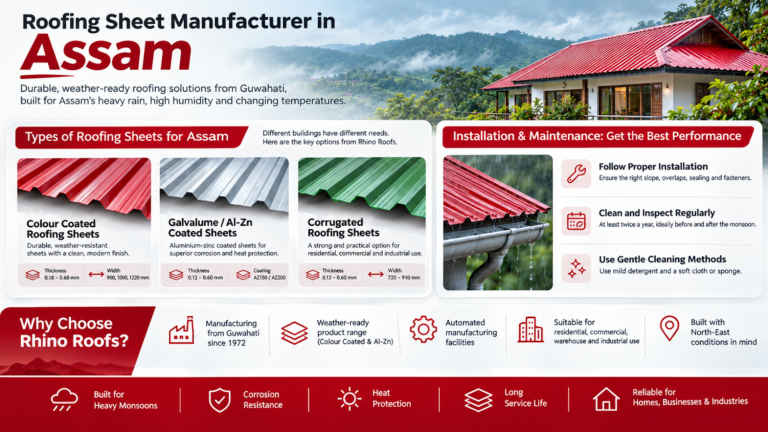
Indian buildings face a combination of intense sunlight, seasonal rainfall, humidity and changing temperatures. The roofing material therefore needs to be selected with the local environment in mind.
For a building exposed to strong sunlight, choosing the best cooling sheet for the roof should not be based on colour alone. This is particularly relevant in regions that experience heavy monsoons as well as high temperatures. A roofing sheet needs to manage both conditions while providing dependable protection.
Ultimately, the best choice is one that brings together heat-reflective properties, corrosion resistance, weather protection, structural strength and a finish that suits the building.
Written and Verified by:
Rhino Roofs
Bio: Leading roofing sheet manufacturer with 50+ years of experience in the Northeast. Rhino Roofs provides colour coated, galvalume (Aluminium Zinc coated) and asbestos cement roofing sheets.
FREQUENTLY ASK QUESTIONS
A cooling sheet is a roofing sheet selected to help reduce solar heat absorption while providing protection against weather and other environmental conditions.
Lighter shades such as white, cream and light grey generally reflect more solar radiation and are therefore preferable when reducing heat absorption is the priority.
The right colour depends on the home’s design and climate. Lighter shades can be considered where heat reflection is important, while colours such as blue, red and green can be chosen for aesthetic preferences.
Yes. Colour coated roofing sheets made with Al-Zn coated steel are designed to provide protection against conditions such as sunlight, high temperatures and heavy rainfall.