Introduction
If you’re building a roof, wall cladding, or any structure that needs to survive harsh weather, the choice of metal sheets can make all the difference.
For years, galvanised iron (GI) sheets have been the go-to. But there’s a new contender that’s turning heads, Al-Zn alloy coated sheets (also known as Aluzinc sheets). And they are proving to be stronger, longer-lasting and more cost-effective in the long run.
What is the Difference Between Aluzinc and GI Sheet?
Aluzinc and GI sheets are both steel sheets protected with a metallic coating, but their coating composition is different. Aluzinc sheet is coated with an aluminium-zinc-silicon alloy, while GI (Galvanized Iron) sheet is coated primarily with zinc. Aluzinc combines the barrier protection of aluminium with the sacrificial protection of zinc, while GI relies mainly on zinc to protect the underlying steel from corrosion.
In simple terms, Aluzinc generally offers better corrosion and heat resistance for many roofing applications, while GI sheets can be a practical choice when initial cost, formability and conventional galvanized protection are the main considerations. The right option depends on the project environment, required service life, budget and application.
What Makes Al-Zn Coating Different from GI Sheets?
“GI sheets use a zinc coating to prevent rust. This works well, but zinc alone has limitations, especially in tropical, coastal or industrial areas where corrosion can be aggressive.
Al-Zn alloy coated sheets, on the other hand, use a blend of aluminium (55%), zinc (43.5%), and silicon (1.5%). This combination offers a dual shield; aluminium gives long-term corrosion resistance, while zinc provides sacrificial protection. The result? Your sheets not only last longer but also keep their structural integrity and shine for years.”
Is Aluzinc the Same as Galvalume?
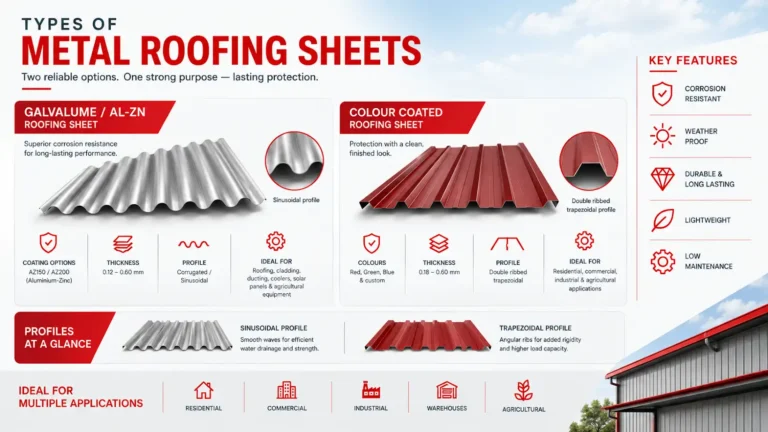
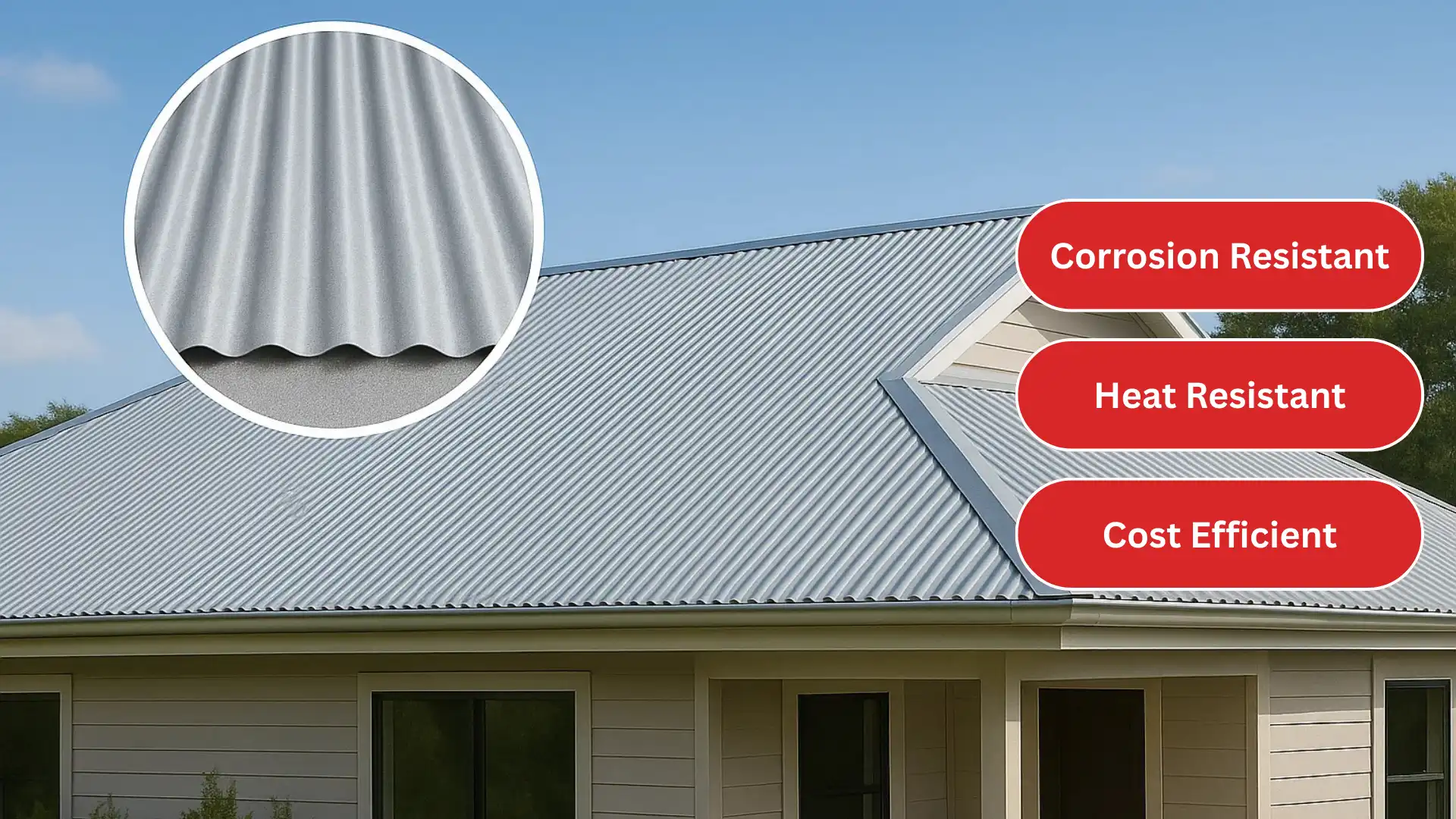
Yes. Aluzinc and Galvalume are commonly used names for aluminium-zinc coated steel. The coating contains aluminium and zinc, along with a small amount of silicon. This coating helps protect the steel from corrosion and improves its durability.
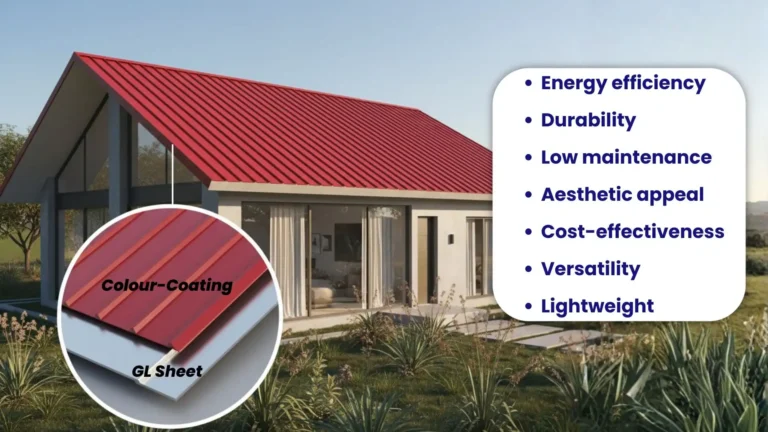
You may also see terms such as Al-Zn sheet, Aluzinc sheet, Galvalume sheet and GL sheet used for this type of coated steel.
Aluzinc Sheet vs GI Sheet: Key Differences
| Feature | Aluzinc Sheet | GI Sheets |
|---|---|---|
| Coating Composition | 55% aluminium, 43.5% zinc, 1.5% silicon | 100% zinc |
| Main Protection | Barrier and sacrificial protection | Mainly sacrificial zinc protection |
| Corrosion Resistance | 2-4 times better than GI sheets | Good, but prone to faster rusting in harsh climates |
| Heat Resistance | Up to 315°C without surface damage | Limited high-heat tolerance |
| Surface Appearance | Smooth, spangled finish | Dull or standard galvanised look |
| Formability | Good | Excellent |
| Lifespan | 30-40 years (with proper maintenance) | 15-20 years |
| Maintenance Needs | Low | Higher over time |
| Cost Efficiency | Higher upfront cost but lower lifecycle cost | Lower upfront cost but higher replacement cost |
| Appearance | Smooth, bright or spangled finish | Typical galvanized spangled finish |
| Common roofing use | Long-life roofing, cladding and industrial buildings | General roofing, fabrication and industrial applications |
Note: Actual performance and service life depend on coating thickness, steel grade, installation quality, exposure conditions and maintenance.
Learn more about the specification of aluzinc sheet.
Which is Better: Aluzinc or Galvanized Sheet?
Neither sheet is the best choice for every project. Aluzinc is generally preferred when long-term corrosion resistance, heat reflection and lower maintenance are important. GI sheets can be suitable when lower initial cost, excellent formability and conventional galvanized protection are priorities. For roofing in demanding weather conditions, compare the coating specification and expected service environment before choosing.
How Do Galvalume and GI Protect Against Corrosion?
Both Aluzinc and GI sheets have a protective coating that helps prevent the steel underneath from rusting. However, they protect the steel in different ways.
How Does Aluzinc Protect Against Corrosion?
Aluzinc sheets have an aluminium-zinc-silicon coating. The aluminium forms a protective barrier over the steel, while zinc provides additional sacrificial protection. This combination helps Aluzinc resist corrosion and makes it suitable for many roofing and outdoor applications.
How Does GI Protect Against Corrosion?
GI sheets have a zinc coating over the steel. Zinc protects the steel by forming a protective layer and can also provide sacrificial protection when the surface is scratched or damaged. This makes GI sheets a reliable choice for many general construction and roofing applications.
Which Has Better Corrosion Protection?
Aluzinc generally provides stronger corrosion resistance in many atmospheric conditions because its aluminium-rich coating creates a durable barrier against moisture and air. However, actual performance depends on the coating thickness, environment, installation and maintenance.
GL vs GI: Which is Better for Different Environments?
The right roofing sheet depends on where it will be used. Humidity, rainfall, heat, coastal air and industrial pollution can affect the service life of a metal sheet. Aluzinc and GI sheets can both be used for roofing, but their performance can vary with the environment.
| Environment | Better Choice | Why |
|---|---|---|
| Hot and sunny areas | Aluzinc | Its aluminium-rich coating provides good heat reflectivity and corrosion protection. |
| High-humidity areas | Aluzinc | The coating provides strong protection against moisture and corrosion. |
| Coastal areas | Aluzinc | Its coating can provide good corrosion resistance in many atmospheric conditions. |
| Normal inland areas | Aluzinc or GI | Both can work well when the correct coating specification is selected. |
| Industrial areas | Aluzinc | It can offer good protection where atmospheric exposure is more demanding. |
| Budget-focused projects | GI | GI generally has a lower initial cost and provides reliable zinc protection. |
Aluzinc for Hot and Humid Areas
Aluzinc can be a suitable choice for hot and humid environments because its aluminium-zinc coating provides corrosion protection and good heat reflectivity. It is commonly considered for roofing and cladding where exposure to heat and moisture is high.
GI for General Applications
GI sheets are a practical option for many general roofing, construction and fabrication applications. Their zinc coating provides reliable protection against corrosion and they are often preferred when initial material cost and easy forming are important.
Which Sheet Should You Choose?
Choose Aluzinc when long-term corrosion resistance, heat performance and lower maintenance are important. Choose GI when you need a cost-effective sheet for a normal environment and conventional galvanized protection is sufficient.
Where are Aluzinc and GI Sheets Used?
Aluzinc and GI sheets are used for roofing, cladding and other construction applications. However, the better choice depends on the required durability, environment, forming needs and project budget.
Common Applications of Aluzinc Sheets
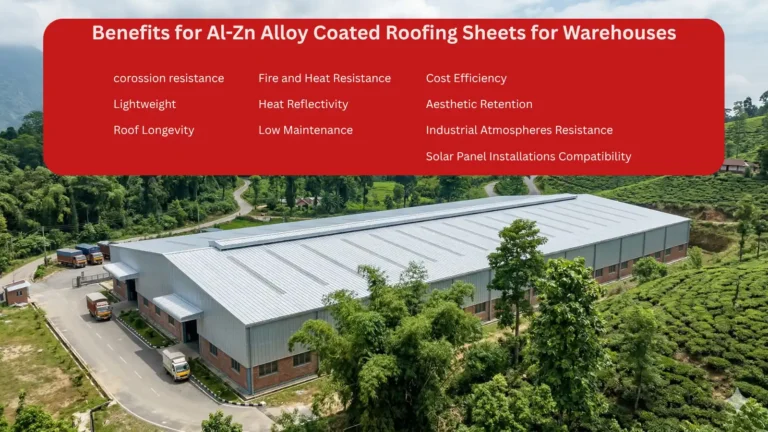
Aluzinc sheets are commonly used where good corrosion resistance, heat performance and long service life are important.
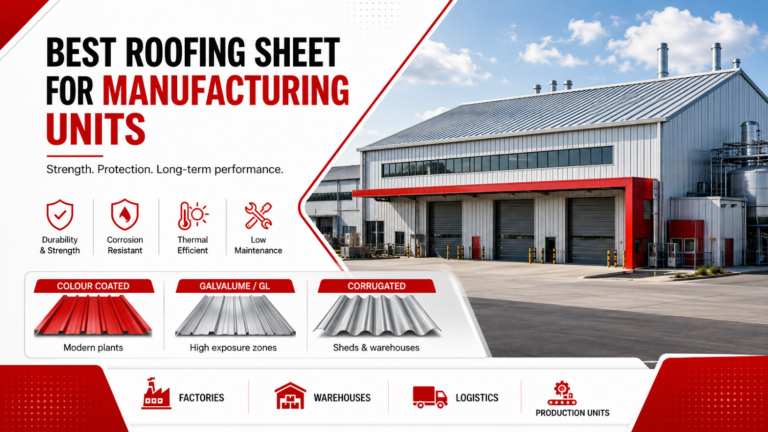
- Industrial sheds and warehouses
- Factory and commercial building roofs
- Roofing and wall cladding
- Agricultural buildings
- Residential and commercial roofing
- Buildings exposed to heat and moisture
Learn more about the uses and applications of galvalume sheet.
Common Applications of GI Sheets
Aluzinc sheets are commonly used where good corrosion resistance, heat performance and long service life are important.
- General roofing
- Sheds and utility buildings
- Ducting and ventilation systems
- Fencing and fabrication
- Construction components
- General industrial applications
Al-Zn vs GL: Which is Better for Your Application?
For roofing and cladding where long-term corrosion resistance and heat performance are important, Aluzinc can be a suitable choice. For general construction, fabrication and budget-focused applications, GI can be a practical option.
The final choice should consider the environment, coating specification, sheet thickness, installation method and expected service life.
Galvalume vs Galvanized: Which is More Cost-Effective?
The cost of a roofing sheet depends on more than its purchase price. Aluzinc sheets may have a higher initial cost than GI sheets, but their corrosion resistance and durability can help reduce maintenance and replacement costs over time.
| Cost Factor | Aluzinc Sheet | GI Sheet |
|---|---|---|
| Initial cost | Generally higher | Generally lower |
| Corrosion protection | High | Good |
| Maintenance | Usually lower | Depends on the environment |
| Service life | Can be longer in suitable conditions | Depends on coating and exposure |
| Long-term value | Good for long-life applications | Good for budget-focused applications |
Is Aluzinc More Expensive Than GI?
Yes, Aluzinc can cost more initially than a comparable GI sheet. However, the higher upfront cost may be justified when better corrosion resistance, heat performance and lower maintenance are important.
Which is Better for a Budget Project?
If the main priority is lower initial cost, GI can be a practical choice. If the priority is long-term performance and reduced maintenance, Aluzinc may offer better overall value.
The actual cost depends on sheet thickness, coating specification, size, brand, quantity and market prices. Therefore, compare sheets based on both initial cost and expected long-term performance.
What are the Advantages of Al-Zn Coating Sheets Over Regular GI Sheets?
-
Longer Life, Less Hassle; Many people ask:
How long do Al-Zn coated sheets last compared to GI sheets? The answer is simple: nearly double or more, depending on environmental conditions. This means fewer replacements, less downtime and better long-term savings.
-
Better Resistance to Extreme Weather:
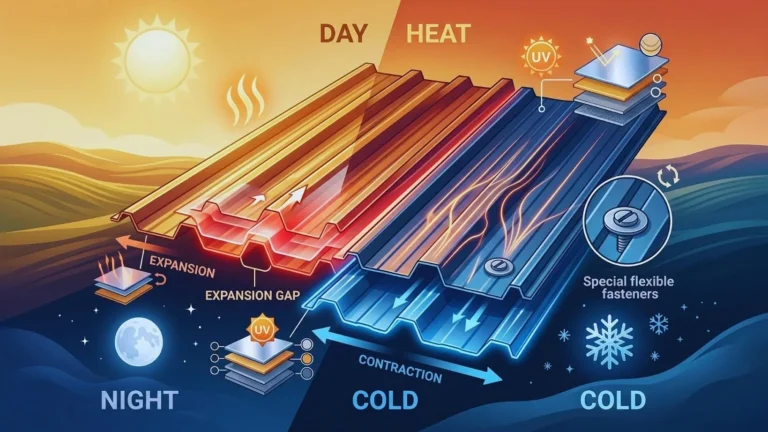
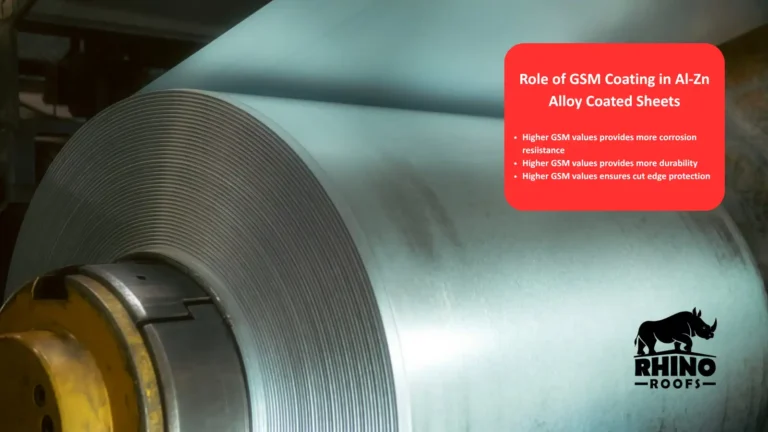
Whether it’s heavy rain, scorching sun or hail storm, AluZinc alloy coated sheets handle it all without losing strength or beauty. GSM coating plays the important role for al-zn sheets.
“The 5% Al–Zn coatings exhibit much better corrosion resistance than the conventional hot-dip galvanizing steels under salt spray tests.” – From a assessment of hot-dip 5% Al–Zn coatings in chloride environments, written by H.C Shih, J.W Hsu, C.N Sun, S.C Chung on ScienceDirect.” Source
-
Lightweight Yet Strong:
Thanks to optimised Aluzinc sheet density, these sheets deliver an excellent strength-to-weight ratio, making installation easier and reducing load on your structure.
-
Aesthetic Appeal:
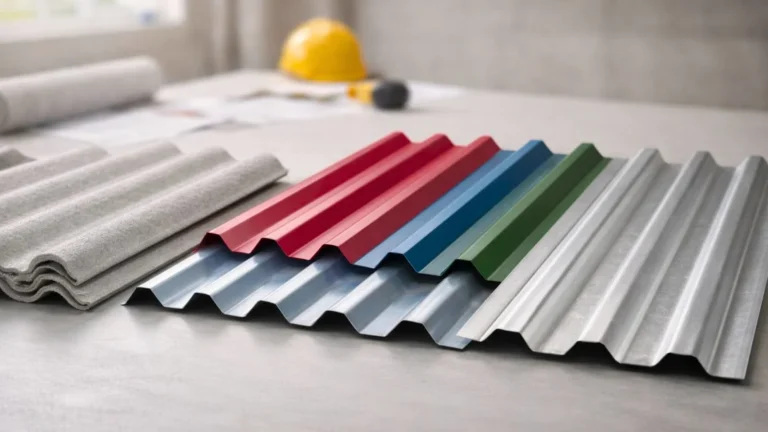
The silvery, spangled finish or colour coated sleek finish reflects a modern and premium appeal, ideal for projects where visual appeal matters just as much as durability.
If you’re evaluating GI sheets, pay close attention to the GI sheet’s thickness and dimensions. While thicker GI sheets may last longer than thinner ones, they still won’t match the corrosion resistance of Al-Zn alloy-coated options.
Why Paying a Little More Now Can Save You a Fortune Later
At first glance, aluminum zinc alloy coated sheets may seem like a pricier option compared to regular GI sheets. However, the real value becomes clear when you look beyond the initial investment. When sourced from a reliable Al-Zn alloy coated sheet manufacturer, these sheets offer a significantly longer lifespan, require minimal maintenance, and are far less likely to need costly replacements. Over the decades, the savings on repairs and replacements can be substantial.
It’s much like choosing a premium product that delivers consistent performance for years, rather than settling for a cheaper option that needs frequent repairs or replacements. This becomes even more significant in large-scale projects, where each replacement cycle adds up to major expenses and disruption.
By investing slightly more at the outset, you secure a roofing solution that offers peace of mind, durability and genuine long-term value. In construction, as in life, quality always pays for itself many times over.
Real World Experiences
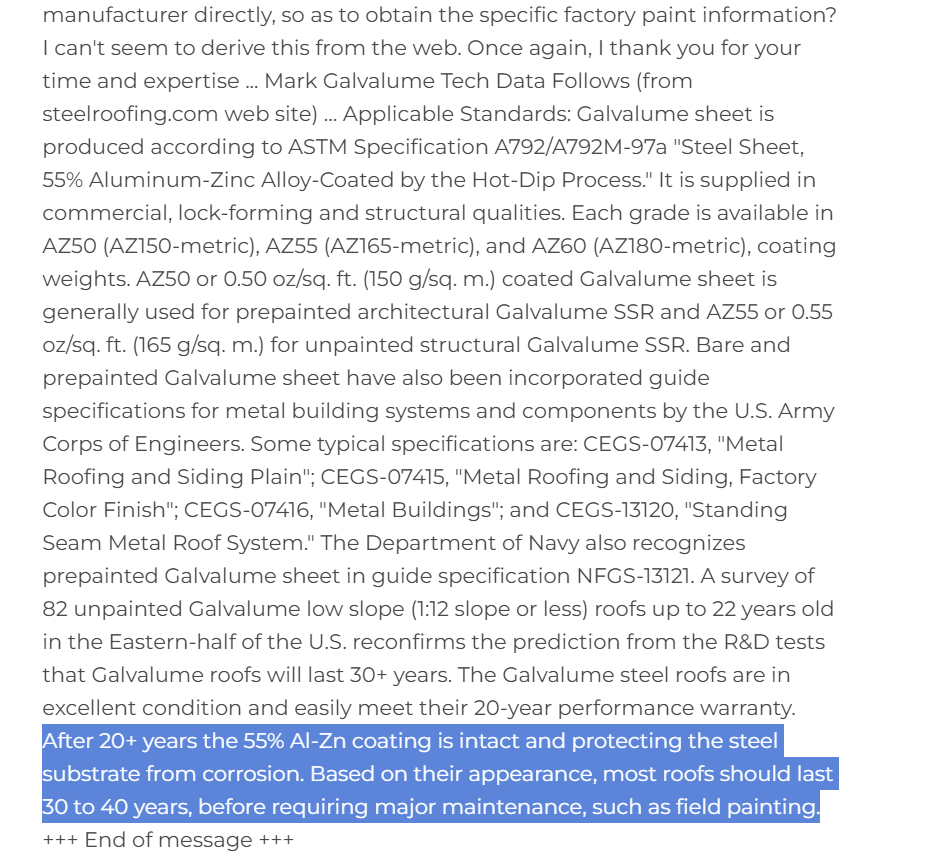
Written by a user on Metal Roofing Alliance – Source
Final Word
“Zn/Al alloy coated sheets are the smarter choice over regular GI sheets. They combine strength, resistance, durability, long-lasting and superior protection – everything that modern construction demands.”
Written and Verified by:
Rhino Roofs
Bio: Leading roofing sheet manufacturer with 50+ years of experience in the Northeast. Rhino Roofs provides colour coated, galvalume (Aluminium Zinc coated) and asbestos cement roofing sheets.
FREQUENTLY ASK QUESTIONS
Yes, they can be easily painted or coated for additional aesthetic appeal without affecting their protective properties.
No, standard metal sheet installation tools and techniques work just fine.
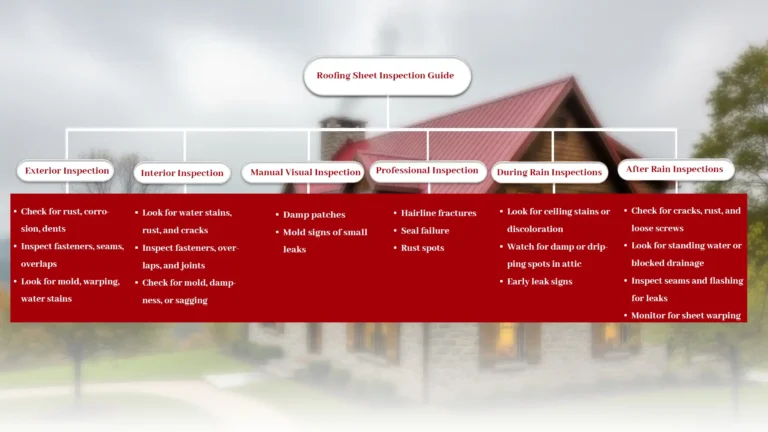
Routine cleaning and occasional inspection are usually enough. They don’t require frequent maintenance like GI sheets.
Yes, they can directly replace GI sheets without major structural changes.