Roofing is expected to deliver far more than basic shelter. A roof must withstand extreme weather and resist corrosion. It also needs to maintain its appearance and perform reliably for decades. This is why coloured roofing sheets have become a preferred choice across residential, commercial and industrial projects.
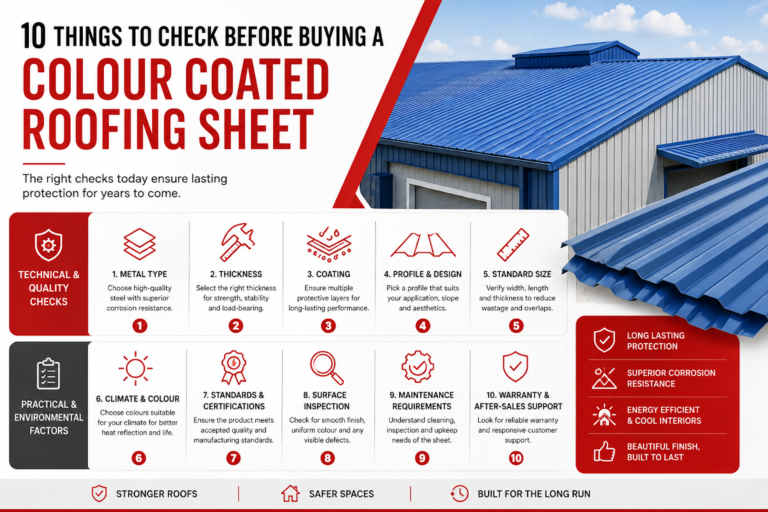
So, selecting the right colour coated roofing sheet involves more than choosing a colour or profile design. The real performance of a roofing system depends on its technical specifications.
Understanding the specifications of colour roofing sheets enables architects, contractors and property owners to make informed decisions based on structural loads and environmental exposure.
What are Colour Coated Roofing Sheets?
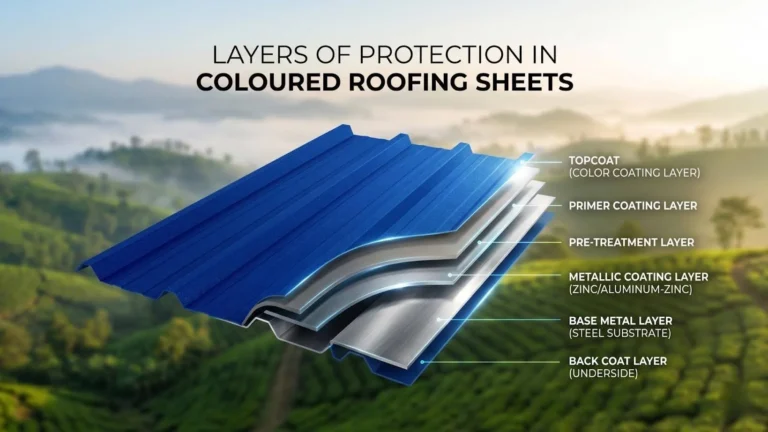
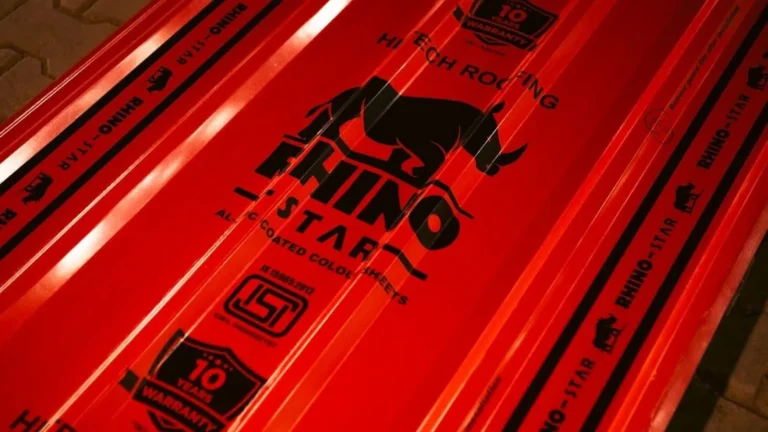
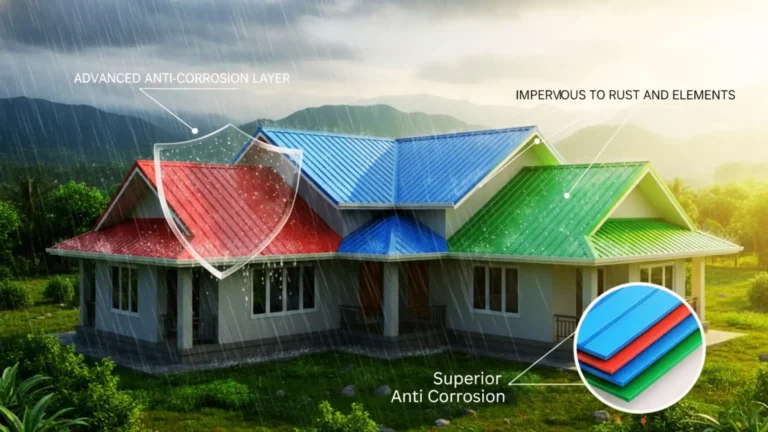
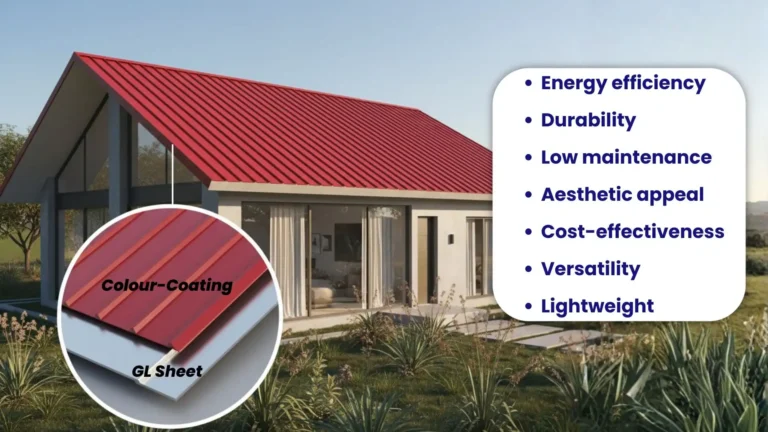
Colour-coated roofing sheets are manufactured using high-strength steel substrates that are protected with an aluminium-zinc alloy coating. It has a finish with a durable paint system. This layered structure provides multiple levels of protection.
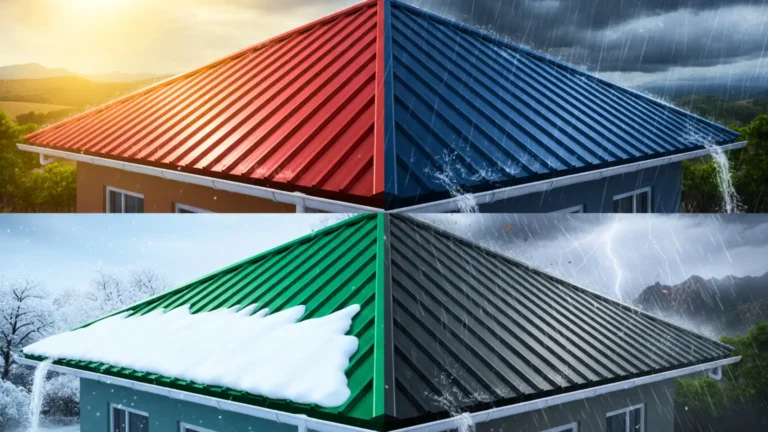
Together, these layers enhance the overall lifespan of the roofing sheet while preserving its visual finish. Modern colour-coated sheets are manufactured to perform consistently under heavy rainfall, temperature fluctuations, and prolonged sun exposure. Their combination of durability and design flexibility makes them suitable for homes, industrial facilities, warehouses, and commercial structures. Learn more on the importance of colour coated roofing sheets.
Technical Specifications of Coloured Roofing Sheets
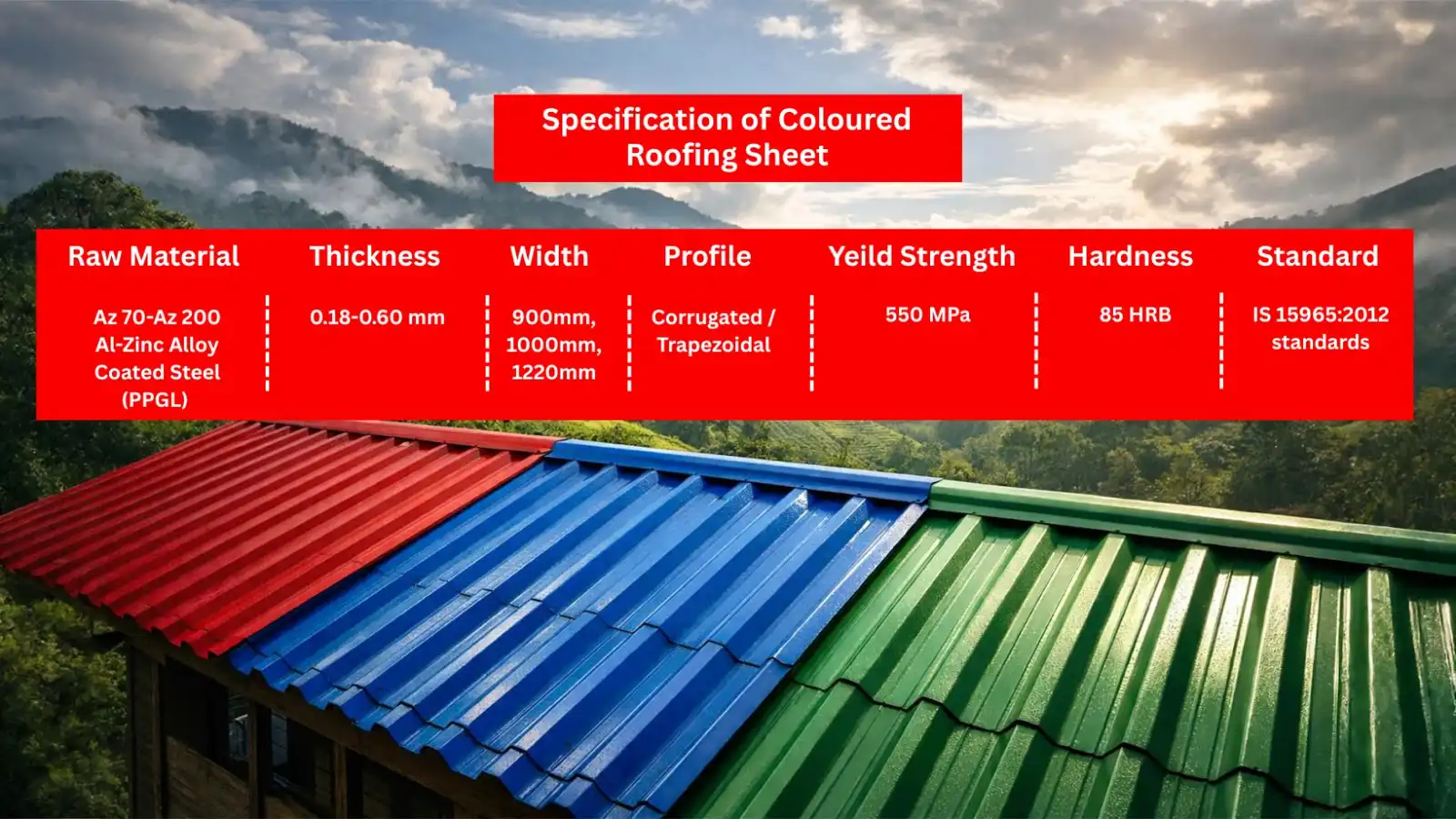
Roofing colour sheets are made from high-quality PPGL (Pre-Painted Galvalume) coils. These sheets are designed to provide strong protection, long life, and an attractive finish for all types of roofing applications.
| Raw Material | PPGL |
|---|---|
| Thickness (mm) | 0.18-0.60 mm |
| Width (mm) | 900mm, 1000mm, 1220mm |
| Profile | Corrugated / Trapezoidal |
| Substrate | Al-Zinc Alloy Coated Steel |
| Aluminium-Zinc Coating (gsm) | Az 70-Az 200 |
| Y.S (Mpa) Mim | 550/td> |
| Hardness (HRB) | Min 85 |
| Standard | IS 15965:2012 |
Material and Build Quality
The coloured roofing sheets use an Aluminium-Zinc alloy coated steel (PPGL) substrate, which improves durability and resistance to rust and corrosion. The aluminium-zinc coating ranges from AZ 70 to AZ 200, offering reliable performance even in harsh weather conditions.
Size and Dimensions
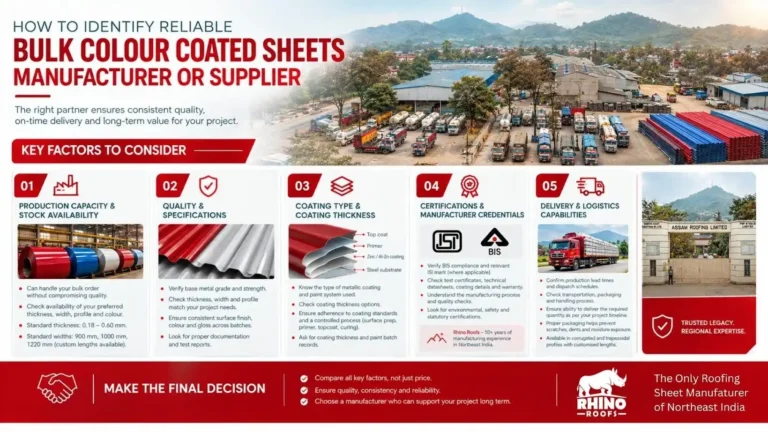
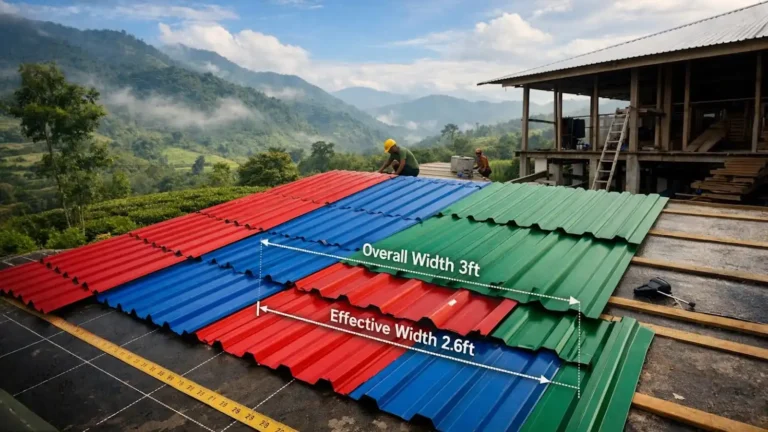
The roofing colour sheets are available in thicknesses from 0.18 mm to 0.60 mm, making them suitable for both light and heavy-duty use. Standard widths include 900 mm, 1000 mm, and 1220 mm. Learn more about the standard size of coloured roofing sheets.
Strength and Hardness
These color coated roofing sheets are built for strength. They have a minimum yield strength of 550 MPa, ensuring good load-bearing capacity. The hardness level is at least 85 HRB, which adds to their durability and resistance to deformation.
Profile Options
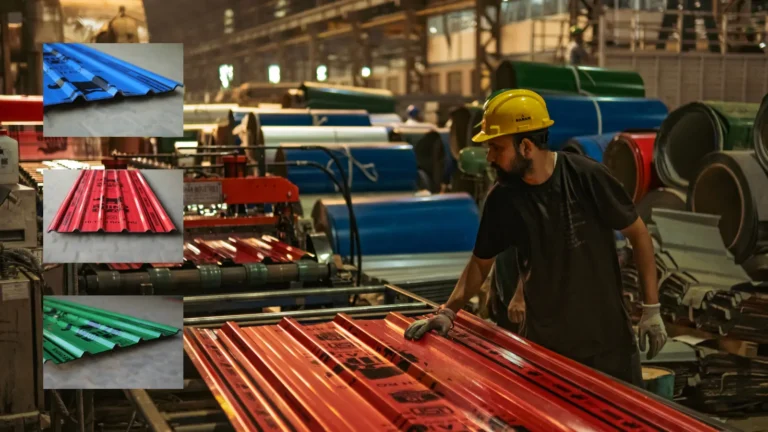
The colour coated sheets are available in different profiles such as corrugated, and trapezoidal. This allows flexibility in design and makes them suitable for various roofing styles and structures.
Standard Compliance
All colour roofing sheets are manufactured as per IS 15965:2012 standards, ensuring consistent quality, safety, and performance.
Conclusion
The specifications of colour coated roofing sheets ultimately define their strength, durability, and long-term value. Each technical parameter-from base metal thickness and aluminium-zinc coating weight to paint systems and profile design-contributes to structural reliability and aesthetic longevity.
By understanding these specifications in detail, builders and property owners can confidently select roofing solutions that withstand environmental stress while maintaining appearance and performance for years to come.
Written and Verified by:
Rhino Roofs
Bio: Leading roofing sheet manufacturer with 50+ years of experience in the Northeast. Rhino Roofs provides colour coated, galvalume (Aluminium Zinc coated) and asbestos cement roofing sheets.
FREQUENTLY ASK QUESTIONS
Yield strength indicates how much stress a sheet can withstand before deforming. Higher yield strength improves structural stability in high-wind or heavy-load conditions.
Overall width is the total sheet width, while effective width refers to the usable coverage area after overlaps during installation.
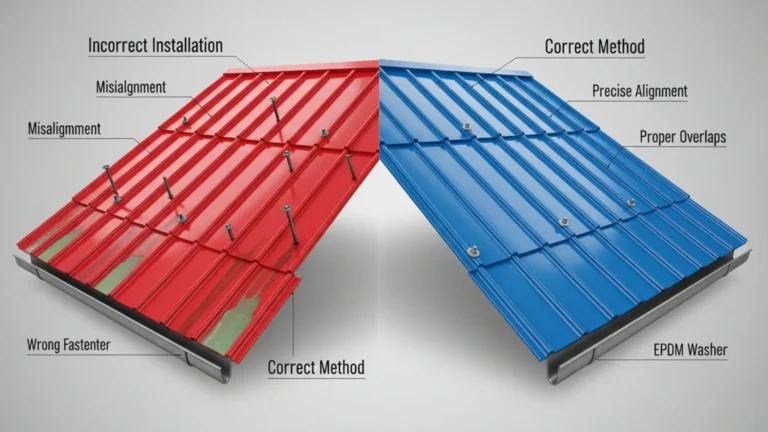
Yes, like all metal roofing materials, they expand and contract with temperature variations, which is why proper installation allowances are important.