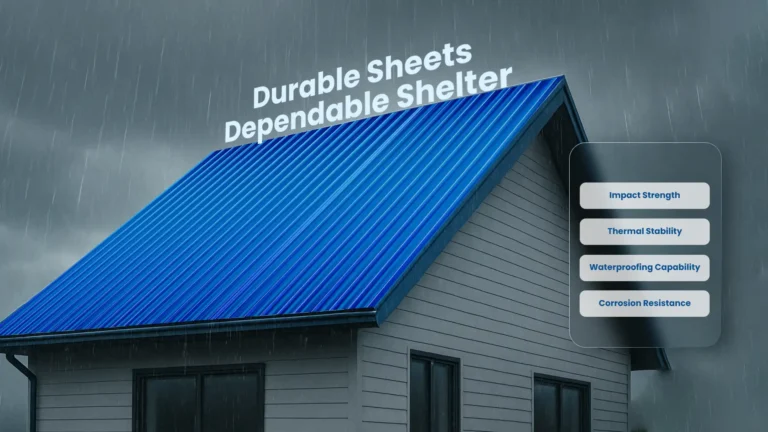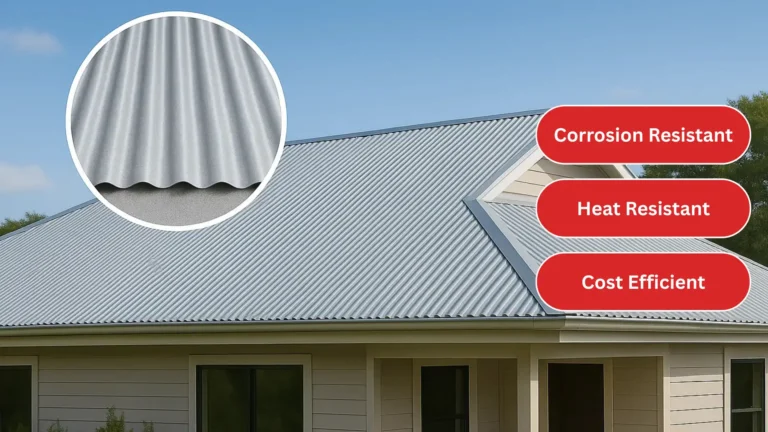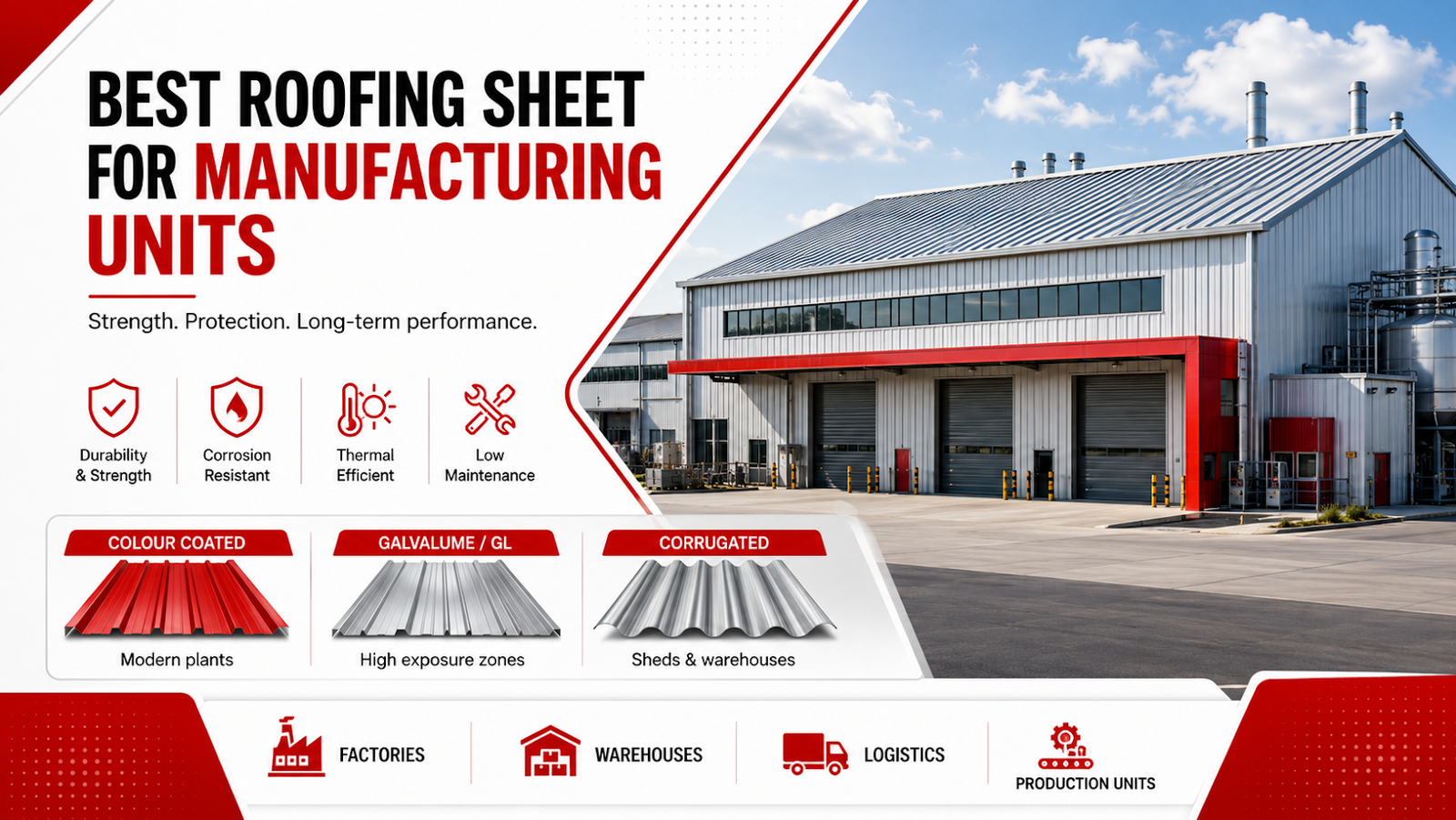
Every manufacturing unit depends on a strong and reliable building to keep operations running smoothly. The roof plays a bigger role than many people realise. It protects expensive machinery, raw materials, finished products and employees from harsh weather while supporting uninterrupted production throughout the year. Choosing the right roofing sheet is not simply about covering a building; it is about investing in durability, operational efficiency and long-term value.
Modern industrial roofing materials are engineered to deliver superior strength, corrosion resistance and low maintenance, making them ideal for factories, warehouses, logistics centres and production plants.
This guide explores what makes the best industrial roofing sheets, the different roofing options available and the technical specifications worth considering before making a decision.
Roofing Sheets by Manufacturing Type
The ideal roofing sheet for a manufacturing unit depends on the building’s size, operating conditions, exposure to heat and chemicals, durability requirements, and budget. Different manufacturing environments require different roofing solutions.
-
Steel Manufacturing Units
Recommended: PPGI, PPGL, or high-strength steel roofing sheets
Key requirements: High durability, heat resistance, and corrosion protection
Best suited for: Steel plants, fabrication units, and heavy engineering facilities
-
Chemical Manufacturing Units
Recommended: PPGL, coated steel, or corrosion-resistant roofing sheets
Key requirements: Excellent resistance to chemicals, moisture, and corrosion
Best suited for: Chemical processing and pharmaceutical manufacturing facilities
-
Food & Beverage Manufacturing Units
Recommended: PPGI or insulated roofing panels
Key requirements: Hygiene, thermal insulation, moisture resistance, and easy maintenance
Best suited for: Food processing, dairy, beverage, and cold-storage facilities
-
Textile Manufacturing Units
Recommended: PPGI, PPGL, or insulated roofing sheets
Key requirements: Heat control, ventilation, durability, and energy efficiency
Best suited for: Textile mills, garment factories, and spinning units
-
Automotive Manufacturing Units
Recommended: PPGI, PPGL, or high-performance insulated panels
Key requirements: Structural strength, weather resistance, thermal efficiency, and long service life
Best suited for: Automobile plants, component manufacturing, and assembly units
-
Pharmaceutical Manufacturing Units
Recommended: Insulated sandwich panels or cleanroom-compatible roofing systems
Key requirements: Temperature control, hygiene, moisture resistance, and minimal maintenance
Best suited for: Pharmaceutical production and controlled manufacturing environments
-
Cement & Heavy Manufacturing Units
Recommended: High-strength coated steel roofing sheets
Key requirements: Resistance to dust, harsh weather, mechanical stress, and corrosion
Best suited for: Cement plants, heavy machinery facilities, and industrial warehouses
Roofing Sheet Materials Comparison
Understanding the differences between available roofing materials helps businesses make an informed investment based on their operational needs.
| Material Type | Benefit | Application | Service Life |
|---|---|---|---|
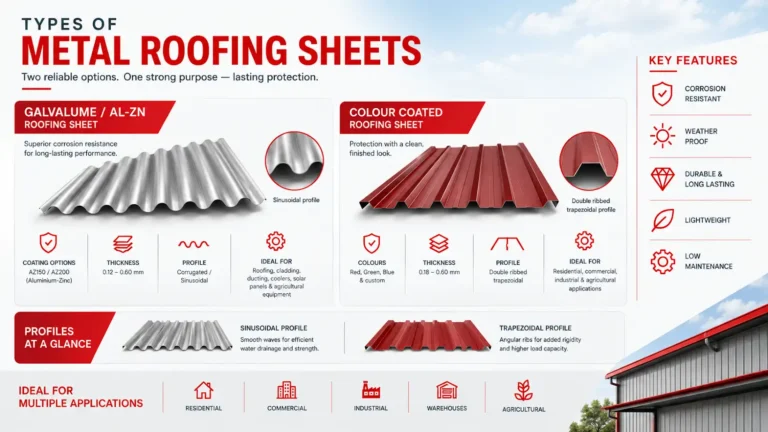
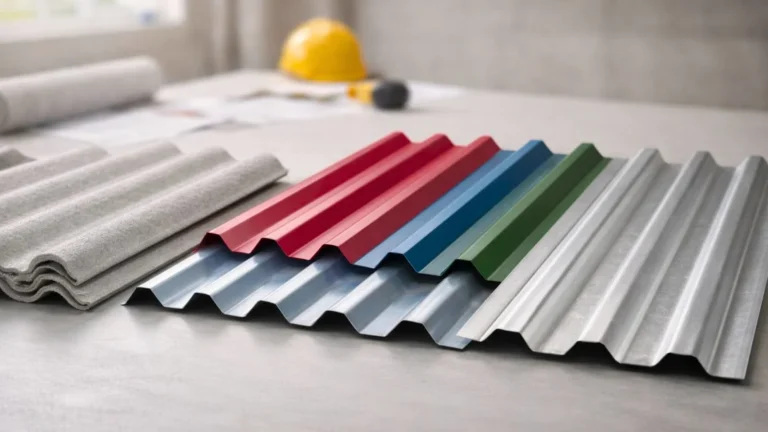
| Colour coated roofing sheets | Attractive finish, UV protection, excellent corrosion resistance | Manufacturing plants, commercial buildings | 20-30+ years |
| Aluminium zinc roofing sheets | Outstanding corrosion resistance and long-term durability | Coastal industries, chemical facilities | 25-35+ years |
| Corrugated roofing sheets | High structural strength and efficient water drainage | Warehouses, industrial sheds, factories | 20-30+ years |
| Galvalume roofing sheets | Superior weather resistance with aluminium-zinc coating | Industrial buildings, logistics centres | 25-35+ years |
Service life varies depending on environmental conditions, installation quality, and maintenance practices.
Essential Technical Specifications of Roofing Sheets for Manufacturing Unit
When selecting roofing sheets for a manufacturing unit, specifications such as thickness, coating, strength, width, weight, thermal performance, and durability should be evaluated. The right combination helps ensure structural stability, weather protection, energy efficiency, and long-term performance.
Sheet Thickness
Roofing sheet thickness directly affects its strength, rigidity, and durability.
- 0.40 mm: Suitable for lighter-duty applications
- 0.45 mm: Commonly used for industrial and commercial roofing
- 0.50 mm: Suitable for heavier-duty manufacturing facilities
- 0.55 mm and above: Preferred for demanding industrial applications
For large manufacturing units, the final thickness should be selected based on purlin spacing, wind load, roof span, and structural calculations.
Coating Thickness
The metallic coating protects the steel substrate from corrosion and extends the service life of the roofing sheet.
Typical coating specifications include:
- 80 GSM: Basic corrosion protection
- 120 GSM: Improved protection for general industrial environments
- 150 GSM: Suitable for more demanding conditions
- 200 GSM and above: Considered for highly corrosive environments, subject to manufacturer specifications
The appropriate coating depends on the site’s humidity, pollution, chemical exposure, and proximity to coastal areas.
Yield Strength
Yield strength indicates the stress a roofing sheet can withstand before permanent deformation.
Typical high-strength roofing steel may have yield strengths in the range of:
- 250 MPa
- 300 MPa
- 350 MPa
- 550 MPa
Higher-strength grades can allow efficient structural design, but the appropriate grade should be determined according to the roof profile and engineering requirements.
Sheet Width and Effective Cover Width
Roofing sheets are available in different overall and effective cover widths.
Typical values may include:
- Overall width: Approximately 1,000-1,250 mm
- Effective cover width: Approximately 900-1,100 mm
The exact dimensions vary according to the manufacturer and profile. Effective cover width is particularly important when estimating the number of sheets required for a project.
Sheet Length
Industrial roofing sheets can generally be manufactured in project-specific lengths.
Common sheet lengths include:
- 3 m
- 4 m
- 5 m
- 6 m
- Custom lengths
Longer sheets can reduce the number of horizontal joints and potentially minimize leakage points when the building design permits their use.
Roof Slope
The recommended roof slope depends on the roofing profile and local rainfall conditions.
As a general design consideration:
- 5°-10°: Common range for many industrial roofing applications
- Higher slopes may be preferred in areas experiencing heavy rainfall.
The manufacturer’s profile-specific recommendations and structural design should always take precedence.
Thermal Insulation
For manufacturing units exposed to high temperatures, thermal performance is an important specification.
Insulated roofing systems may use materials such as:
- EPS
- PIR
- PUF
- Mineral wool
For example, insulated panels may commonly use 30-100 mm insulation thickness, depending on the required thermal performance and application.
Wind Load
Industrial roofing must be designed to withstand both downward wind pressure and roof uplift.
The required resistance depends on:
- Design wind speed
- Building height
- Roof geometry
- Building location
- Purlin spacing
- Fastener type and spacing
For Indian projects, wind-load calculations should be carried out according to the applicable Indian Standards and project-specific structural design rather than relying on a single universal value.
Fastener Spacing
Fastener spacing affects the stability and wind resistance of the roofing system.
Depending on the profile and design, fasteners may be installed at approximately:
- 300-600 mm centres in critical areas
- Wider spacing may be possible in specific applications.
The exact spacing should be determined by the roofing manufacturer and structural calculations, particularly at roof edges, corners, and high-wind zones.
Expected Service Life
The service life of a roofing system depends on the base metal, coating, environment, installation quality, maintenance, and exposure conditions.
A well-designed and properly maintained industrial roofing system can commonly target:
- 15-20+ years for general applications
- 20-30+ years for higher-quality systems in suitable environments
Manufacturers may provide different warranties for coating performance, corrosion, and product integrity, so warranty terms should be checked separately.
Quick Technical Specification Guide of Best Roofing Sheet for Manufacturing Unit
| Parameter | Typical Range / Value |
|---|---|
| Sheet Thickness | 0.40-0.55+ mm |
| Metallic Coating | 80-200+ GSM |
| Yield Strength | 250-550 MPa |
| Overall Width | 1,000-1,250 mm |
| Effective Cover Width | 900-1,100 mm |
| Sheet Length | 3-6 m / Custom |
| Insulation Thickness | 30-100 mm |
| Typical Roof Slope | 5°-10° |
| Fastener Spacing | Approx. 300-600 mm |
| Target Service Life | 15-30+ years |
Note: These are indicative ranges, not universal specifications. The final roofing specification should be selected based on the building design, local climate, applicable standards, manufacturer recommendations, and structural calculations.
What Makes the Best Roofing Sheet for Manufacturing Units?
Not every industrial building has the same requirements. The ideal roofing solution depends on the type of manufacturing activity, environmental conditions and the expected service life of the building. Here are the key factors that should guide your decision.
-
Durability and Structural Strength
Industrial roofs are exposed to constant stress. Heavy rainfall, strong winds, prolonged sunlight and everyday operational demands all affect the roof over time. A quality roofing sheet should be able to handle these conditions without losing its structural integrity.
Manufacturing units often house heavy equipment that creates vibrations, making structural stability even more important. Premium steel roofing sheets are manufactured to provide excellent load-bearing capacity while maintaining their shape and strength for years.
-
Corrosion Resistance
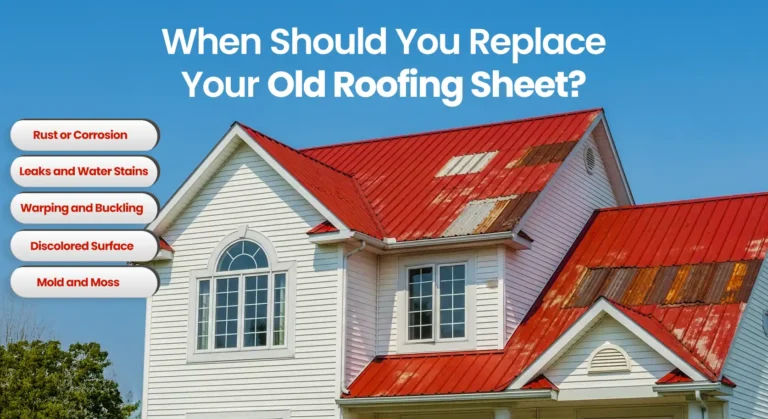
Rust is one of the biggest concerns for industrial buildings, especially in coastal regions or areas with high humidity. This is where galvalume roofing sheets stand out. Their aluminium-zinc coating creates an additional protective barrier that significantly improves corrosion resistance compared to conventional steel roofing. This protection helps extend the life of the roof while reducing maintenance costs.
-
Thermal Performance and Energy Efficiency
A comfortable indoor environment benefits both employees and machinery. Excessive heat inside a factory can increase cooling costs and affect operational efficiency.
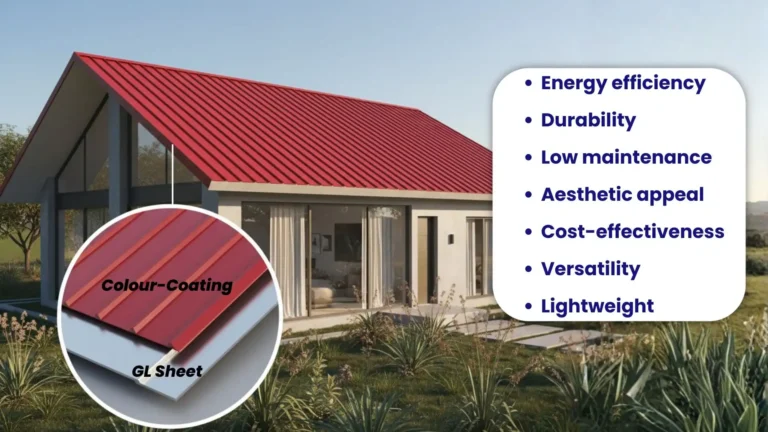
Modern colour coated roofing sheets are designed with protective paint systems that reflect a portion of solar heat while providing an attractive finish. When combined with suitable insulation, they help regulate indoor temperatures and reduce the dependence on cooling systems.
-
Weather Protection
Industrial buildings face changing weather throughout the year, from intense summer heat to heavy monsoon rainfall and strong winds. High-quality metal roofing sheets are manufactured using strong steel and protective coatings that resist weather-related damage. Well-designed profiles also ensure efficient rainwater drainage, reducing the possibility of water accumulation and seepage. A dependable roof protects production areas, machinery, and stored materials while allowing daily operations to continue without interruption.
-
Low Maintenance Requirements
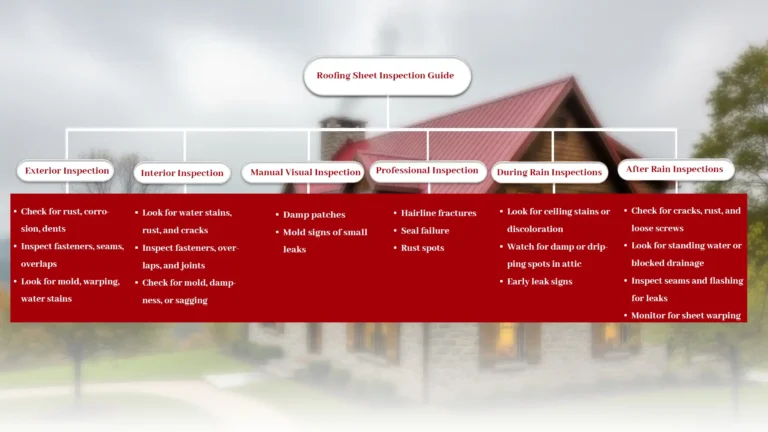
Frequent maintenance can interrupt production schedules and increase operating expenses. This is why many industries look for roofing systems that continue performing well with minimal upkeep. Premium coated steel roofing retains its finish, resists corrosion and requires only routine cleaning and inspections to remain in good condition. Investing in low-maintenance roofing allows manufacturers to focus on production instead of ongoing repair work, making it a practical long-term choice.
Conclusion
Selecting the right roofing sheet is a decision that affects the performance and longevity of an entire manufacturing facility. A well-chosen roofing system protects valuable assets, improves operational efficiency, reduces maintenance and delivers dependable performance for years.
Choosing a trusted manufacturer ensures consistent quality and lasting value. By considering your industry’s requirements along with the essential technical specifications, you can invest in a roofing solution that supports your business well into the future.
Written and Verified by:
Rhino Roofs
Bio: Leading roofing sheet manufacturer with 50+ years of experience in the Northeast. Rhino Roofs provides colour coated, galvalume (Aluminium Zinc coated) and asbestos cement roofing sheets.
FREQUENTLY ASK QUESTIONS
The ideal roofing sheet depends on the industry and operating conditions. Galvalume and colour coated roofing sheets are widely preferred because they combine durability, corrosion resistance and long service life.
Metal roofing sheets offer excellent strength, require minimal maintenance, resist harsh weather and provide reliable long-term performance, making them suitable for manufacturing facilities.
Yes, corrugated roofing sheets are widely used in factories because they offer structural strength, efficient water drainage and dependable performance across different industrial applications.
Look at factors such as corrosion resistance, sheet thickness, coating quality, thermal performance, profile design, weather resistance, warranty, and the reputation of the manufacturer before making your final decision.
Roofing sheets protect manufacturing units from heat, rain, wind, and corrosion while improving insulation, durability, safety, energy efficiency, and overall operational comfort.