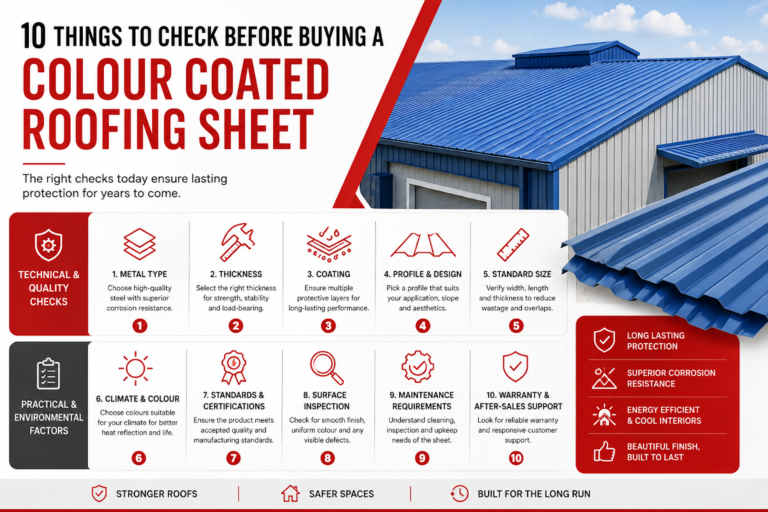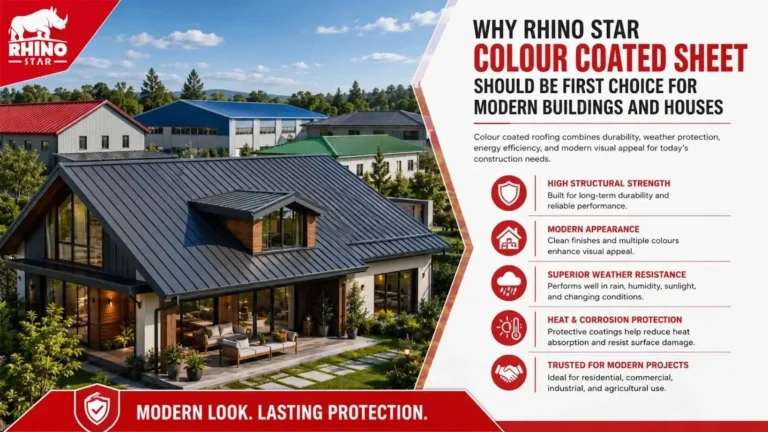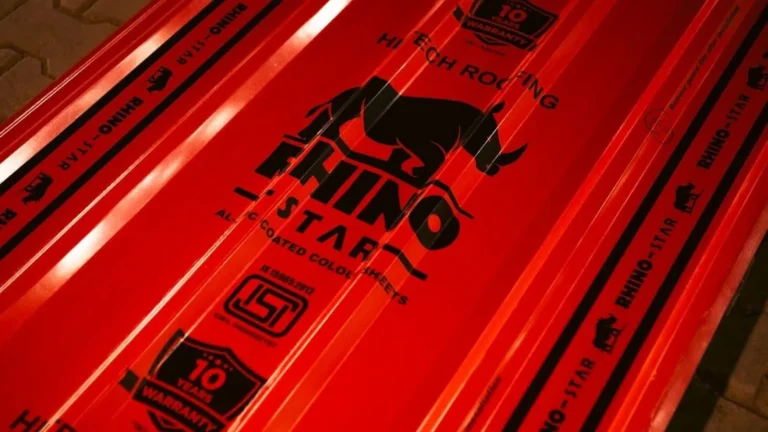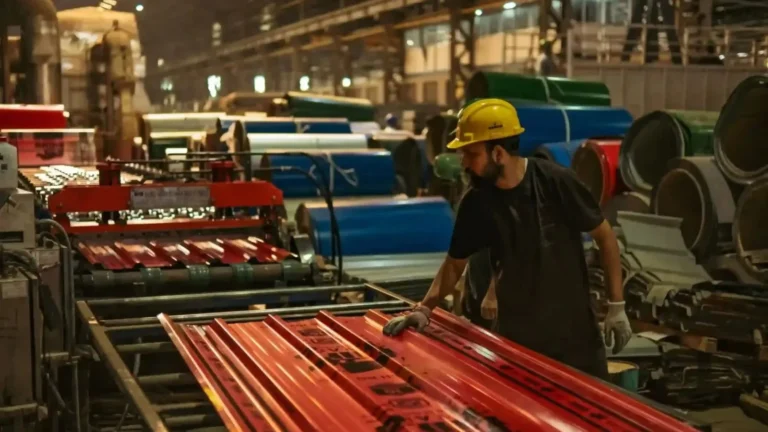
Roofing materials are expected to do more than simply provide coverage. They are required to perform consistently under varying environmental conditions, resist corrosion, and maintain their appearance over time. This is where the layers of protection in colour roofing sheets become particularly important.
These multi layer coating colour roofing sheets are designed to handle challenges such as moisture, UV exposure and temperature changes. It is an important specification of colour coated sheets.
Understanding how these layers function helps in evaluating product quality beyond surface appearance. It also ensures that the selected material delivers dependable performance over its lifespan.
What are the Key Layers of Protection for Colour Roofing Sheets?
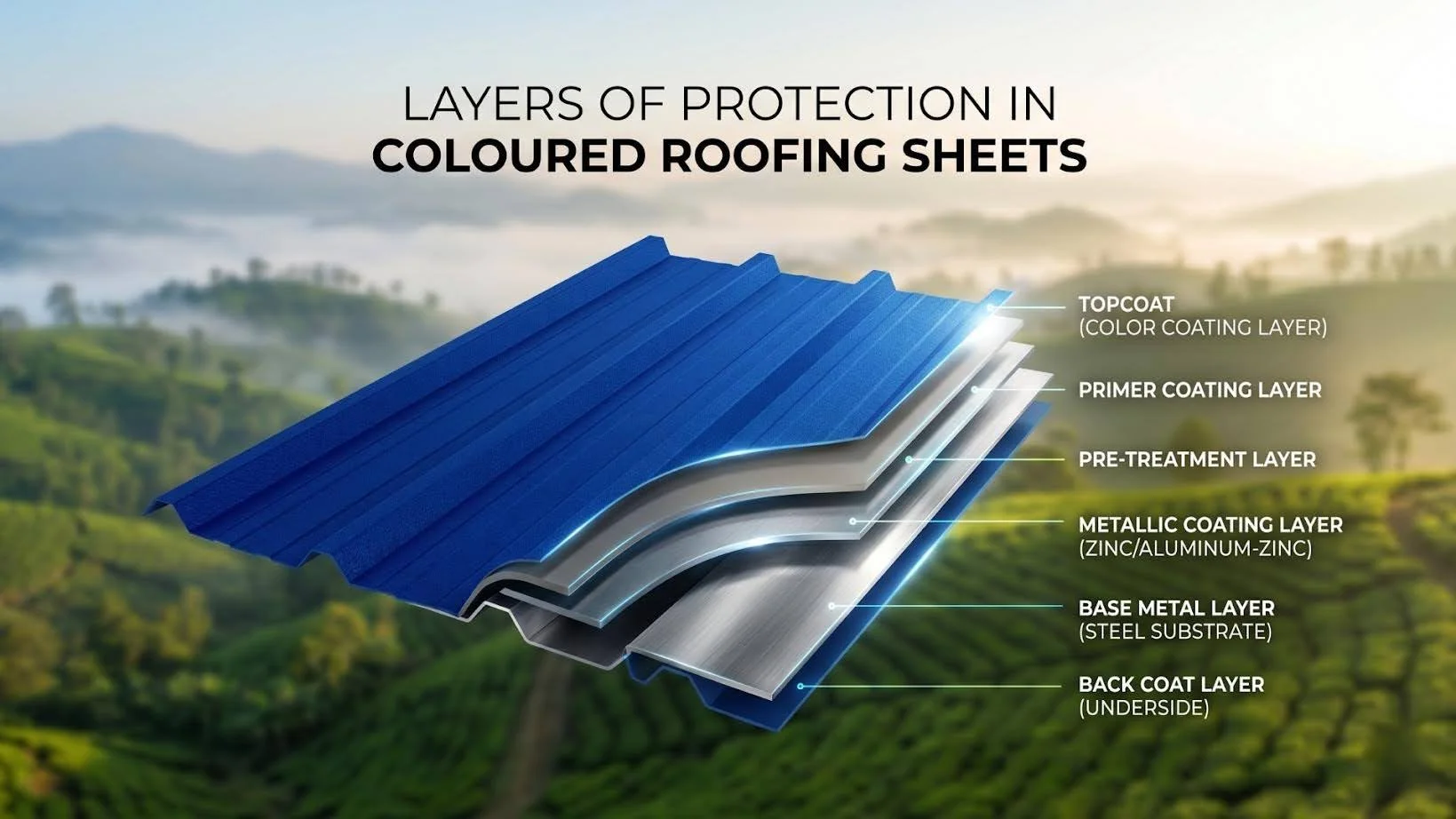
The effectiveness of colour roofing sheets comes from a carefully designed layer structure, where each layer contributes to overall protection and performance.
-
Base Metal Layer (Steel Substrate)
The base metal layer forms the core of the roofing sheet. It is typically made from galvanized steel or aluminum-zinc coated steel, providing the necessary structural strength to withstand loads and environmental stress. This layer ensures that the sheet retains its shape and stability over time. A strong substrate supports the entire roofing sheet layer structure which allows the upper coatings to function effectively. The durability and performance of the roofing sheet would be significantly compromised without a reliable base metal.
-
Metallic Coating Layer for Corrosion Protection in Roofing Sheets
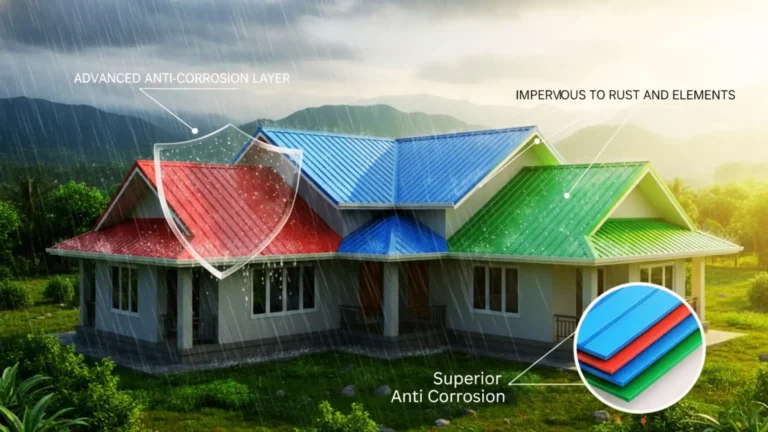
The metallic coating layer is commonly zinc or aluminum-zinc which plays a key role in corrosion protection roofing sheets. It acts as a protective barrier that prevents moisture and oxygen from reaching the steel surface. This significantly slows down the corrosion process and helps extend the lifespan of the sheet. This layer is particularly important in environments exposed to humidity, rainfall, or industrial pollutants.
-
Pre-Treatment Layer
The pre-treatment layer is applied to improve the bonding between the metallic coating and the paint layers that follow. It also enhances corrosion resistance by stabilizing the surface at a chemical level. This layer ensures that the coating layers of roofing sheets adhere properly and remain intact over time. Without proper pre-treatment, coatings may lose adhesion which leads to peeling or early degradation.
-
Primer Coating Layer
The primer coating roofing sheets layer serves as an intermediate protective layer between the base coatings and the topcoat. It strengthens adhesion while providing an additional barrier against moisture and corrosion. Primer coatings also contribute to flexibility, allowing the sheet to accommodate thermal expansion and contraction without cracking. This helps maintain the durability and consistency of the roofing sheet under changing environmental conditions.
-
Topcoat (Color Coating Layer)
The topcoat is the outermost layer and is responsible for both protection and visual appeal. It provides color, finish, and resistance to UV radiation, making it a vital part of the colour roofing sheet protection layers. This layer shields the sheet from sunlight, rain and environmental pollutants while preserving its appearance. High-quality topcoats, such as polyester or PVDF, are designed to maintain color stability and surface integrity over time, even under continuous exposure.
-
Back Coat Layer Roofing Sheets
The back coat layer roofing sheets are applied to the underside of the sheet, offering protection against internal moisture and condensation. Although it is not visible after installation, this layer plays an important role in preventing corrosion from the underside. In environments with high humidity or temperature variation, it ensures that the sheet remains protected from both external and internal exposure.
How Layers Protect Against Weather
The multi-layer structure allows roofing sheets to perform effectively under a wide range of environmental conditions.
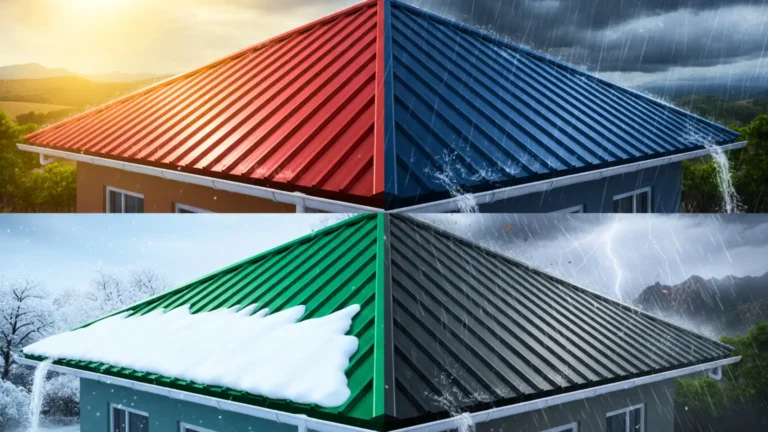
The coating layers of roofing sheets help protect against:
- Rain and moisture by preventing water penetration and rust formation
- UV radiation through durable top coatings that reduce fading
- Temperature changes by maintaining flexibility and preventing cracking
- Pollution and chemicals through resistant surface layers
This layered approach ensures that roofing sheets maintain their performance and appearance over time, even in challenging environments.
Benefits of Multi-Layer Design in Roofing Sheets
The multi-layer design offers both performance advantages and long-term value.
- Increased durability and extended service life
- Enhanced resistance to corrosion
- Reduced maintenance requirements
- Improved thermal performance
- Consistent appearance over time
These advantages make multi layer coating roofing sheets a reliable choice for construction projects that require durability and efficiency.
Conclusion
The performance of modern roofing materials is defined by the layers of protection in colour roofing sheets. Each layer contributes to structural strength, corrosion resistance, and weather protection, creating a system designed for long-term reliability.
Understanding the roofing sheet layer structure allows for more informed material selection. By choosing high-quality multi layer coating roofing sheets, builders and buyers can achieve dependable performance, reduced maintenance and lasting value.
Written and Verified by:
Rhino Roofs
Bio: Leading roofing sheet manufacturer with 50+ years of experience in the Northeast. Rhino Roofs provides colour coated, galvalume (Aluminium Zinc coated) and asbestos cement roofing sheets.
FREQUENTLY ASK QUESTIONS
They include base metal, metallic coating, pre-treatment, primer, topcoat, and back coating.
They work together to provide protection against corrosion, weather, and structural damage.
It improves adhesion and adds an extra protective layer against moisture and corrosion.
They prevent corrosion, reduce wear and maintain structural integrity over time.