The need for materials that offer long-term durability and strong resistance to environmental challenges with dependable lifecycle value has become a defining priority. Industries operating in regions with high humidity and unpredictable weather patterns also corrosive atmospheres now look for solutions that do more than just perform-they must last.
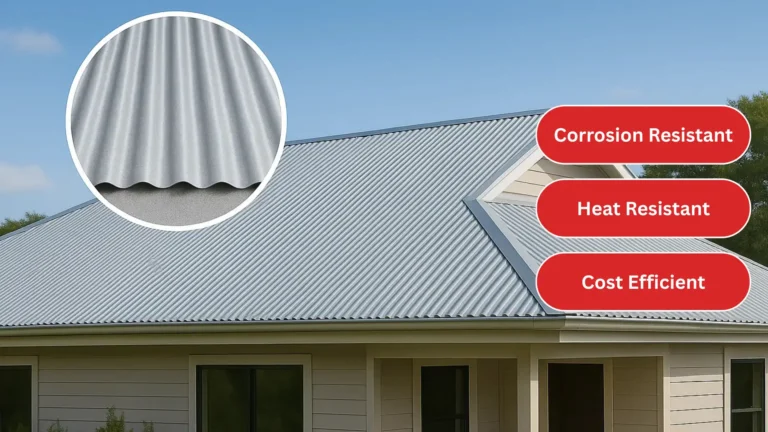
In this context, the Aluminium Zinc coated sheet has emerged as one of the most reliable and widely adopted options. It has become essential in roofing known for its robust corrosion resistance and heat reflectivity with consistent structural performance.
This article presents a comprehensive overview of the composition, specifications, mechanical behaviour and diverse applications of Al-Zn alloy coated sheets.
What Are Al-Zn Alloy Coated Sheets?
A closer look at the coating technology reveals why Al-Zn alloy sheets significantly outperform conventional galvanised steel in modern applications.
Al-Zn alloy coated sheets-popularly recognised as Galvalume Sheets, Aluzinc coated sheet products, or simply Aluminium Zinc roofing sheets are produced by hot-dip coating steel with an alloy of 55% Aluminium, 43.4% Zinc, and 1.6% Silicon.
- Aluminium forms a consistent and protective oxide layer.
- Zinc delivers galvanic protection, which helps resist rust formation even if the surface is scratched.
- Silicon stabilises the bond between the coating and steel, ensuring uniformity during hot-dip processing.
Key Chemical Composition and Metallurgical Characteristics
The detailed chemistry behind the coating is central to the long-term protective behaviour and structural value of these sheets.
-
Coating Composition
The coating on Al-Zn sheets is specially made to ensure long-term defence against environmental exposure. The 55% Aluminium content serves as an outstanding barrier. It protects the steel core from oxidation and atmospheric contaminants.
Zinc accounts for 43.4% which reinforces this protection through galvanic action, providing an additional safety layer against rust formation. The presence of 1.6% Silicon ensures optimum coating adhesion, preventing peeling or flaking during forming, bending, or thermal cycling. This precise balance of elements not only enhances durability but also ensures that the material complies with stringent ASTM A792 specifications. -
Intermetallic Layer Formation
Al-Zn alloy coated sheets possess a sophisticated metallurgical structure. It consists of several protective layers. The outermost layer is aluminium-rich. This provides impressive resistance to atmospheric conditions and oxidation and long-term exposure. The intermetallic zone beneath it forms a strong bond between the alloy coating and steel substrate. It ensures excellent coating adhesion and structural stability. The inner zinc-heavy layer delivers galvanic protection, especially at exposed edges where corrosion typically begins.
Mechanical Properties That Define Performance
The mechanical behaviour of the sheets plays a critical role in determining how they perform under forming, fabrication, and structural load conditions.
-
Tensile Strength
Al-Zn alloy coated sheets exhibit tensile strengths ranging from 240–550 MPa, depending on the grade and intended industry use. Higher tensile grades are ideal for commercial roofing systems and PEB structures with components requiring greater load-bearing capacity. Meanwhile, lower tensile variants are suitable for deep forming operations where flexibility is essential. The consistent tensile performance allows fabricators and engineers to rely on uniform behaviour across various processing methods.
-
Yield Strength
With yield strengths ranging from 180–350 MPa, Al-Zn sheets provide flexibility during forming operations without compromising their structural integrity. This property is especially important for applications involving bending and roll forming also shaping into complex profiles. For hot dip Al-Zn corrugated sheet production, this characteristic ensures consistent dimensions, precise profile formation, and dependable performance even under mechanical stress. The controlled yield strength makes these sheets a trusted choice across construction and mechanical fabrication industries.
-
Elongation
With elongation values typically between 18–30%, Al-Zn alloy coated sheets demonstrate strong formability and stretchability. This flexibility is crucial when producing curved surfaces and deep-drawn components with precision-formed structures. The strong elongation behaviour also ensures that the sheet adapts well to thermal movement during long-term use. It reduces the chances of coating cracks or structural fatigue. This makes the material reliable not only during manufacturing but throughout its operational life in varying temperature environments.
-
Hardness
The hardness of Al-Zn coatings is calibrated to provide structural protection. It also allows smooth processing during fabrication. This balanced hardness prevents surface chipping or damage when subjected to cutting, drilling, roll forming, or stamping operations. The coating ensures consistent corrosion protection and prolongs the overall lifespan of the structure by maintaining surface integrity. Manufacturers like Rhino Roofs benefit significantly from this stability, especially when producing exposed roofing sheets where visual appeal and durability must go hand in hand.
Applications Across Industries
The versatility, durability and corrosion resistance power of Al-Zn alloy coated sheets make them valuable across a broad range of industries and applications. Learn more why choosing Al-Zn coating roofing sheets is always better than regular GI sheets.
Key Application Areas of Al-Zn Corrugated Sheets
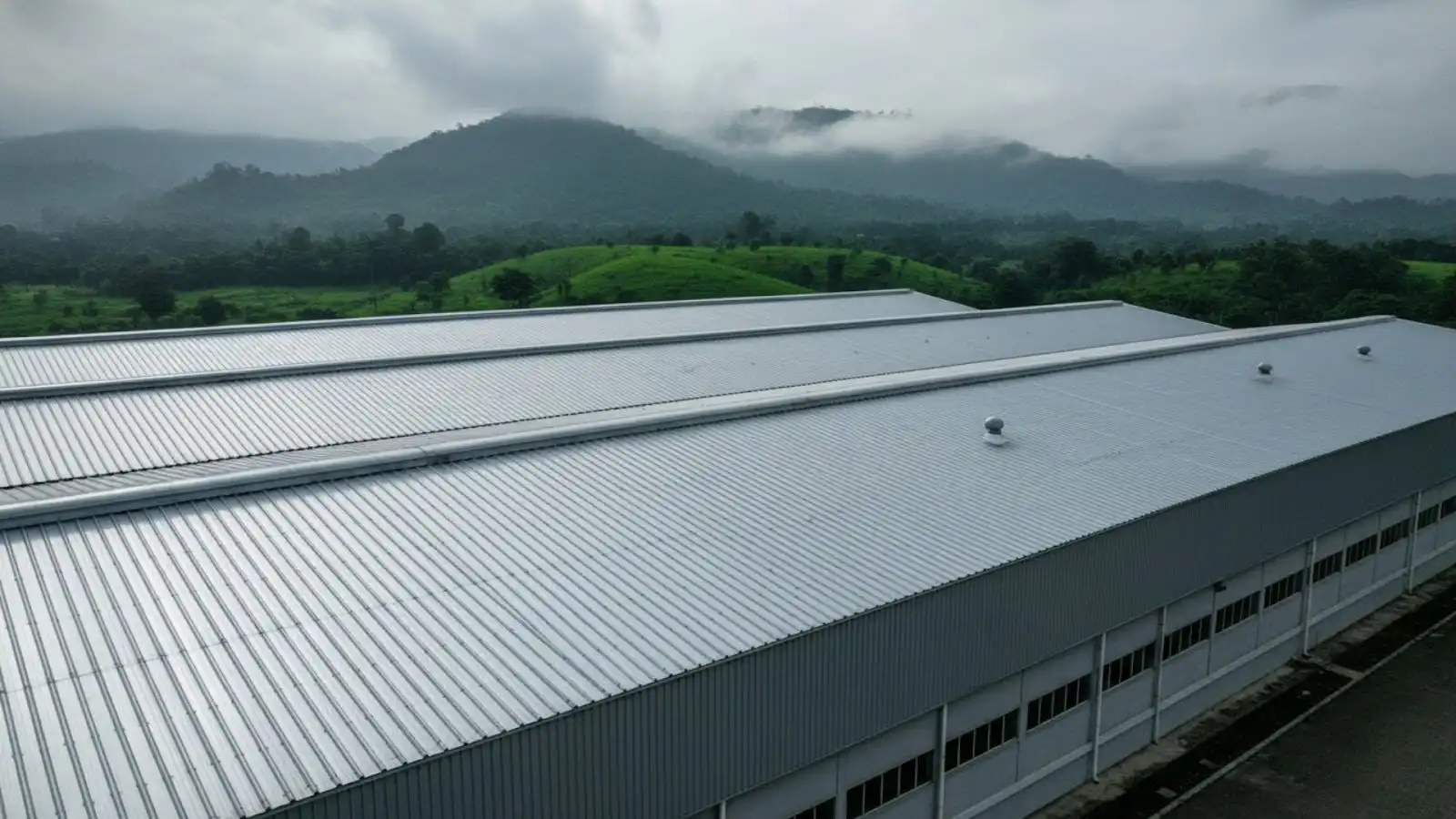
Al-Zn coated sheets are extensively used in roofing and cladding, particularly for industrial buildings, PEB structures and high-durability commercial roofing.
Their corrosion resistance and thermal reflectivity make them excellent for tropical, coastal, high-humidity and high-temperature zones. Beyond roofing, they are used in automotive components, electrical panel casings, agricultural sheds, cold storage enclosures, HVAC ducting, furniture fabrication and industrial housings.
Their ability to withstand harsh environments while retaining structural stability adds significant long-term value to infrastructure and engineering projects.
Conclusion
The Aluminium Zinc coated sheet continues to stand out as dependable and efficient with high-performance material. This material is suitable for roofing and cladding also engineered metal systems. This material remains a leading choice for projects requiring long-term reliability and reduced maintenance. It has advanced 55% Aluminium and Zinc alloy coating with strong mechanical properties and proven resistance to corrosion. These sheets provide exceptional value in both industrial and commercial applications supported by high-quality manufacturers like Rhino Roofs.
Understanding these specifications enables engineers and consultants and procurement professionals to make informed choices. So that they can deliver performance, cost efficiency and durability-ensuring structures remain stable and resilient for decades.
Written and Verified by:
Rhino Roofs
Bio: Leading roofing sheet manufacturer with 50+ years of experience in the Northeast. Rhino Roofs provides color-coated, galvalume and asbestos cement roofing sheets.
FREQUENTLY ASK QUESTIONS
Around 25–40 years, depending on coating mass and environmental exposure.
Yes, they are widely used as the base substrate for colour-coated and pre-painted roofing systems.
Yes, their corrosion resistance makes them ideal for coastal and high-humidity regions.
Yes, most products comply with ASTM A792, ISO specifications, and relevant Indian standards.