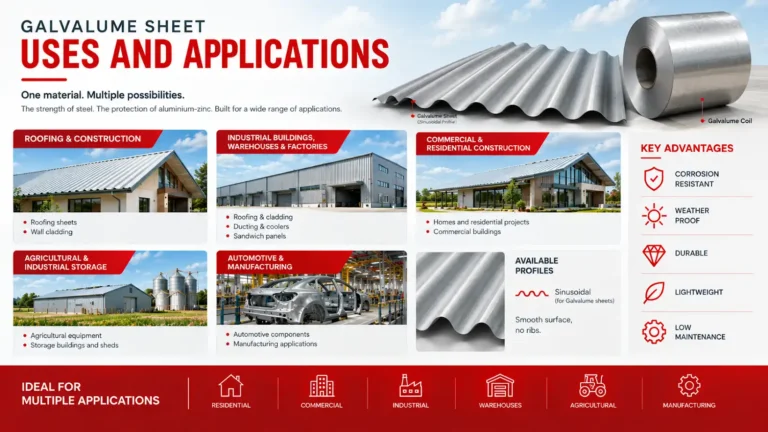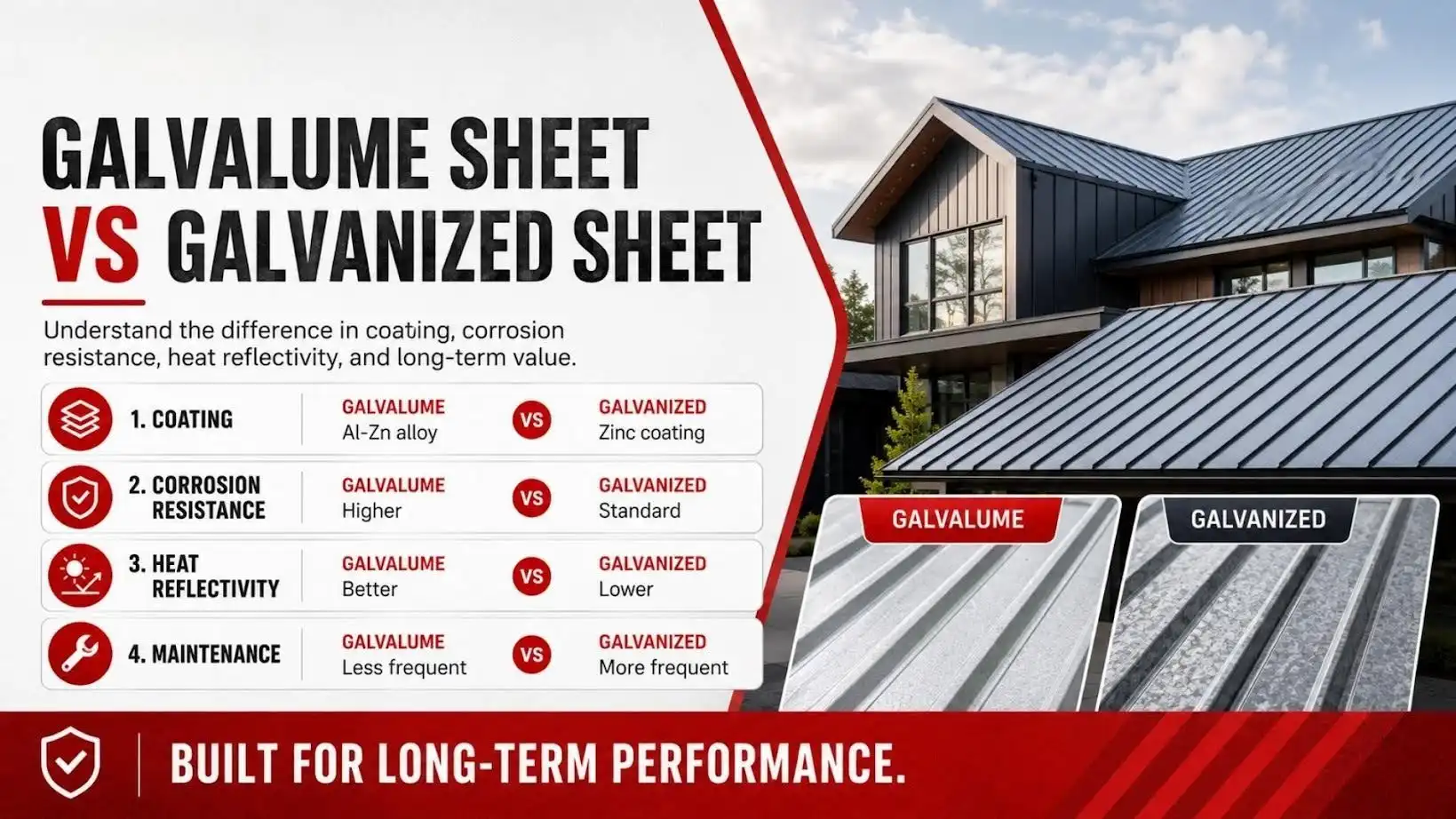
A roofing sheet does more than cover a structure. It protects against rain, heat, humidity and long-term wear. That is why choosing the right material matters. When comparing modern roofing solutions, the discussion often comes down to one important question – should you choose a galvalume sheet or a galvanized sheet?
Both materials are widely used across residential, commercial and industrial projects. However, differences in coating technology, durability and corrosion resistance can significantly affect long-term performance.
Understanding these differences helps builders, businesses and homeowners make a more informed decision.
Difference between Galvalume Sheet and Galvanized Sheet
| Feature | Galvalume Sheet (GL Sheet) | Galvanized Sheet (GI Sheet) |
|---|---|---|
| Coating Composition | Aluminium-zinc alloy coating with a small percentage of silicon | Pure zinc coating |
| Corrosion Resistance | Higher corrosion resistance due to the Al-Zn coating | Good corrosion resistance but may deteriorate faster in harsh environments |
| Durability | Longer service life and better long-term performance | Durable for standard applications but generally has a shorter lifespan than Galvalume |
| Durability | Longer service life and better long-term performance | Durable for standard applications but generally has a shorter lifespan than Galvalume |
| Surface Protection | Better protection against moisture, humidity, and weathering | Provides reliable protection but may show signs of wear sooner under continuous exposure |
| Heat Reflectivity | High solar reflectivity, reducing heat absorption and improving indoor comfort | Lower heat reflectivity compared to Galvalume |
| Maintenance Requirements | Requires less maintenance due to enhanced corrosion protection | May require more frequent maintenance and repairs depending on environmental conditions |
| Performance in Harsh Climates | Well-suited for regions with heavy rainfall, humidity, and fluctuating temperatures | Suitable for moderate environments but may need earlier intervention in harsh conditions |
| Applications | Residential roofs, industrial sheds, warehouses, commercial buildings, agricultural structures | Residential, commercial, and industrial roofing where environmental exposure is less demanding |
| Long-Term Value | Higher lifecycle value with reduced maintenance and longer durability | Lower initial cost but potentially higher maintenance costs over time |
| Best Choice For | Projects prioritising durability, thermal performance, and long-term reliability | Projects with standard performance requirements and budget-focused installations |
-
The Coating Technology Behind Each Sheet
The most important distinction between the two lies in their protective coating. Galvanized sheets are coated with only zinc, while a GL sheet uses an aluminium-zinc alloy coating with a small percentage of silicon.
This difference in composition directly influences how the sheet performs over time. Zinc offers protective coverage, but the aluminium content in Galvalume creates an additional barrier against environmental exposure. As a result, colour coated galvalume sheets are often chosen for projects where long-term protection and consistent roofing performance are priorities. -
Surface Protection Works Differently
Galvanized sheets provide dependable protection in standard applications, but prolonged exposure to moisture, heat or humidity can gradually affect their surface condition.
Galvalume sheets are designed to handle demanding conditions more effectively. Their Al-Zn coating helps preserve surface quality, reduce early signs of deterioration and maintain structural reliability over longer periods.
This added protection becomes especially valuable in regions where roofs are regularly exposed to rain, moisture and fluctuating temperatures. -
Heat Reflectivity Adds Functional Value
Modern roofing materials are increasingly judged not only by strength but also by how they respond to heat. This is an area where Galvalume sheets often stand out. Their surface reflects a greater amount of solar radiation, helping reduce heat absorption within the structure.
In warmer Indian climates, this can contribute to improved indoor comfort and lower cooling demands. Galvanized sheets, while effective in many applications, typically offer comparatively lower thermal reflectivity. -
Maintenance Requirements Influence Long-Term Cost
Galvalume sheets are generally preferred for projects seeking reduced maintenance requirements. Their enhanced coating protection helps minimise corrosion-related issues, lowering the likelihood of frequent repairs.
Galvanized sheets may require earlier intervention depending on the environmental conditions and exposure levels. Over time, reduced maintenance can contribute to better operational efficiency and stronger lifecycle value. -
Application Flexibility Across Roofing Projects
Different projects demand different roofing solutions. Residential homes, industrial sheds, warehouses and agricultural buildings all operate under unique conditions.
Because of their durability, corrosion resistance and thermal performance, Galvalume sheets are suitable across a broad range of applications.
Their versatility allows them to meet both functional and aesthetic requirements. This adaptability has contributed to their growing adoption in modern roofing projects across India.
When to Use Galvalume vs Galvanized Sheets
| Use Galvalume Sheets When | Use Galvanized Sheets When |
|---|---|
| The roof will be exposed to high humidity, heavy rainfall, or coastal conditions. | The project is in a dry or moderate climate with limited exposure to moisture. |
| Long-term durability and corrosion resistance are priorities. | You need a cost-effective solution for standard roofing applications. |
| Better heat reflectivity and improved thermal performance are required. | Thermal performance is not a primary concern. |
| You want lower maintenance and a longer service life. | The project has a shorter expected lifespan or regular maintenance is acceptable. |
| The application includes industrial buildings, warehouses, commercial facilities, or premium residential roofing. | The application includes general residential, agricultural, or light commercial structures with moderate environmental exposure. |
In summary: Choose galvalume sheets for superior corrosion resistance, durability, and long-term value. Choose galvanized sheets when budget is the primary consideration and the roofing will be installed in less demanding environmental conditions.
Conclusion
Choosing between a galvanized sheet and a Galvalume sheet ultimately comes down to long-term performance requirements. While both materials serve as effective roofing solutions, colour coated GL sheet offers clear advantages in areas that matter most to modern construction projects.
For buildings exposed to heavy rainfall, humidity, and fluctuating temperatures, a galvalume roofing sheet provides an added layer of confidence. As roofing expectations continue to evolve, builders and property owners are increasingly prioritising materials that offer lasting value rather than short-term savings. In that regard, galvalume sheets stand out as a practical and future-ready roofing choice for residential, commercial, and industrial applications alike.
Written and Verified by:
Rhino Roofs
Bio: Leading roofing sheet manufacturer with 50+ years of experience in the Northeast. Rhino Roofs provides colour coated, galvalume (Aluminium Zinc coated) and asbestos cement roofing sheets.
FREQUENTLY ASK QUESTIONS
Galvalume sheets use an aluminium-zinc coating, while galvanized sheets use a zinc coating.
Galvalume sheets are generally preferred for humid and heavy rainfall conditions because of their stronger corrosion resistance.
Yes. GL sheets are widely used in industrial, commercial and warehouse roofing because of their durability difference and weather resistance.
Yes. Colour coated roofing sheets offer added protection, visual appeal and improved resistance to weather exposure.
Galvalume generally performs better for corrosion resistance than galvanized steel. Its aluminium-zinc coating provides superior protection against rust, moisture, and harsh weather conditions, making it a better choice for long-term roofing applications, especially in humid and coastal environments.