

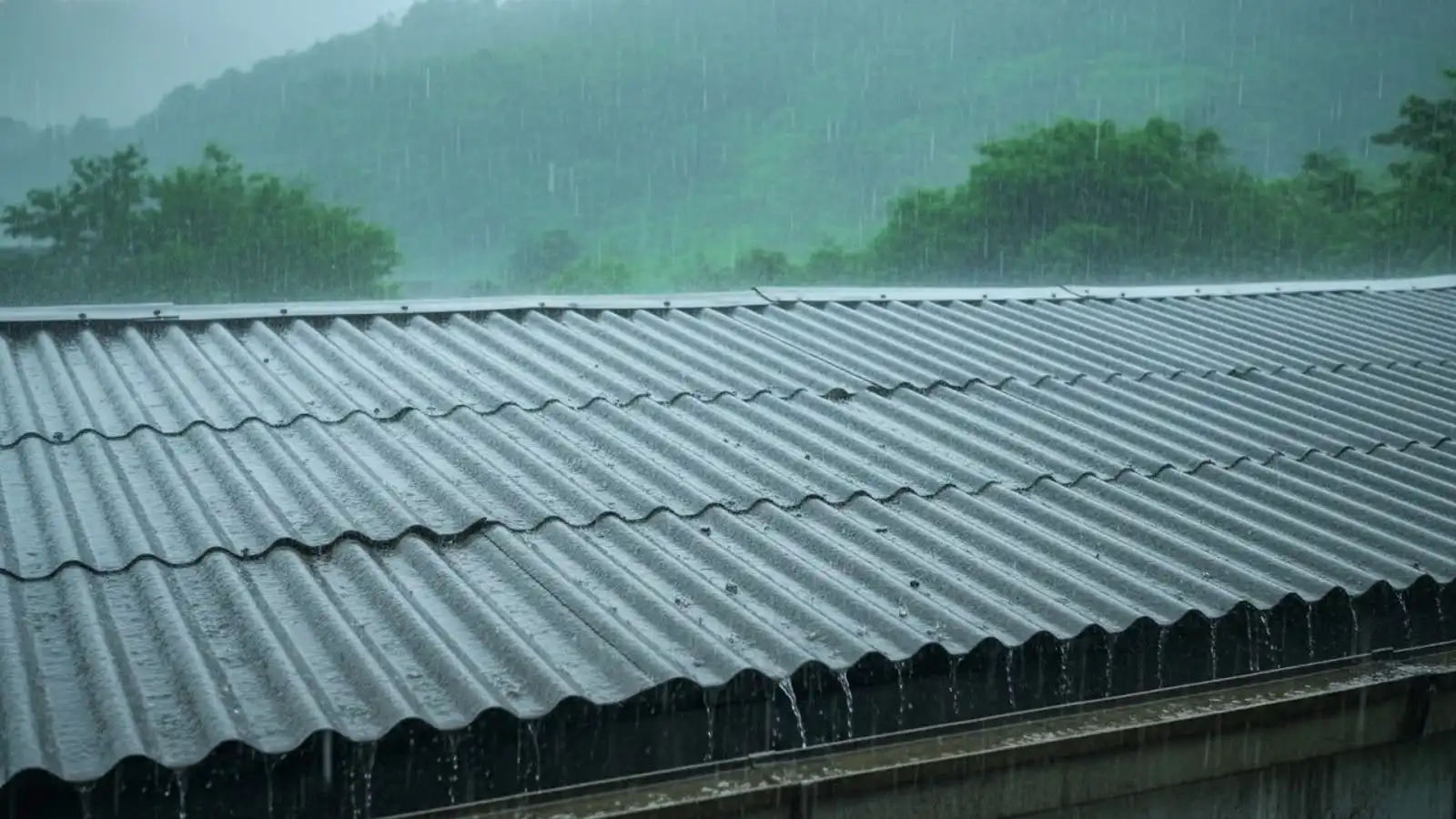
A cement sheet leakage solution depends on the cause of the leak. Small cracks, damaged fasteners, loose overlaps, open joints and ageing sheets are common reasons for water leakage from a cement sheet roof. Minor damage can often be repaired using a suitable roofing sealant, repair tape or waterproofing system. However, severely cracked, brittle or damaged sheets may need replacement.
What Causes Leakage in Cement Sheet Roofs?
Water can enter through different points of a cement sheet roof. Finding the actual source of the leakage is important before starting any repair.
Common causes include:
- Cracks or small holes in the cement sheet
- Damaged or loose roofing screws and fasteners
- Worn-out washers around fasteners
- Gaps at sheet overlaps
- Open or damaged ridge joints
- Deteriorated sealant
- Ageing and weathering of the roofing sheet
- Improper installation or drainage
A leak may also appear at a different location from where water actually enters the roof. Therefore, inspect the complete sheet, joints, fasteners and adjoining areas before repairing the affected spot.
How to Find the Source of Cement Sheet Roof Leakage?
Finding the actual source of a roof leak is the first step toward an effective cement sheet leakage solution. Water may enter through a crack, fastener, joint or damaged sheet and appear at a different location inside the building. Carefully inspect the roof for visible cracks, holes, loose screws, damaged washers, open overlaps and gaps around ridge or edge areas. Check for water stains, damp patches or dripping points on the underside of the roof as well. Identifying the exact entry point helps you choose the right repair method and prevents repeated leakage.
Cement Sheet Crack Solution
A cracked cement sheet should be repaired as soon as possible because even a small crack can allow rainwater to enter the building. For a minor crack, first clean and dry the damaged area. A compatible roofing sealant or repair system can then be used to seal the crack and prevent further water entry.
Types of Roofing Sealant and Their Comparison
| Sealant Types | Durability | Approx. Cost (₹) | Best For | Pros | Cons |
|---|---|---|---|---|---|
| Elastomeric Waterproof Coating | 8–12 years | 55–120/sq.ft | Old asbestos cement roof sheets, industrial roofs | Flexible, UV-resistant, seamless finish | Requires professional application |
| Polyurethane Sealants | 3–5 years | 250–450 per tube | Cracks, nail holes, small joints | Highly elastic, durable for spot repairs | Not ideal for entire roof coverage |
| Leakage Sealing Tape | 1–3 years | 250–650 per roll | Emergency repairs, overlaps, ridge gaps | Easy to apply, DIY-friendly | Temporary solution |
For larger cracks, multiple cracks or severely damaged sheets, patching may not provide a reliable long-term solution. In such cases, replacing the damaged sheet may be more suitable.
Important: Do not walk directly on old or fragile cement sheets during inspection or repair, as they can break under load.
Cement Sheet Water Leakage Solution
The right cement sheet water leakage solution depends on where the water is entering.
-
Repair Small Cracks and Gaps
Clean the affected area and use a suitable roofing sealant or repair material designed for the roofing application. The repair should cover the damaged area properly to prevent water from entering through the crack.
-
Check Roofing Fasteners
Loose or damaged screws can create leakage points. Inspect the fasteners and washers and replace damaged components with suitable roofing fasteners.
-
Seal Sheet Overlaps
Water can enter through poorly sealed or damaged overlaps between sheets. Check the overlap area and repair it using a compatible sealing or waterproofing system.
-
Repair Ridge and Joint Areas
Ridges, joints and roof edges are exposed to rainwater and can develop gaps over time. These areas should be inspected and sealed where required.
-
Apply a Suitable Waterproofing System
For wider areas affected by water penetration, a suitable waterproof coating or roofing waterproofing system can provide additional protection. The surface should be properly prepared before application.
Step-by-step Process to Prevent Water Leakage from a Cement Sheet Roof?
Follow a systematic approach instead of applying waterproofing material directly over the visible leak.
-
Step 1: Find the source of leakage
Inspect cracks, holes, fasteners, overlaps, ridges and joints.
-
Step 2: Check the condition of the sheet
Determine whether the sheet is structurally sound or badly damaged.
-
Step 3: Clean the damaged area
Remove dirt, loose material and old deteriorated sealant from the repair area.
-
Step 4: Repair cracks and gaps
Use a suitable roofing repair or sealing system according to the type and extent of damage.
-
Step 5: Check fasteners and overlaps
Repair loose fasteners and seal vulnerable joints or overlaps where necessary.
-
Step 6: Apply waterproofing if required
For suitable applications, apply a compatible waterproofing coating or system over the prepared surface.
-
Step 7: Inspect the repair
After the repair has properly cured or set, inspect the area for gaps or incomplete coverage.
Cement Sheet Leakage Solution for Roof: Repair or Replace?
Not every leaking cement sheet needs to be replaced. The decision depends on the condition and extent of damage.
Repair may be suitable when:
- The crack is small and localised.
- The sheet is otherwise in good condition.
- Leakage is caused by a fastener or joint.
- The damage can be properly sealed.
Replacement may be necessary when:
- The sheet has large or multiple cracks.
- The sheet has become brittle or severely weathered.
- There are significant holes or broken sections.
- Leakage continues despite repeated repairs.
- The sheet is structurally unsafe.
A professional inspection can help determine whether repair or replacement is appropriate.
Temporary vs Long-Term Cement Sheet Leakage Solution
A temporary repair can help control leakage until a proper repair is carried out, but it may not address the underlying cause.
For example, repair tape or a localised seal can provide short-term protection for a small damaged area. A more durable approach may involve repairing the underlying defect, replacing damaged components and applying a suitable waterproofing system where appropriate.
The right solution depends on the sheet condition, location of the leakage and extent of damage.
Safety Precautions When Repairing Asbestos Roofing Sheets
If you are looking for an asbestos sheet leakage solution, safety should be considered before starting any repair work. Old asbestos-containing roofing sheets can become fragile over time, and disturbing them may release asbestos fibres.
Important Safety Measures
- Avoid drilling or cutting: Do not drill, cut, grind or break asbestos sheets unless the work is being carried out using appropriate professional controls.
- Do not walk directly on the sheet: Old asbestos sheets can be brittle and may break under weight. Use a safe access method and avoid putting body weight directly on the roofing sheet.
- Avoid creating dust: Do not use dry brushing, sanding or other methods that can release dust from the sheet.
- Do not disturb damaged sheets unnecessarily: If the sheet is cracked, broken or badly deteriorated, avoid handling it until it has been assessed.
- Use trained professionals: For significant repair, removal or replacement work, consider professionals experienced in handling asbestos-containing materials.
- Follow local requirements: Asbestos repair, removal and disposal may be subject to specific safety and waste-management requirements.
- Consider replacement for severely damaged sheets: Repeatedly repairing an old, brittle or extensively damaged asbestos sheet may not be appropriate. Professional assessment can help determine the safest option.
If you are unsure whether an old roofing sheet contains asbestos, do not drill, cut or break it to check. Seek professional advice before carrying out work.
Long-Term Performance Preventive Maintenance Tips for Cement Sheet
Routine maintenance is key to make sure you have the long-lasting results. Even the best waterproofing system benefits from periodic inspection and cleaning.
-
Annual Roof Inspection
A yearly roof inspection, preferably scheduled before the monsoon. It will help to identify early symptoms of leakage such as moisture patches, mold, rust around fasteners or subtle sagging. Early intervention prevents unnecessary damage and makes repairs more manageable. Regular inspections are particularly crucial for aging asbestos roof sheets or fibre cement systems that naturally weaken over time. Learn more about the asbestos roofing sheet inspection guide.
-
Cleaning & Debris Removal
Debris accumulation between overlapping sheets is one of the most common reasons for water stagnation. Leaves, dust, moss and dirt trapped in these gaps slow down water flow and increase pressure on vulnerable sections of the roof. Regular cleaning improves drainage and prevents long-term dampness-related damage. To ensure that excess water does not overflow back into the roofing structure maintain clean gutters and downpipes.
-
Timely Fastener Tightening & Replacement
Fasteners loosen naturally due to wind pressure and heat-induced expansion and structural movement. Even a slightly raised screw head can create a direct water entry point. Periodically tightening fasteners and replacing rusted or damaged ones helps prevent seepage and enhances the roof’s overall stability. This precaution is especially important in older roofs where the original fasteners may have lost their grip over time.
-
Checking & Resealing Overlaps and Joints
Overlaps and joints are the most vulnerable areas on any cement sheet roof, especially in structures that have undergone multiple repairs. Over time, sealing compounds dry out, shrink or lose adhesion. Conducting a routine check of side laps, ridge joints and end overlaps helps identify early signs of gaps or capillary leakage. This practice also reduces the risk of cracking or shifting during heat cycles.
-
Protective Painting and Surface Recoating
UV rays and extreme heat accelerate the deterioration of cement and asbestos roofing surfaces. Applying a protective paint or reflective coating every few years shields the sheets from harsh sunlight. It also reduces the surface porosity and slows aging. This preventive step supports long-term durability and reduces the frequency of major repairs. It can keep the roofing system structurally well-maintained throughout seasonal changes.
Conclusion
Leakage of asbestos roofing sheets can be solved effectively when the right techniques are used. Whether you choose for elastomeric coatings, bitumen membranes, PU sealants, or sealing tapes, each solution offers distinct advantages suited to different levels of damage-even for older roofs made with asbestos sheet panels. Routine maintenance helps extend the life of these repairs, while full roof replacement sourced from the trusted asbestos sheet manufacturer like Rhino Roofs ensures long-lasting protection when repairs are no longer sufficient. With the right approach, leakage can be efficiently controlled and prevented from recurring.
Written and Verified by:

Rhino Roofs
Bio: Leading roofing sheet manufacturer with 50+ years of experience in the Northeast. Rhino Roofs provides colour coated, galvalume (Aluminium Zinc coated) and asbestos cement roofing sheets.
FREQUENTLY ASK QUESTIONS
Elastomeric coatings typically offer 8–12 years of durability.
Yes, sealing tape can temporarily address ridge gaps when applied correctly.
When sheets become brittle, structurally weak or excessively cracked.
They should be handled carefully and preferably by trained professionals.